> **Quick Answer:** Yes, get a tow. A slipping transmission on the highway means your drivetrain is losing its ability to transfer power reliably. Driving further risks total transmission failure, possible loss of vehicle control, and a much larger repair bill. Signal right, exit or pull onto the shoulder, turn on your hazards, and call a tow truck. Do not try to limp it to a shop.
## What Does It Mean When My Transmission Is Slipping at Highway Speed?
Your transmission is slipping when the engine revs up but your speed does not increase to match, or when the vehicle surges, jerks, or drops out of gear unexpectedly. At highway speed, this often feels like the engine suddenly racing while you lose acceleration, or a hard shudder when the transmission tries to re-engage a gear. Both automatic and manual transmissions can slip, but on the highway the most common cause is low or burnt automatic transmission fluid, a failing torque converter, worn clutch packs, or a solenoid that is no longer holding the correct pressure in the valve body.
## Is It Safe to Keep Driving, or Do I Need to Pull Over Right Now?
Pull over now. A slipping transmission at 65 mph is not a "drive carefully to the next exit" situation. If the transmission drops into neutral unexpectedly, you lose engine braking and acceleration at the same moment, which makes merging or avoiding hazards nearly impossible. Continuing to drive also generates heat in the transmission fluid, and overheated fluid breaks down fast, turning a fluid flush or solenoid job into a full rebuild or replacement. The longer you push it, the worse the damage and the higher the bill.
Once you are safely on the shoulder, shift into Park and leave the engine running at idle to preserve electrical systems, but do not rev it. If you smell burning fluid, a sharp chemical odor coming from under the hood or the floorboard, shut the engine off. Burnt automatic transmission fluid smells distinctly like charred rubber or hot oil, and that smell means fluid has already degraded badly.
For more on managing a highway breakdown safely while you wait for help, see [how to stay safe waiting for a tow truck on the highway](/how-to-stay-safe-waiting-for-tow-truck-on-highway/).
## How Do I Get Help and What Should I Tell the Tow Truck Dispatcher?
Call your roadside assistance provider, AAA, or a local tow company. Give the dispatcher your exact location: mile marker number, the highway number and direction of travel, and the nearest exit or landmark. Tell them the vehicle is drivable to the shoulder but cannot be driven further, and that the issue is a slipping transmission. This matters because the tow operator needs to know whether they can winch the car or need a flatbed. For a transmission problem, request a flatbed. Putting a front-wheel-drive vehicle with a bad transmission on a wheel-lift and towing it by the front wheels can cause additional damage to already stressed components.
If you have no cell service, turn on your hazards, raise your hood, and use the signals described in [how to signal for help if your car breaks down and you have no phone](/how-to-signal-for-help-car-breaks-down-no-phone/).
## How Much Will the Tow Cost?
A local tow of 5 to 15 miles typically runs $75 to $150. If you are far from a transmission shop and need a longer haul, expect $3 to $7 per mile beyond the first 5 miles, and sometimes a higher hook-up fee for flatbed service. If you break down on a remote stretch and need more than 50 miles of towing, costs can reach $300 to $500 or more. Check
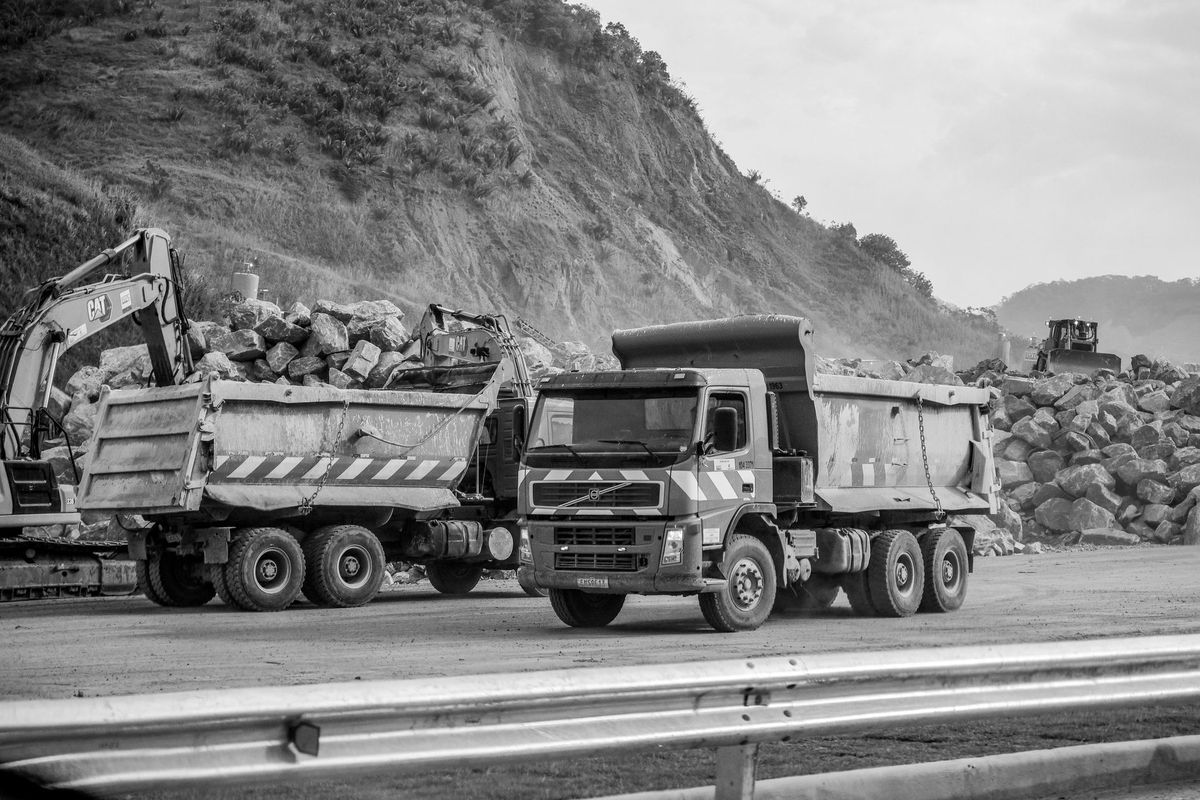
*Photo: Pexels*
your insurance policy before you pay out of pocket. Many comprehensive policies and add-on roadside assistance plans cover towing, though reimbursement limits vary significantly. See [does insurance cover towing if car breaks down not an accident](/does-insurance-cover-towing-if-car-breaks-down-not-accident/) for a clear breakdown of what most policies actually pay.
For long hauls to a preferred shop, read [how much does a long distance tow truck cost per mile](/how-much-does-a-long-distance-tow-truck-cost-per-mile/) before you commit to a tow company's quote.
## What Happens After the Tow: What Am I Looking at for Repairs?
A slipping transmission can be as simple as a low fluid level, which a shop fixes for under $100 including a fluid top-off and inspection, or as serious as a complete transmission rebuild. A solenoid replacement typically runs $150 to $400 in parts and labor. A torque converter replacement on a common V6 automatic can run $500 to $1,000. A full rebuild or remanufactured transmission replacement is commonly $1,800 to $3,500 depending on make, model, and whether you go OEM or aftermarket. Get the vehicle to a shop that specializes in transmissions, not a general oil change chain, and ask for a written diagnosis before authorizing any work. If the shop can confirm the slip was caused by a single failed solenoid or low fluid rather than internal clutch pack damage, you are in the best-case scenario. If the fluid is dark brown or black and smells burnt, plan for more.
---

*Photo: Pexels*
## Common Questions
**Q: Can I drive a car with a slipping transmission if it still moves?**
A: Technically it may move, but you should not drive it. Each mile you drive with a slipping transmission generates heat and friction that destroys clutch material and contaminates the fluid, turning a cheaper repair into a full rebuild.
**Q: What causes a transmission to slip suddenly on the highway?**
A: The most common sudden causes are low transmission fluid from a leak, a failed pressure solenoid, or a torque converter clutch that has stopped locking up properly. A transmission that slips only at highway speed and not in city driving often points to the torque converter or overdrive solenoid specifically.
**Q: Will my car insurance or roadside assistance pay for this tow?**
A: If you have comprehensive coverage with a towing add-on, or a standalone roadside assistance plan through AAA or your insurer, the tow is likely covered up to your plan's mileage or dollar limit. A breakdown tow is not covered by liability-only policies.
**Q: Should I have the car towed to the nearest shop or a transmission specialist?**
A: Take it to a transmission specialist if you can. A general mechanic can diagnose simple issues like fluid level, but a shop that does transmissions daily will spot internal damage faster, has the right tooling, and will give you a more accurate repair estimate.
**Q: How long can I leave my car on the highway shoulder while I wait for the tow?**
A: Most states allow a disabled vehicle on a highway shoulder for one to two hours before it gets tagged for removal, but enforcement varies. Stay with the vehicle if it is safe to do so, get behind a barrier if one is available, and make sure your hazard lights are on. See [how long can you leave a broken down car on the highway](/how-long-can-you-leave-broken-down-car-on-highway/) for state-by-state context.
---
*Need roadside help? Visit [Tow With The Flow](https://towwiththeflow.com/transmission-slipping-on-highway-need-tow/) for real answers when your car breaks down.*
Transmission Slipping on Highway: Do You Need a Tow Right Now?
Photo: Pexels