
Quick Answer: Small leaks with full fluid levels allow short drives to nearby mechanics. Large leaks, low fluid, or slipping gears require immediate towing. Check your transmission fluid level first, then decide based on leak severity and distance to repair shop.
What To Do
Check the fluid level immediately. Park on level ground, engine warm and running. Pull the transmission dipstick and check the fluid level. If it’s below the minimum line, do not drive. Most dipsticks have a “cold” and “hot” range marked. Check it hot, since that’s when the fluid is circulating and you get an accurate reading.
Identify the leak size. Look under your car for fresh red fluid. A few drops per hour is minor. A puddle forming within minutes means major leak. Take a photo to show your mechanic. Also note where the drip originates: a leak at the pan gasket behaves differently than a cracked cooler line, which can spray fluid rapidly onto hot exhaust components and create a fire risk.
Test for transmission problems. Put the car in drive and reverse while parked. If you feel hesitation, slipping, or grinding, the damage is already happening. Stop driving immediately. A healthy transmission engages smoothly within one to two seconds of shifting. Anything longer than that, or any shudder, is a warning sign you cannot ignore.
Drive only if conditions are met: Fluid level above minimum, leak is minor (under 10 drops per hour), no slipping or grinding, and mechanic is under 5 miles away. Drive slowly, avoid hills and highway speeds. Keep RPMs low by using gentle acceleration and staying off the throttle as much as possible. Aggressive driving increases fluid temperature and pump pressure, both of which accelerate fluid loss from an active leak.
Monitor constantly while driving. Stop every mile to check fluid level. If it drops noticeably or you feel any transmission hesitation, pull over safely and call for a tow truck. Bring a flashlight so you can actually see the dipstick markings in low light conditions. A drop of even half a quart in one mile means your leak is worse than it looked.
Add fluid only as emergency measure. If fluid drops while driving, add the correct type (check owner’s manual) to keep it above minimum. This buys time for towing, not permanent repair. Using the wrong fluid type, for example Dexron III in a vehicle that requires ATF+4, can cause seal swelling and shift quality problems on top of the existing leak.
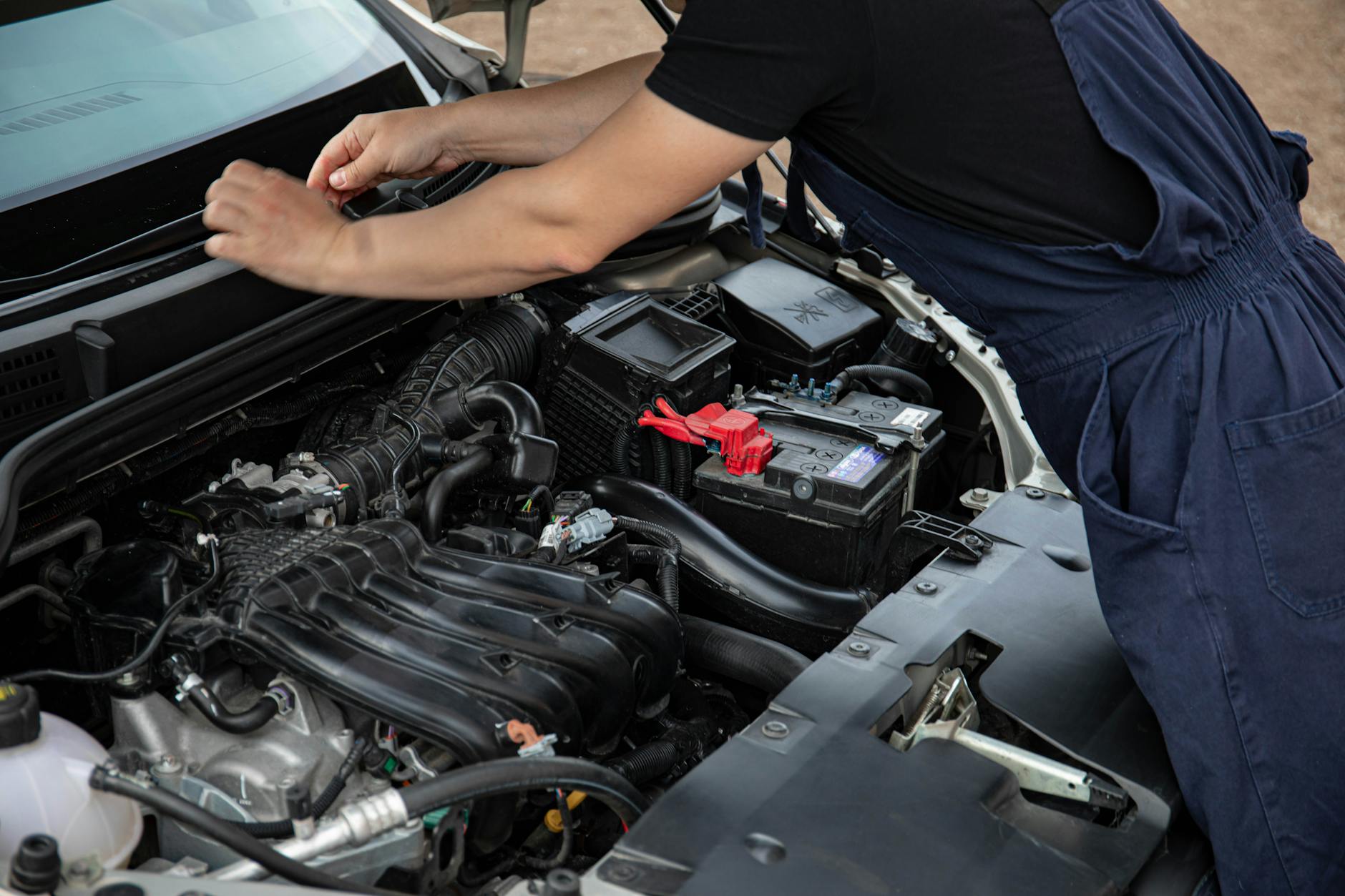 Photo: Pexels
What It Might Cost
Driving on low transmission fluid typically causes $2,000-$4,000 in internal damage. A tow truck costs $100-$300 depending on distance. The math is simple: towing saves thousands.
Minor leak repairs run $150-$500. A pan gasket replacement is usually on the lower end of that range, around $150-$250 parts and labor. A transmission cooler line repair sits around $200-$400 depending on routing and accessibility. Major internal transmission damage from driving with low fluid costs $2,500-$5,000 for rebuild or replacement. On many trucks and SUVs with heavy-duty transmissions, full replacement runs even higher, sometimes $6,000 or more at a dealership.
The internal components most vulnerable to low fluid are the clutch packs and planetary gears. These are precision-machined parts running at high speed with tight tolerances. Once they score or weld together from heat and friction, the only fix is a full rebuild or a replacement unit.
 Photo: Pexels
Common Questions
Q: Can I just keep topping off the fluid and drive normally until I get to the shop? A: Only if the leak is genuinely minor, meaning a few drops per hour, not a steady drip. Topping off buys you time for a short, slow drive to a nearby shop, but it does not stop the leak or protect you if the leak rate increases suddenly. Stop and check the level every mile.
Q: What does burning transmission fluid smell like, and how do I know it’s not engine oil? A: Burning transmission fluid has a sharp, acrid chemical smell, slightly sweeter than burning engine oil. If the fluid is dripping onto the exhaust manifold or catalytic converter, you may also see thin wisps of smoke from under the hood or beneath the car. Pull over immediately if you notice either sign.
Q: My transmission is leaking but shifts fine and the fluid is at the minimum line. Can I wait until tomorrow to get it fixed? A: If the fluid is already at the minimum line, you have no margin left. A leak that looks slow can drain that last quart overnight or within a few miles of driving. Get it towed or top off the fluid and drive directly to a shop today, not tomorrow.
Stay Safe
- Never drive if fluid level is below minimum line
- Stop immediately if transmission slips, hesitates, or makes grinding noises
- Avoid hills, highways, and stop-and-go traffic with any transmission leak
- Keep transmission fluid in your car for emergencies
- If you smell burning transmission fluid while driving, pull over immediately
- Car overheating symptoms often accompany transmission problems, requiring immediate attention
Transmission fluid lubricates and cools internal components spinning at thousands of RPM. Without adequate fluid, metal parts grind against each other, creating permanent damage within minutes. A $200 tow bill prevents a $4,000 transmission rebuild.
Large leaks from damaged lines or pan gaskets can drain fluid completely in under 10 miles of city driving. Highway driving accelerates fluid loss due to higher operating temperatures and pump speeds.
If your transmission shows slipping symptoms, the internal damage has already begun. Continuing to drive will only multiply repair costs.
Need roadside help? Visit Tow With The Flow for real answers when your car breaks down.