
Quick Answer: A 50-mile tow from the city typically costs $200-400 total. You’ll pay a base hookup fee ($75-150) plus mileage charges ($3-7 per mile) and often rural/distance surcharges. Call multiple companies and ask for exact quotes before agreeing to service.
What To Do
Get multiple quotes immediately - Prices vary drastically between companies, especially for long-distance rural tows. A 50-mile haul can run $220 from one operator and $380 from another in the same market. Spend five minutes making calls before you commit.
Ask for the complete breakdown - Base fee, per-mile rate, fuel surcharge, after-hours fees, and any rural area surcharges. Some companies advertise a low per-mile rate but bury a $50 rural zone fee in the fine print. Get the final number confirmed before the truck rolls.
Verify your exact location - Use GPS coordinates or mile markers to give tow companies precise pickup details. If you’re on an interstate, note the direction of travel and the nearest exit number. A vague location description can add 10-15 minutes to dispatch time and occasionally a repositioning fee.
Check if roadside assistance covers it - AAA Plus covers up to 100 miles, some insurance policies include long-distance towing. AAA Basic only covers 5 miles, so know your membership tier before assuming you’re covered. Some credit cards like Chase Sapphire also include roadside assistance with per-incident limits around $50-100.
Ask about one-way vs round-trip pricing - Some companies charge for the empty return trip back to the city. This is more common with smaller independent operators than large fleets. If they mention a “deadhead charge,” that’s what they mean. It can add $40-80 to your bill.
Confirm drop-off location - Additional fees may apply if you need delivery to a specific shop rather than your home. Gated facilities, dealerships requiring appointment check-ins, or shops with restricted yard access can all trigger an additional placement fee of $25-50.
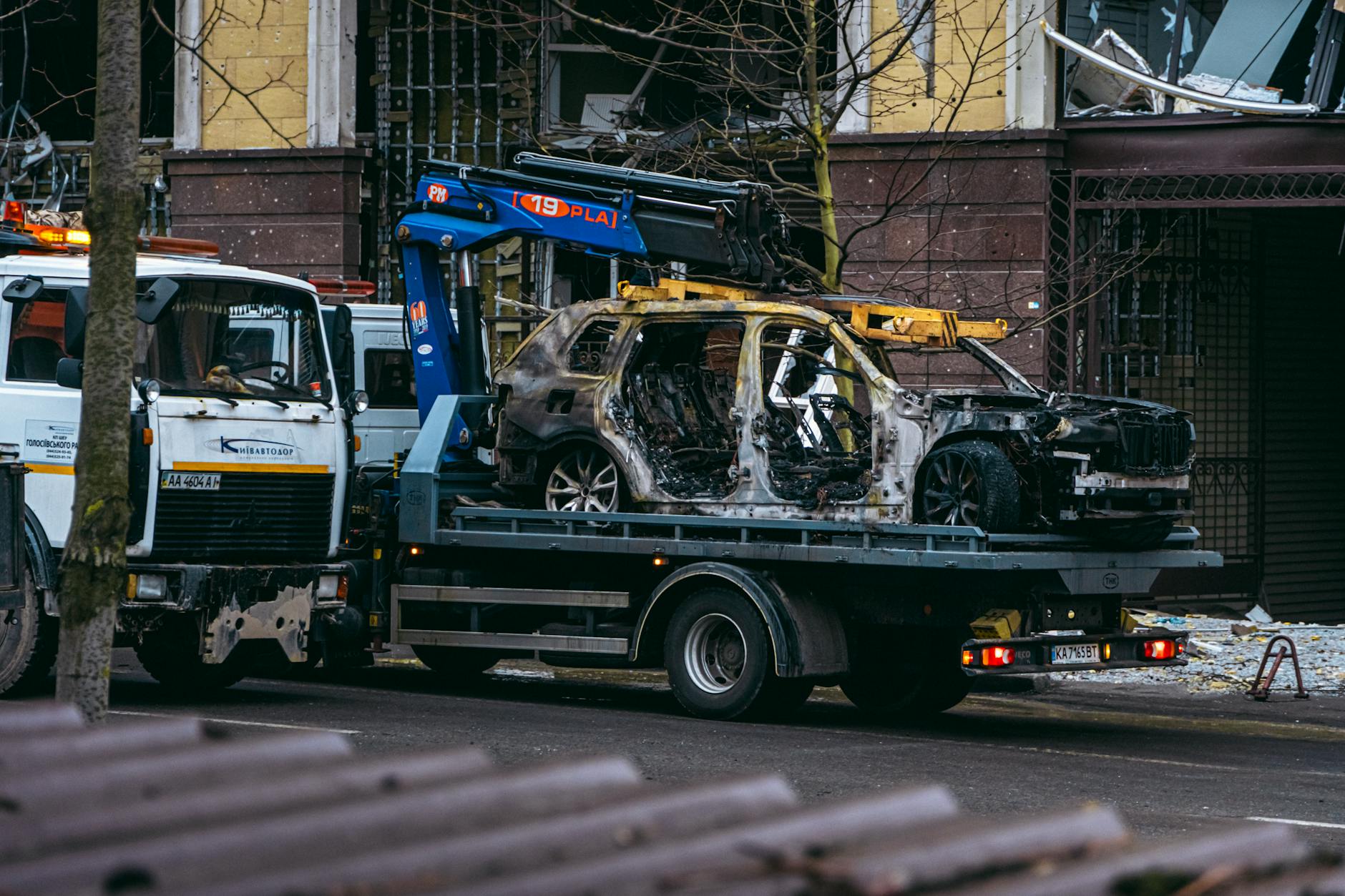 Photo: Pexels
What It Might Cost
Base hookup fee: $75-150 Mileage charge (50 miles): $150-350 ($3-7 per mile) Rural/distance surcharge: $25-75 After-hours fee: Add 25-50% Fuel surcharge: $15-30
Total range: $200-400 for standard vehicles Heavy-duty trucks/RVs: Add $100-200
A few scenarios worth knowing: if your breakdown happens after 10 PM on a weekend, expect to land near the top of that range or above it. Flatbed tows, which are required for all-wheel-drive vehicles and most modern sports cars, typically cost 10-20% more than wheel-lift tows because of the equipment involved. If you’re driving a low-clearance vehicle like a Corvette or a Hellcat, confirm the operator has a flatbed before they arrive, or you risk damage on pickup.
Luxury and exotic vehicles sometimes carry an additional specialty handling fee of $50-150, particularly if the driver needs to use soft straps or has to winch the car from a ditch before loading.
 Photo: Pexels
Common Questions
Q: Will my car insurance cover a 50-mile tow? A: It depends on your policy. Many comprehensive auto insurance plans include roadside assistance as an add-on, but the towing benefit is often capped at $50-100, which won’t cover a 50-mile haul in full. Call your insurer before the tow truck arrives so you know exactly what you’re responsible for paying out of pocket.
Q: How long does it take for a tow truck to reach me 50 miles outside the city? A: Plan on 45-90 minutes in most cases. Operators based closer to the city edge will dispatch faster, but rural routes and highway traffic can stretch that to two hours. If multiple companies quote similar prices, ask each one where their nearest available truck is sitting right now before you decide.
Q: Can I ride in the tow truck for the full 50 miles? A: Most operators allow one passenger in the cab at no extra charge, but it is not guaranteed. Ask explicitly when you call. Some companies have insurance restrictions that prohibit passengers on long-distance hauls, and a few charge a small fee for the ride. If you have additional passengers with you, arrange alternate transport before the truck shows up.
Stay Safe
- Stay with your vehicle if it’s safely off the road
- Use hazard lights and reflective triangles if available
- Wait inside your car if traffic is heavy
- Keep your phone charged for status updates from the tow company
- Have your driver’s license, registration, and insurance ready
Need roadside help? Visit Tow With The Flow for real answers when your car breaks down.