
Quick Answer: The towing company is responsible for damage they cause to your vehicle. Document everything immediately, take photos, get the driver’s information, and file a claim with their insurance. You may need to pursue legal action if they refuse to pay.
What To Do
Stop the driver immediately if you notice damage happening. Don’t let them finish the job and drive away. If your car is already on the truck, ask them to lower it so you can inspect it before it leaves the scene. Once your vehicle rolls away, proving exactly where and how the damage happened becomes much harder.
Take extensive photos of all damage from multiple angles. Include close-ups and wide shots showing the tow truck’s position relative to your car. Photograph tire scuff marks on the pavement, drag marks on the undercarriage, and any equipment the driver used. Timestamp photos if your phone allows it.
Get the driver’s information: full name, license number, company name, truck number, and insurance details. Take a photo of their commercial driver’s license. Also photograph the truck’s DOT number, which is displayed on the door panel of every commercial vehicle.
Document everything in writing on the spot. Note the time, location, weather conditions, and exactly how the damage occurred. Write down the names of any bystanders who witnessed it. A detailed written account made within minutes of the incident carries far more weight than one reconstructed hours later.
Call the police if damage is significant. Get a report number even if they won’t come out. This creates an official record. For major structural or mechanical damage above $1,000, having a police report makes the insurance claim process noticeably smoother.
Don’t sign anything the tow truck driver gives you without reading it carefully. Many release forms include damage waivers. Language like “vehicle received in satisfactory condition” or “no claims after transport” can void your ability to recover costs. If you are unsure about a form, photograph it and consult your own insurance company before signing.
Contact the towing company’s insurance immediately. Most reputable companies carry commercial liability insurance for exactly this situation. Ask specifically for the name of their insurer and the policy number. Follow up in writing by email or certified letter so you have a paper trail.
Get repair estimates from at least two certified shops. Include all related damage, not just obvious scratches or dents. Ask each shop to note any damage that could indicate underlying structural issues, since a bent wheel well or shifted frame rail may not be obvious until a proper inspection is done on a lift.
Keep all receipts for rental cars, additional towing, or other expenses caused by their negligence. These are recoverable costs if you end up in small claims court or mediation. Even a few days of rental car fees can add $200 to $500 to your claim.
File a complaint with your state’s public utilities commission or transportation department if the company won’t cooperate. Many states license towing companies and have formal complaint processes. A complaint on record puts pressure on the company and can trigger an audit of their insurance compliance.
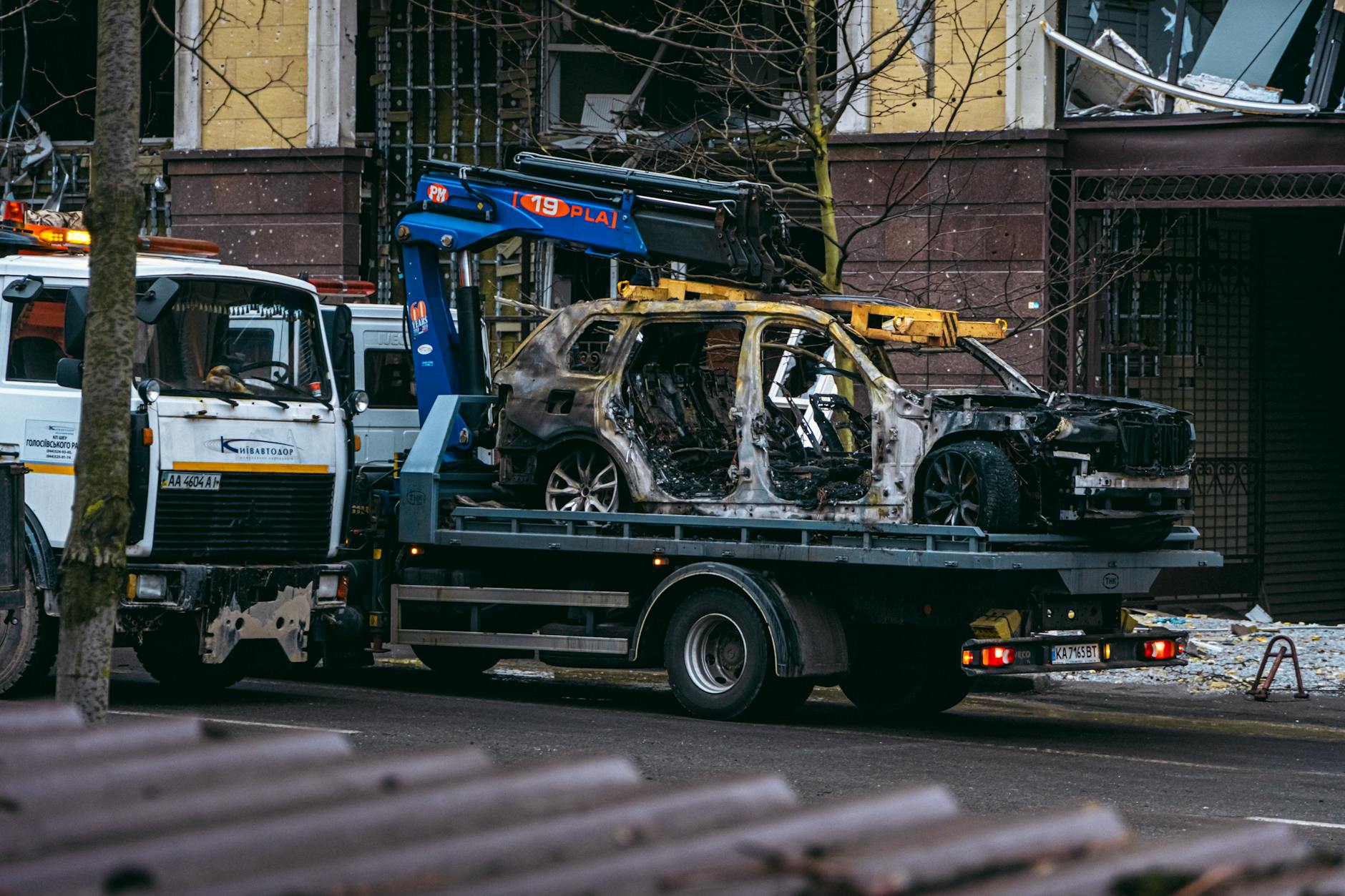 Photo: Pexels
What It Might Cost
Towing companies typically carry $100,000 to $1 million in liability coverage. Common damage includes:
- Scratched paint or body panels: $500-2,000
- Damaged bumpers or trim: $800-3,500
- Transmission damage from improper towing: $2,000-8,000
- Suspension damage: $1,000-5,000
If the company disputes responsibility, your own comprehensive or collision coverage may pay out first and then subrogate against the towing company’s insurer, meaning your insurer chases them for reimbursement. You may still owe your deductible temporarily, but many insurers waive it when a third party is clearly at fault.
Common Questions
Q: What if the tow truck driver denies they caused the damage? A: That is why photo and witness documentation from the scene matters so much. If you have timestamped photos showing damage that was not present before the tow, the burden shifts significantly. File with their insurer anyway and let the claims adjuster make the determination.
Q: Can I take them to small claims court if their insurance won’t pay? A: Yes. Most states allow small claims filings for vehicle damage up to $5,000 to $10,000. Bring your photos, written account, repair estimates, and any receipts. Judges handle these cases regularly and towing liability claims are straightforward when documentation is solid.
Q: My car was towed without my permission and came back damaged. Does that change anything? A: It strengthens your case. Unauthorized tows, often called predatory or wrongful tows, are regulated in most states, and companies performing them face stricter liability. Contact your state’s consumer protection office in addition to filing an insurance claim.
 Photo: Pexels
Stay Safe
- Never approach a moving tow truck or try to stop the loading process by getting in the way
- Stay visible and alert the driver to stop if you see damage occurring
- If the driver becomes hostile about the damage, call police immediately
- Don’t accept cash settlements on the spot without getting everything in writing
Need roadside help? Visit Tow With The Flow for real answers when your car breaks down.