> **Quick Answer:** Steer to the right shoulder immediately, get as far from traffic as possible, and turn on your hazard lights. Do not stay in the car if you're stopped in a live lane. Call 911 if you're in danger, or a roadside assistance service for a fuel delivery. Most fuel deliveries arrive in 30 to 60 minutes and cost $50 to $100 without a membership.
## What Do I Do the Second I Realize I'm Out of Gas on the Freeway?
Steer right and coast to the shoulder. The moment your engine loses power, you lose power steering assist and the brake booster starts to fade, so act fast while the car still responds. Signal right, drift off the travel lanes, and get as far onto the shoulder as you can, ideally past the white fog line and close to any guardrail or barrier. Once stopped, shift into park, set your parking brake, and hit the hazard lights immediately.
Do not sit in the driver's seat waiting. Exit from the passenger side, away from traffic, and stand behind the guardrail or up the embankment if there is one. A car parked on a shoulder is a target for distracted drivers, and standing outside the barrier gives you somewhere to go if one drifts your direction.
## Is It Safe to Stay in My Car or Should I Get Out?
Get out and get behind a barrier if one is available. The shoulder is not a safe zone, it is the least dangerous option you had. Studies on freeway shoulder crashes consistently show that stopped vehicles get struck far more often than drivers realize. If there is a concrete barrier, a guardrail, or an embankment, move behind it and stay there until help arrives.
If you are on a bridge, in a tunnel, or somewhere with no safe place to stand outside the car, stay inside with your seatbelt fastened and remain in the passenger-side seat. In that specific situation, inside the car is safer than standing on the roadway.
For more on keeping yourself safe in a freeway breakdown scenario, including what to do at night, this guide on [how to stay safe broken down on a highway at night](/how-to-stay-safe-broken-down-on-highway-at-night/) covers the specifics.
## How Do I Get Gas Delivered to Me on the Freeway?
Call a roadside assistance service and request a fuel delivery. This is the fastest, safest option. Here is who can help:
- **AAA or your auto club:** Covered under most memberships. Call their roadside number and give your GPS coordinates or the nearest mile marker.
- **Your car insurance roadside rider:** State Farm, GEICO, and many others offer fuel delivery as part of roadside add-ons. Check your policy app before you call a tow.
- **On-demand apps:** Urgently, Honk, and similar apps dispatch local providers and show you an ETA.
- **A private roadside company:** Most will come out for $50 to $100 including a gallon or two of fuel to get you to the nearest station.
Give your exact location using mile markers, the nearest exit name, or your phone's GPS coordinates. Do not just say "I'm on I-95" because that tells the dispatcher almost nothing.
[Knowing how long a tow truck takes to arrive](/how-long-does-it-take-for-a-tow-truck-to-arrive/) also applies to fuel delivery drivers from the same dispatch networks, so that article gives you realistic wait-time expectations.
## Can I Walk to a Gas Station, or Should I Stay Put?
Stay put. Walking along a freeway shoulder is one of the most dangerous things you can do. Pedestrians on interstate shoulders are struck and killed every year, and the risk is not worth shaving time off your wait. The nearest
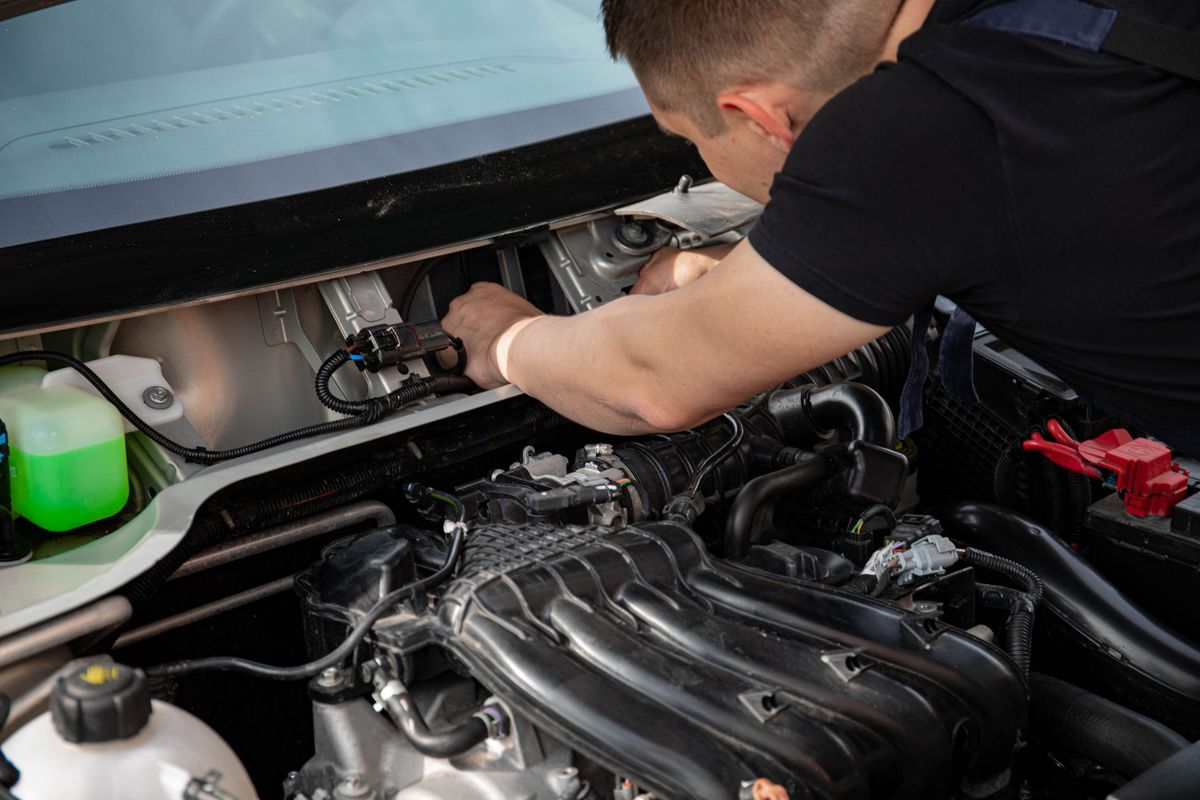
*Photo: Pexels*
exit may look close on a map but can be a mile or more on foot along a live highway.
The one exception: if you are physically safe, have a companion with you, the exit is visibly close, and you can access a frontage road or path completely off the highway, that is a judgment call. But if you are alone, it is dark, or there is any doubt, call for help and wait.
If you have no cell service, [this article on what to do when your car breaks down with no cell service on the highway](/car-broke-down-no-cell-service-on-highway-what-to-do/) walks through your options including using highway emergency call boxes, which are still present on many interstates spaced roughly one mile apart.
## What Happens After I Put Gas In, and Why Won't My Car Start?
Add fuel and wait 60 seconds before cranking the engine. On fuel-injected engines, the fuel pump needs to prime the lines before the engine will catch. Turn the key to the "on" position (not start), hold it for about 10 seconds, then try to start. Do this two or three times if it does not fire on the first attempt.
If the car still will not start after adding fuel, the likely culprit is a dry fuel pump. Running a tank completely empty can pull sediment into the pump or burn the pump motor due to lack of lubrication from the fuel itself. In that case, you will need a tow, not just a refill. This is more common in vehicles with higher mileage where the fuel pump was already showing wear. For a full breakdown of what happens mechanically when you run dry, [this article on why a car won't start after running out of gas](/car-wont-start-after-running-out-of-gas-what-is-wrong/) explains exactly what is happening and what it costs to fix.
---
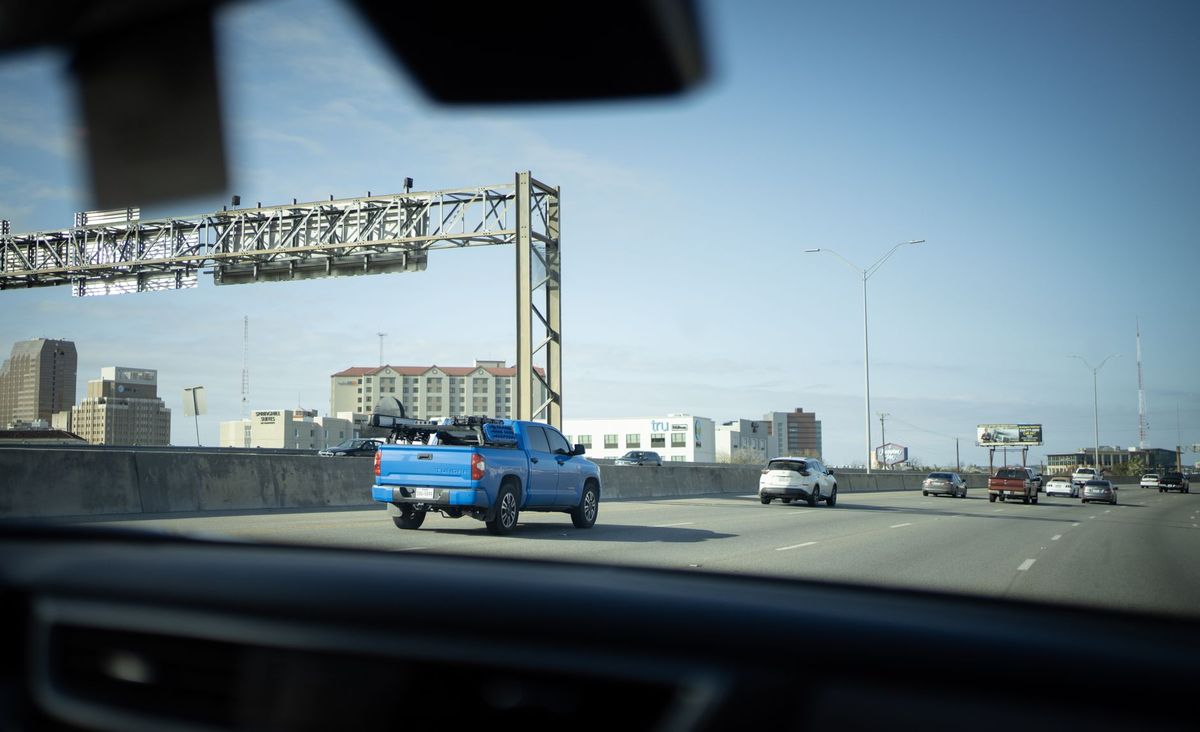
*Photo: Pexels*
## Common Questions
**Q: How much does it cost to get gas delivered on the freeway?**
A: Expect $50 to $100 from a private roadside service, which usually includes one to two gallons of fuel. AAA members get it covered at no extra charge per incident. Insurance roadside riders vary, so check your app.
**Q: Will a cop help me if I run out of gas on the freeway?**
A: A highway patrol officer who spots you will stop to check on you. They can radio for help and will often have flares or a push to a safer location, but they typically do not carry fuel. Do not count on a patrol car finding you. Call for help yourself.
**Q: Can running out of gas damage my car?**
A: It can. Running the tank dry pulls sediment from the bottom of the tank into the fuel pump and injectors. On a car with a worn pump, it can burn the pump motor out entirely. Even on a healthy car, you may need to crank it multiple times before it starts again.
**Q: What do I do if I run out of gas at night on the freeway?**
A: Same steps, but prioritize getting behind a barrier even more urgently. Make yourself visible: turn on hazards, and if you have road flares or a reflective triangle in your trunk, place them 100 to 200 feet behind your car. Stay off your phone screen while standing outside so your eyes adjust to oncoming headlights.
**Q: Does my car insurance cover running out of gas?**
A: Standard collision and comprehensive policies do not. Roadside assistance riders from State Farm, GEICO, and others often do cover fuel delivery, sometimes for free per incident. Check your insurer's app right now while you are waiting so you know before you call a private company.
---
*Need roadside help? Visit [Tow With The Flow](https://towwiththeflow.com/ran-out-of-gas-on-freeway-what-to-do/) for real answers when your car breaks down.*
Ran Out of Gas on the Freeway: What to Do Right Now
Photo: Pexels