Quick Answer: Your car still steers when power steering fails, but it takes much more muscle, especially below 15 mph. If the cause is a snapped belt or low fluid and you’re only a short, low-speed trip from home, you can often make it carefully. If the steering is grinding, the battery light is on, or you’d need a highway, call a tow.
Can I Still Steer My Car After Power Steering Fails?
Yes. Power steering only assists. The steering column is still mechanically connected to the wheels, so the car will turn, but it will feel like you’re wrestling a truck.
Here’s what to do in the first 30 seconds:
- Grip the wheel with both hands and keep it steady. Don’t jerk it.
- Slow down gradually. Effort is worst at parking-lot speeds and easiest at highway speeds.
- Turn on your hazards and signal early. Your turning radius will be slower than normal.
- Brake earlier than usual. If the belt that drives the steering pump also drives the water pump or alternator, you may be losing other systems too.
Pull off at the first safe spot. Don’t try to muscle through a tight turn in traffic.
Is It Safe to Drive Home With No Power Steering?
It’s safe only if the failure is minor and your route is short, slow, and simple. Whether it’s safe depends entirely on why the assist died, so check before you move.
Pop the hood and look for these:
- Snapped or missing serpentine belt. If the belt is gone, you’ve likely lost the alternator and possibly the water pump too. Don’t drive. See serpentine belt snapped while driving.
- Low or empty power steering fluid. Check the reservoir. If it’s dry and you see fluid dripping under the front of the car, the system has a leak.
- Whining or groaning noise right before it failed. That’s usually a pump starving for fluid.
- Battery or red warning light. On cars with electric power steering (most newer Hondas, Toyotas, Fords, and Chevys), a sudden loss of assist can come from a failing alternator or a fault in the steering rack’s motor. If the lights are dimming, treat it as an electrical failure. See alternator died while driving.
Drive it only if the belt is intact, the engine temperature is normal, no warning lights are on, and you can get home on slow streets without highways or sharp turns. If you’re unsure, tow it. A steering failure at speed costs far more than a tow.
Can I Add Power Steering Fluid and Keep Driving?
You can top it off, but only if the reservoir is low and you can see no active leak. Fluid is a short-term patch, not a fix.
Use the fluid type printed on the reservoir cap or in the owner’s manual. Some systems take dedicated power steering fluid, others take ATF, and some Hondas require their own specific fluid. Wrong fluid can swell the seals and make the leak worse.
After topping off, start the car and turn the wheel lock to lock a few times with the engi
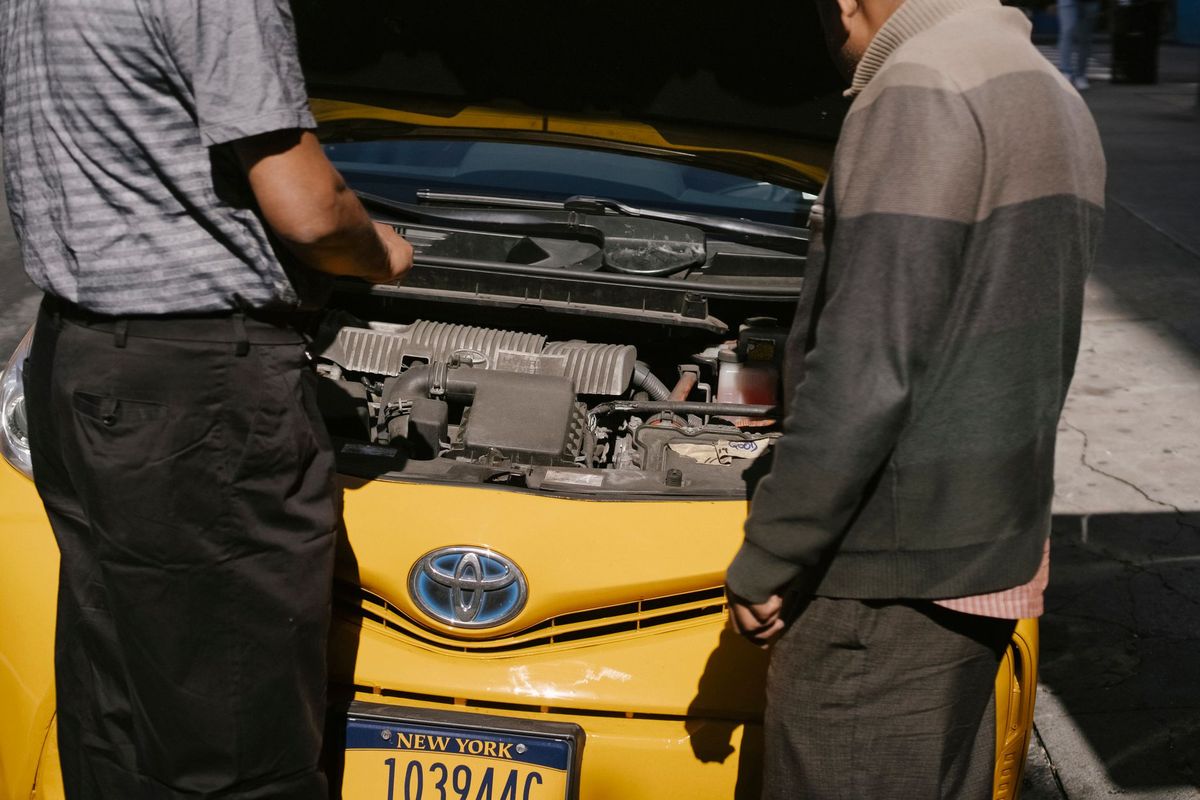 Photo: Pexels
ne running. If the assist comes back and the fluid level holds, you likely have a slow leak from a hose or the pump seal. Drive to a shop, check the level again halfway, and keep a bottle of the right fluid in the trunk.
If the fluid is dark, foamy, or smells burnt, or the assist doesn’t return, stop. The pump is probably damaged, and running it dry will finish it off. Foamy fluid means air is getting into the system, often from a loose hose clamp or a failing pump.
When Do I Need a Tow Instead of Driving?
Call for a tow if you’d have to merge onto a highway, make sharp turns, drive through hills, or if the steering is binding, clunking, or grinding. A grinding rack can seize, and a seized steering system at 40 mph is a crash.
Also tow if the belt is shredded, the car is overheating, or the steering suddenly went heavy without any warning sound, which can point to electric power steering motor failure or a lost steering angle sensor.
Expect a local tow to run roughly $75 to $150 for the first few miles in most metro areas, more at night or on the interstate. A pump replacement typically runs several hundred dollars installed. A steering rack replacement costs more, often well into four figures depending on the vehicle. A tow is cheap next to a collision. If you’re stuck on a fast road, see car died on highway shoulder, is it safe to wait for a tow truck and call 911 if you can’t get clear of traffic.
 Photo: Pexels
Common Questions
Q: Can you drive a car with no power steering? A: Yes, for a short distance at moderate speed, but steering effort is much higher, especially at low speeds and in tight turns. Only do it if the cause is minor and the route is simple.
Q: Why did my power steering suddenly stop working? A: The most common causes are a snapped serpentine belt, a leaking hose or low fluid, a failing pump, or on newer cars a fault in the electric steering motor or a weak alternator. A sudden loss with warning lights points to an electrical or belt problem.
Q: How far can I drive with a power steering leak? A: If you’ve topped off the right fluid and the level holds, a few miles to a shop is usually fine. If it’s losing fluid quickly or whining, the pump can burn out fast, so don’t push it.
Q: Is it safe to drive on the highway without power steering? A: It’s not recommended. Steering is lighter at speed, but a sudden evasive move is much harder, and the underlying failure may spread. Take surface streets or tow it.
Q: Will my car steering lock up if power steering fails? A: Not from losing assist alone. The wheel gets heavy, but it still turns. It can lock up only if the pump seizes or a rack component fails mechanically, which is why grinding noises mean stop immediately.
Need roadside help? Visit Tow With The Flow for real answers when your car breaks down.