> **Quick Answer:** Your car needs a flatbed if all four wheels cannot roll freely, if the drivetrain is damaged, or if the vehicle is all-wheel drive or four-wheel drive. Also use a flatbed for low-clearance cars, vehicles with front-end damage, cars that are stuck in a ditch, or any situation where lifting just the front or rear wheels would cause further damage.
## What Situations Absolutely Require a Flatbed Tow?
A flatbed is required any time the car cannot be safely towed with two wheels on the ground. That covers more situations than most people expect.
Here are the hard rules:
- **All-wheel drive (AWD) and four-wheel drive (4WD) vehicles.** Towing these with a standard hook-and-chain or wheel-lift rig, even on just two wheels, spins the driveshaft and can destroy the transfer case and differentials. This is the most commonly ignored rule and the most expensive mistake.
- **Rear-wheel drive cars with a dead rear axle or locked-up differential.** If the rear wheels won't spin, a wheel-lift tow dragging them will chew up the brake rotors, tires, and axle seals.
- **Front-end collision damage.** If the front subframe, control arms, or steering components are bent or broken, lifting the front end puts stress on parts that are no longer structurally sound.
- **Vehicles with the engine or transmission seized.** Seized engines lock up the drivetrain. Rolling any set of wheels feeds torque back into the damage.
- **Low-clearance cars.** Sports cars, modified vehicles, and many European sedans sit too low for a wheel-lift truck to get under safely without scraping.
If you [blew a tire on the freeway](/tire-blew-out-on-freeway-car-wont-move-who-do-i-call/) and the rim is collapsed or digging into the fender, that car needs a flatbed too. Dragging a destroyed wheel will ruin the rotor and wheel well in under a mile.
## Does Drivetrain Type Actually Matter That Much?
Yes, and this is the one that catches drivers off guard most often. If you drive an AWD crossover or SUV, assume you need a flatbed. Full stop.
In a standard AWD system, the front and rear axles are mechanically linked through the transfer case. When a wheel-lift truck picks up the front end and drags the rear wheels on the pavement, those rear wheels are still turning the driveshaft, which is still turning the transfer case and front differential. Without engine oil pressure and normal operating lubrication running through those components, you can burn out a transfer case in a few miles. Rebuild cost: $1,500 to $4,000 depending on the vehicle. A flatbed tow: $100 to $200 in most markets.
When you call for a tow, tell the dispatcher your drivetrain type immediately. Do not wait for the driver to show up and figure it out.
## What If My Car Is Stuck in a Ditch or on Its Side?
Ditch recoveries and rollovers almost always need a flatbed, plus winching equipment. A standard wheel-lift truck has no way to safely extract a car that is at a sharp angle, buried in mud, or resting against a guardrail.
Winching pulls the vehicle back onto a surface where it can be loaded. Once it is on level ground, the driver assesses whether the wheels roll freely. If they do not, the car goes on the flatbed. If you are dealing with a [car stuck in a snow ditch in a situation like Denver winter roads](/car-stuck-in-snow-ditch-denver-how-to-get-towed/), the ground itself may be too unstable for a wheel-lift recovery without spinning the tires and making the situation worse.
Specific detail that matters here: if your car is hung up on a curb or berm with the frame resting on the obstruction and the wheels off the ground, a wheel-lift truck literally has nothing to grab. You need a flatbed with a slide deck or a recovery truck with a boom.
## Can I Tell by Looking Whether I Need a Flatbed?
Most of the time, yes. Walk around the car and check these th
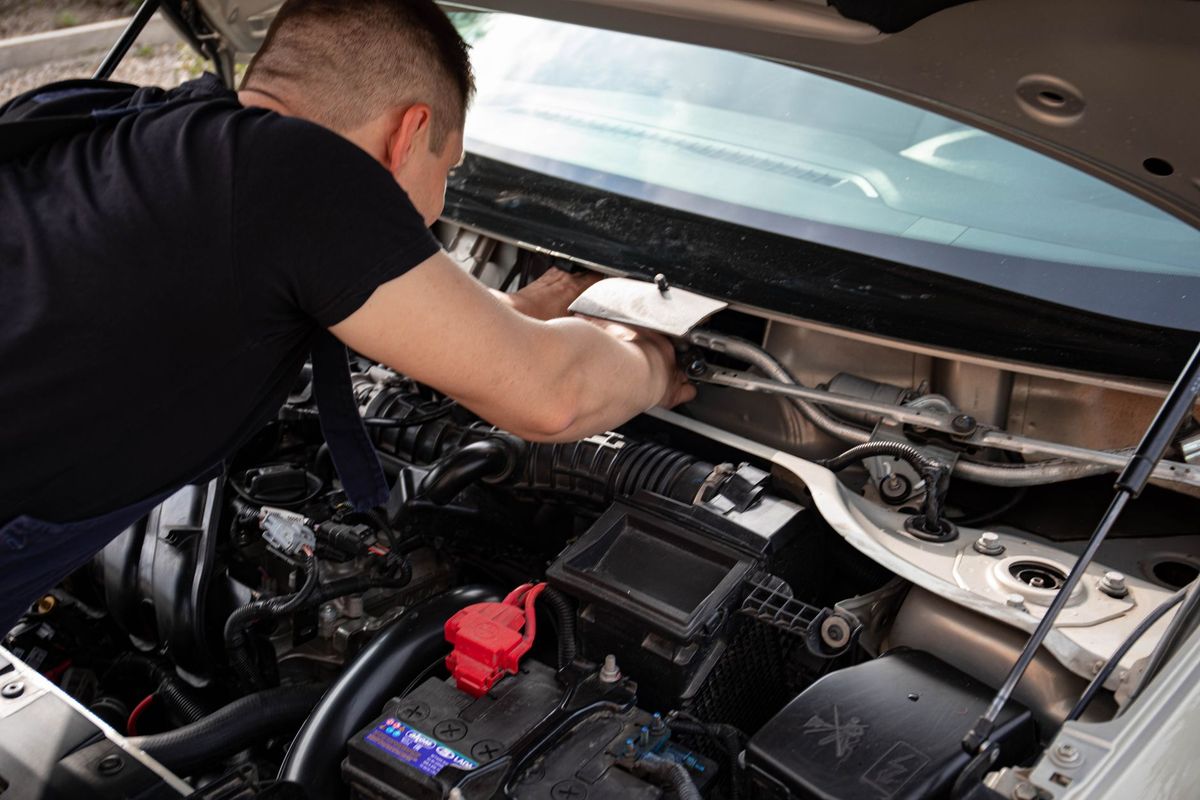
*Photo: Pexels*
ings before you call:
1. **Do all four wheels spin freely when you push the car?** If any wheel drags, locks, or grinds, you need a flatbed.
2. **Is there fluid pooling under the engine or transmission?** A severe transmission leak can mean internal damage that makes towing on two wheels risky.
3. **Is the car sitting at an unusual angle?** A collapsed suspension corner means that corner's wheel is not aligned properly and will not roll without causing more damage.
4. **Is there impact damage to the front or rear that affects the frame?** If the bumper is pushed into the wheel well, the geometry of that axle is compromised.
5. **What is your drivetrain?** Check the badge on the car if you are unsure. Words like "Quattro," "xDrive," "SH-AWD," "4MATIC," or "e-FOUR" all mean AWD. Assume flatbed required.
If your [serpentine belt snapped](/car-serpentine-belt-snapped-can-i-drive/) and the engine turned off on the highway, that is one situation where a standard wheel-lift tow is often fine, as long as the drivetrain type allows it and no other damage occurred. Broken belt does not lock up the drivetrain the way a seized engine does.
## Will My Insurance or Roadside Assistance Pay for a Flatbed Instead of a Standard Tow?
Many policies will pay for whatever tow gets the car to the shop, but some roadside assistance plans only reimburse up to a flat dollar amount, and flatbeds cost more. Know your ceiling before the truck arrives.
Standard wheel-lift tows typically run $75 to $125 for a local haul. Flatbeds run $100 to $200 for the same distance, sometimes more for heavy vehicles or difficult recoveries. If your roadside assistance caps reimbursement at $100, you may owe the difference out of pocket.
Tell the dispatcher specifically that you need a flatbed and why. If the driver shows up with a wheel-lift and your car is AWD, you have every right to send them back and request the correct equipment. Do not let a driver talk you into a wheel-lift tow on an AWD vehicle to save time or because they think it will be fine.
---
*Photo: Pexels*
## Common Questions
**Q: My car is AWD but just has a dead battery. Does it still need a flatbed?**
A: Yes. A dead battery does not change your drivetrain type. The mechanical link between all four axles is still there, and towing on two wheels still risks transfer case damage. Get a flatbed.
**Q: What if the tow company only has wheel-lift trucks available right now?**
A: Ask them to dispatch a flatbed specifically, even if the wait is longer. For most AWD vehicles and any car with drivetrain or front-end damage, the extra wait is worth it. A damaged transfer case will cost you far more than a delayed tow.
**Q: Is a flatbed tow harder to get at night or on weekends?**
A: Sometimes. Flatbed availability drops during off-hours in some markets. Call ahead, be explicit about your vehicle type and the damage, and ask for an estimated arrival time before you commit to a company.
**Q: My car has rear-wheel drive and just has a flat tire. Do I need a flatbed?**
A: Not necessarily, if the wheel-lift picks up the front (non-drive) end and the flat tire is at the rear. But if the rim is destroyed or the wheel is locked, you need a flatbed. If you have [a flat with no spare](/flat-tire-no-spare-what-are-my-options/), confirm with the dispatcher what equipment will be sent before the truck rolls.
**Q: Does a flatbed tow cost more, and will insurance cover the difference?**
A: Flatbeds typically cost $25 to $75 more than a wheel-lift for a local tow. Most comprehensive roadside assistance plans cover it, but reimbursement-based plans may cap the total. Call your insurer while you wait for the truck and ask what they will pay.
---
*Need roadside help? Visit [Tow With The Flow](https://towwiththeflow.com/how-do-i-know-if-my-car-needs-a-flatbed-tow/) for real answers when your car breaks down.*
How Do I Know If My Car Needs a Flatbed Tow: The Honest Answer
Photo: Pexels