> **Quick Answer:** A knocking engine at highway speed almost always means pull over now. The two likeliest causes are low oil pressure or rod knock, and either one can seize your engine within minutes of continued driving. Kill the throttle, coast to the shoulder safely, shut it off, and call for a tow. Do not restart and drive. The repair bill for a seized engine is four to ten times the cost of a tow.
## What Does That Knocking Sound Actually Mean?
A rhythmic knock that gets louder or faster as engine RPM climbs is almost certainly mechanical, not electrical or exhaust. The two most common sources are a spun or worn rod bearing (rod knock) and piston slap, both of which mean metal-on-metal contact inside your engine. A rod bearing knock sounds like a deep, heavy thud that follows the engine's firing rhythm. Piston slap is a lighter, hollow clatter that often quiets once the engine warms up. Rod knock does not quiet down. It gets worse.
A third cause worth ruling out immediately: low oil pressure. If your oil pressure warning light is on alongside the knock, that is a five-alarm emergency. [Driving with a low oil pressure warning is one of the fastest ways to total an engine.](/oil-pressure-warning-light-came-on-driving-what-to-do/) Pull over and stop the engine.
## Can I Drive It to the Nearest Exit or Do I Need to Stop Right Now?
Stop now if any of these are true: the oil pressure light is on, the knocking gets louder when you accelerate, the noise started suddenly rather than building over days, or you smell burning oil. Any one of those conditions means the engine is failing in real time, and every mile adds damage.
The only scenario where limping a short distance is defensible: the knock is faint, it has been present for days and not changed, the oil level is full, oil pressure reads normal, and the nearest exit is less than a mile away. Even then, keep RPMs low, watch that oil pressure gauge, and stop the moment anything changes. You are gambling, not driving safely.
## What Do I Do Right Now If I'm Still on the Highway?
Signal, reduce speed gradually, and get to the right shoulder. Do not brake hard. Once stopped, turn off the engine immediately. Do not restart it to "check if it's still making the noise." Every restart risks a catastrophic failure.
Put on your hazard lights. If you have reflective triangles or road flares, set them 100 to 300 feet behind the car. Stay in the car with your seatbelt on if traffic is heavy. If the shoulder is narrow or you are on a bridge, get the guardrail between you and traffic. Then call for a tow. For more detail on staying safe while you wait, [this guide on highway breakdown safety at night covers the specifics.](/how-to-stay-safe-broken-down-on-highway-at-night/)
You will want a flatbed if possible, especially for front-wheel-drive and all-wheel-drive vehicles. A flatbed keeps the drivetrain off the ground and avoids adding any stress to an already compromised engine.
## How Much Damage Am I Looking At If I Kept Driving?
If yo
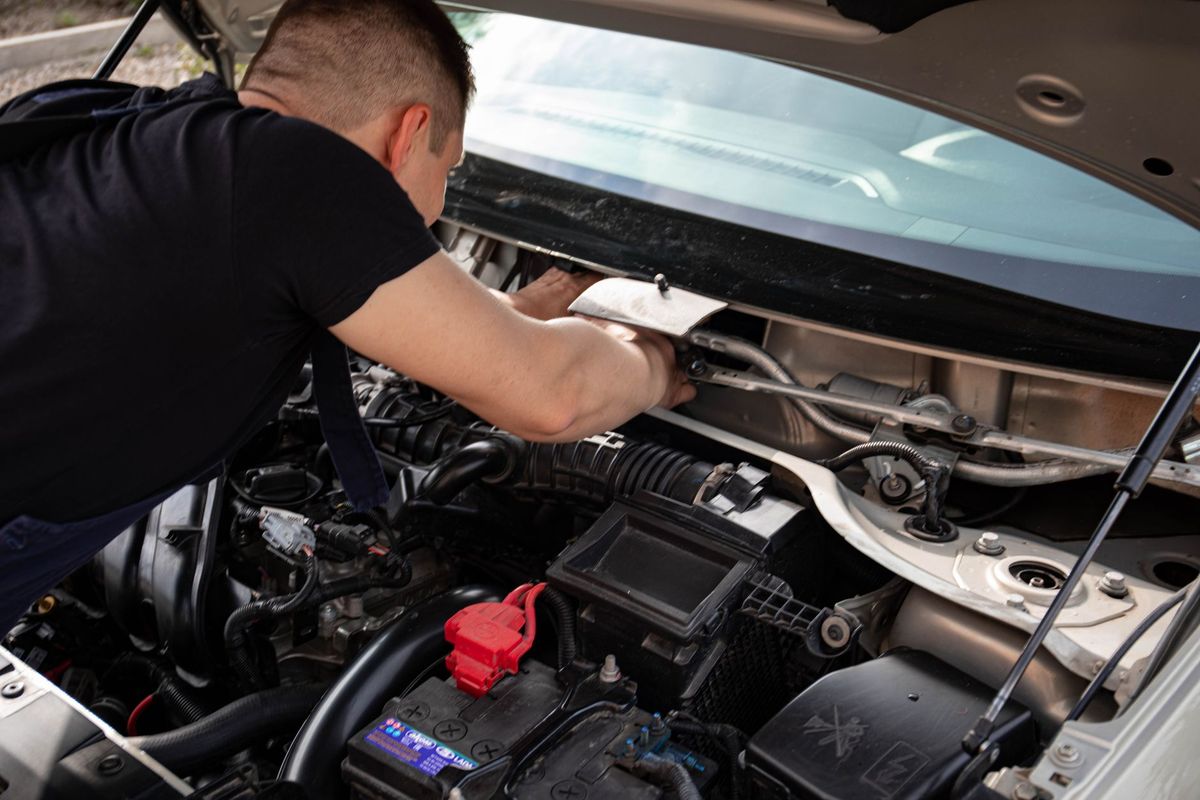
*Photo: Pexels*
u caught it early, you might be looking at a rod bearing replacement, which runs $500 to $1,500 depending on how many bearings are affected and the labor rate in your area. If you drove on it until the engine seized, you are looking at a short block or full engine replacement. That is $3,000 to $8,000 or more for most vehicles, and some turbocharged or performance engines go higher.
The math is not close. A tow in most cities runs $75 to $200. An engine is 20 to 50 times that cost. The knocking is telling you something is already wrong. Continued driving turns a fixable problem into a totaled engine.
If you have roadside assistance through your insurer or AAA, call them first. [Check whether your policy actually covers the tow cost](/does-insurance-cover-towing-if-car-breaks-down-not-accident/) before you call a private tow company, because the coverage difference can be significant.
*Photo: Pexels*
## Common Questions
**Q: Is engine knocking always serious or can it just be bad gas?**
A: Spark knock or ping from low-octane fuel is a lighter, metallic rattle under load that usually stops when you ease off the throttle. True rod knock or bearing knock is a deep, repetitive thud that follows engine RPM and does not stop when you lift off the gas. If you are not sure which you have at highway speed, treat it as serious and pull over.
**Q: Can I add oil to fix the knocking and drive home?**
A: If the knock is caused by low oil and you catch it before any bearing damage, adding oil can stop it. But if the knock persists after you bring the oil level up, the bearing surface is already damaged and driving will finish it off. Check the dipstick first. If the oil level is fine and it still knocks, do not drive it.
**Q: What happens if I ignore engine knocking and keep driving?**
A: A connecting rod will eventually break through the engine block, an event called throwing a rod. At highway speed this can mean a hole in the block, an oil fire, or sudden loss of power with no warning. The engine is destroyed and the car becomes unsafe to control.
**Q: Will my insurance cover the tow if the engine is knocking?**
A: If you have roadside assistance as an add-on or through a membership like AAA, the tow itself is typically covered regardless of the breakdown cause. The engine repair is a mechanical failure and is not covered by standard auto insurance, only by an extended warranty or mechanical breakdown insurance if you have one.
**Q: Should I get the car towed to a dealer or an independent shop?**
A: Either can diagnose it, but an independent shop with a strong reputation for engine work will often charge less labor and be just as qualified. Get the car somewhere with a mechanic who can do a compression test and oil pressure test before any teardown. A diagnosis first tells you whether you are dealing with a bearing job or a full replacement.
---
*Need roadside help? Visit [Tow With The Flow](https://towwiththeflow.com/engine-knocking-noise-highway-speed-tow-or-drive/) for real answers when your car breaks down.*
Engine Making Knocking Noise at Highway Speed: Tow or Drive?

Photo: Pexels