
Quick Answer: If coolant is leaking fast, do not drive to the mechanic. A fast leak can empty the system in minutes, and an engine running without coolant can warp the cylinder head or blow the head gasket. Pull over, shut it off, and call a tow. The only exception is a mechanic within a few hundred yards, with the temp gauge staying in the normal range the whole way.
Can I Drive My Car If Coolant Is Leaking Fast?
No. A fast leak means the system is draining while you drive, and the engine will overheat long before you reach a shop unless it’s practically next door.
Most cooling systems hold around 1.5 to 3 gallons. Once the level drops enough, the water pump circulates air instead of liquid and the engine temperature spikes. Aluminum cylinder heads, which most modern engines use, can warp within a few minutes of serious overheating. That turns a $150 hose repair into a head gasket job or a replacement engine.
Watch the temperature gauge, not the distance. If the needle moves past the middle, or you see steam, smell something sweet, or get a warning light, shut the engine off immediately.
What Do I Do Right Now If I See Coolant Leaking?
Get off the road, shut the engine off, and stay away from the radiator cap. Do this before anything else.
- Signal and pull to the shoulder or the nearest parking lot. Do not stop in a travel lane.
- Turn the engine off. Turn on your hazards.
- Do not open the hood right away if you see steam. Wait at least 20 to 30 minutes.
- Never open the radiator cap or coolant reservoir cap on a hot engine. The system runs under pressure, and the spray can cause serious burns.
- Look under the car. A puddle of green, orange, pink, or yellow fluid with a sweet smell is coolant. A steady drip or stream means a fast leak.
If you’re on a highway, get everyone out of the car and away from traffic if the shoulder is narrow. Our guide on how to wait safely when a car dies on the highway shoulder covers where to stand and what to do while you wait.
Can I Just Add Water or Coolant and Keep Going?
Only if the leak is slow, and even then it’s a stopgap. If the coolant is pouring out, topping off just feeds the leak and you’ll overheat again within minutes.
Here’s how to tell the difference. After the engine has fully cooled, add coolant or plain water to the reservoir, start the car, and watch under it. If fluid hits the ground within a minute or so, the leak is too big to drive on. A burst hose, cracked radiator tank, or failed water pump will do exactly this.
If the leak is a slow seep, such as a weeping hose clamp, you may be able to top off and drive a short distance to a shop while watching the gauge. Pull over the moment it climbs.
Skip the stop-leak additives from the parts store in an emergency. They rarely seal a fast leak and can clog the heater core and radiator passages.
A hose that failed outright is the most common cause of a sudden, heavy leak. See radiator hose burst while driving for how to conf
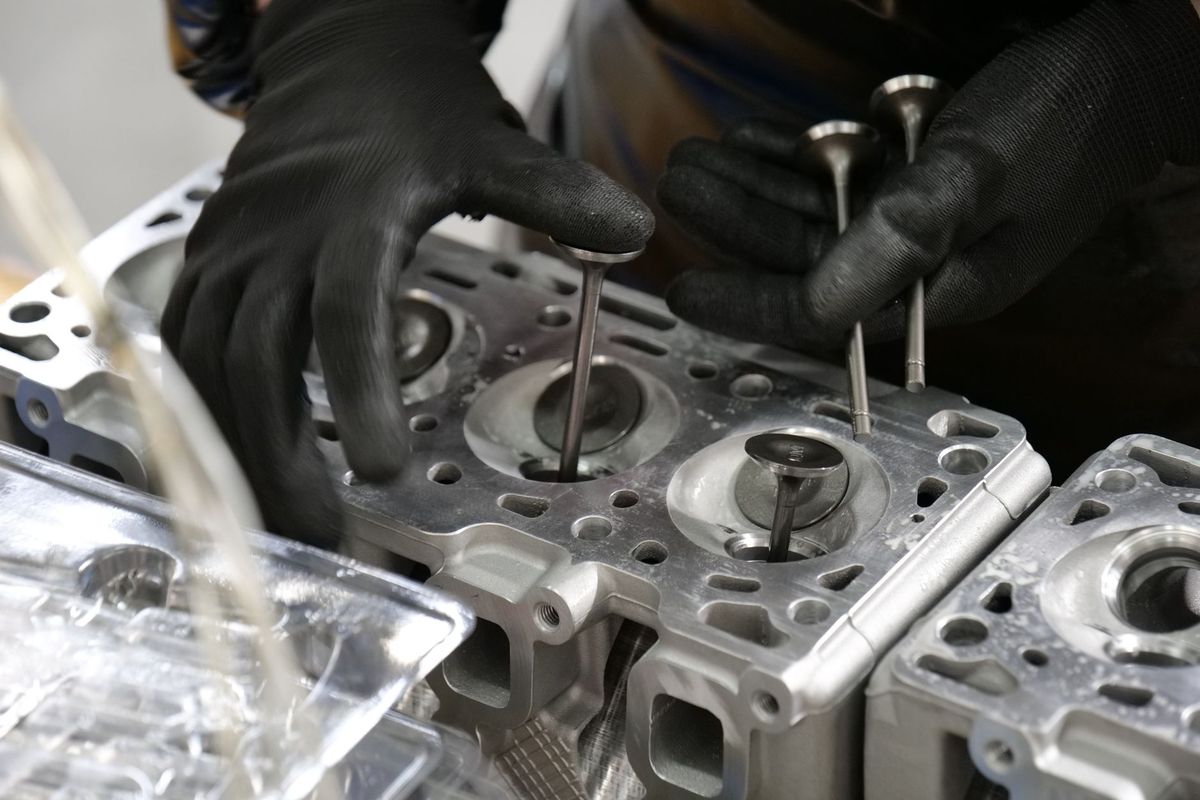 Photo: Pexels
irm it and what the repair involves.
How Far Can I Drive Before the Engine Is Damaged?
There’s no safe number of miles, because it depends on how fast the coolant is escaping and how hot the engine runs. With a heavy leak, serious damage can start in a few minutes of driving.
Damage often starts when you keep driving past the first warning sign. The gauge climbs, the car loses power, and a lot of drivers push on hoping to make the exit. That’s the mistake that kills engines. If you see the temperature gauge rise toward hot, you’ve already used up your margin.
One more sign to know: if the engine starts knocking, loses power, or white smoke pours from the tailpipe, the engine is already damaged. Stop driving. If steam or smoke is coming from under the hood, follow the steps in smoke coming from under the hood while driving.
Should I Tow It, and What Will It Cost?
Yes, tow it. A tow typically runs $75 to $150 for the first several miles plus a per-mile charge after that, and it costs far less than an engine repair.
Check whether your insurance or credit card includes roadside coverage before paying out of pocket. Call your insurer or use the app, since many policies include towing at no cost or a reduced rate. If you have a membership like AAA, use it.
Ask the dispatcher for a flatbed if one is available. Towing an overheated car by its drive wheels on a wheel-lift adds stress to a vehicle that’s already compromised. If the wait is long, see what to do when the tow truck is taking too long.
 Photo: Pexels
Common Questions
Q: Can I drive with the heater on high to cool the engine? A: That trick can pull a little heat from the engine and buy you a minute or two, but it won’t fix a fast leak. Once the coolant is gone, it won’t save the engine. Pull over.
Q: How do I know if the coolant leak is from the radiator or the water pump? A: A leak at the front of the car, under the radiator, points to the radiator or a hose. A leak near the belt side of the engine, often with a squealing or grinding noise, points to the water pump. A mechanic can pressure-test the system to confirm.
Q: Is it safe to touch coolant that leaked on the ground? A: Avoid it. Coolant is toxic to people and pets, and the sweet taste attracts animals. Keep pets away and wash your hands if you touch it.
Q: What if my car overheated but the coolant level looks fine? A: Low coolant isn’t the only cause. A stuck thermostat, failed fan, or clogged radiator can overheat the engine with a full reservoir. Don’t keep driving; have it inspected.
Q: Can a coolant leak mean a blown head gasket? A: It can. Coolant disappearing with no puddle, white exhaust smoke, or milky oil all point inside the engine. See blown head gasket symptoms for what to check.
Need roadside help? Visit Tow With The Flow for real answers when your car breaks down.