> **Quick Answer:** Yes, pull over now. A flashing check engine light is not the same as a steady one. It means your engine is actively misfiring and dumping raw fuel into your catalytic converter. Keep driving and you risk destroying a $1,500+ part in minutes, or causing a fire. Get off the road, shut the engine off, and call for help.
## Should I Pull Over Right Now If My Check Engine Light Is Flashing?
Pull over as soon as it is safe to do so. A flashing check engine light signals an active engine misfire, which means unburned fuel is passing through the combustion chamber and into the exhaust system. That fuel hits the hot catalytic converter and can melt its internal honeycomb structure, which is expensive, or ignite it, which is dangerous. A steady check engine light can often wait until morning. A flashing one cannot.
Once you are safely off the road, shut the engine off. Do not restart it and try to limp to a shop. Every minute you run that engine in misfire is more damage.
## What Is Actually Happening Inside the Engine When the Light Flashes?
One or more cylinders are misfiring, meaning the air-fuel mixture is not igniting the way it should. The most common causes are a failed ignition coil, a fouled or cracked spark plug, or a failing fuel injector. On many modern engines, particularly four-cylinders, a single dead coil-on-plug unit will cause the entire engine to shudder noticeably. If your car is also shaking or vibrating hard, that shaking is the misfiring cylinder. The two problems together are a clear signal to stop immediately. More on that scenario here: [Check Engine Light Flashing and Car Shaking: What to Do Right Now](/check-engine-light-flashing-car-shaking-emergency/).
## How Do I Know If I Need a Tow or Can I Drive to the Shop?
If the light is flashing, you need a tow. Do not drive it. The moment the light goes from flashing back to steady, the misfire has stopped and you may be able to drive carefully to a nearby shop at low speed, but only if no other warning lights are active and the car feels normal. If the oil pressure light or temperature gauge is also acting up, treat that as a second emergency on top of the first. A misfiring engine that is also overheating or losing oil pressure needs to stop immediately. See [Engine Oil Pressure Warning Light Came On While Driving](/engine-oil-pressure-warning-light-came-on-while-driving/) for what that combination means.
While you wait for the tow, do not run the engine to keep the heat or AC on. If it is dangerously hot or cold outside, run the engine for a few minutes, then shut it back off.
## Where Should I Pull Over and How Do I Stay Safe?
Get as far right as possible, past the fog line and onto the shoulder if you are on a highway. Turn on your hazard lights the moment you decide to pull over, not after you stop. If you have road flares or reflective triangles, place them 100 to 300 feet behind the car. Stay out of the vehicle if you are on a high-speed road and there is a barrier or guardrail you can
*Photo: Pexels*
stand behind. If you are on a surface street, pull into a parking lot or side street. Sitting in a stopped car on the shoulder of an interstate is genuinely dangerous. Get out and get behind the barrier if one is available.
If you break down at night, keep your dome light on so rescuers and other drivers can see you are in the car. [Car Broke Down on Highway at Night](/car-broke-down-on-highway-at-night-safety-tips/) covers the full safety protocol for that situation.
## What Does the Tow Truck Driver Need to Know?
Tell the dispatcher the light is flashing and the car is not driveable. That tells them to send a flatbed rather than a wheel-lift, especially if your car is all-wheel drive or has low ground clearance. A flatbed is always the right call when you have an unknown engine fault, because a wheel-lift tow of a car with a drivetrain problem can cause additional damage. Give them your exact location: mile marker if you are on a highway, or the nearest cross street. If you have roadside assistance through your insurance, check your policy's tow distance limit before you choose a shop. Policies vary significantly on how far they will cover. [GEICO Roadside Assistance Towing Distance Limit](/geico-roadside-assistance-towing-distance-limit/) is a good example of what those limits look like.
---
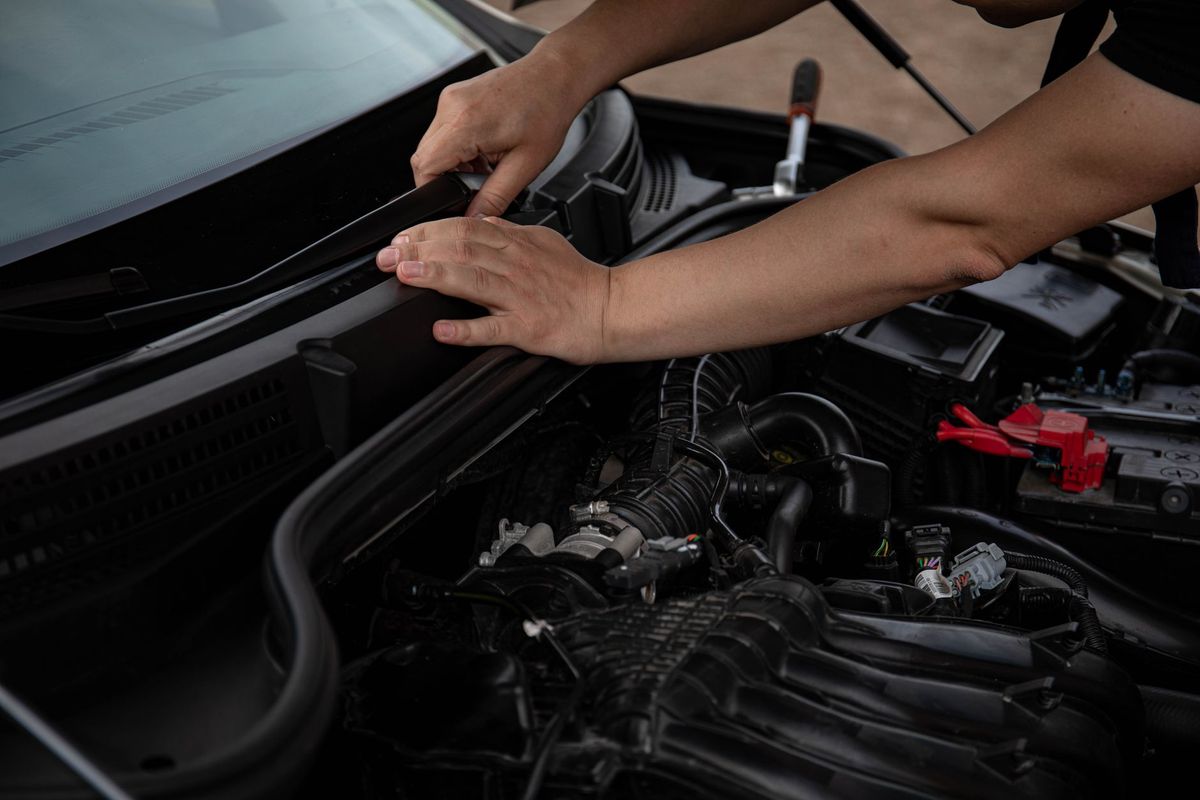
*Photo: Pexels*
## Common Questions
**Q: Can I drive a mile or two with the check engine light flashing?**
A: No. Even a short distance can melt the catalytic converter substrate or crack an exhaust manifold. The repair cost of driving on a flashing check engine light almost always exceeds the cost of a tow.
**Q: What causes a check engine light to flash instead of staying solid?**
A: A flashing light specifically means an active misfire. Common causes are a failed ignition coil, a fouled spark plug, or a stuck-open fuel injector. A steady light covers hundreds of other fault codes, most of which are not immediate emergencies.
**Q: Will the check engine light go away on its own if I stop driving?**
A: Sometimes the flashing stops after the misfire clears, and the light may go steady or turn off. That does not mean the problem is fixed. The fault code is still stored in the ECU and the underlying cause is still there.
**Q: How much does it cost to fix a misfiring engine?**
A: Ignition coil replacement runs $150 to $350 per coil at a shop. Spark plugs are cheaper, usually $100 to $250 for a full set with labor. A catalytic converter damaged by a prolonged misfire can cost $800 to $2,000 or more depending on the car.
**Q: Is a flashing check engine light covered by roadside assistance?**
A: Roadside assistance covers the tow, not the repair. If your policy includes towing, they will get the car to a shop. What the shop finds and fixes is a separate bill, covered only if you have mechanical breakdown insurance or an extended warranty.
---
*Need roadside help? Visit [Tow With The Flow](https://towwiththeflow.com/check-engine-light-flashing-should-i-pull-over-now/) for real answers when your car breaks down.*
Check Engine Light Flashing: Should I Pull Over Now?
Photo: Pexels