
Quick Answer: Mechanically, yes. A car with no catalytic converter usually starts and runs. But it will be extremely loud, throw a check engine light, and can leak exhaust fumes near the cabin. If the cut was messy, the exhaust is hanging, or you smell fumes inside, don’t drive it. Tow it. Short, careful drive to a shop is the only exception.
Can I Still Drive My Car With the Catalytic Converter Gone?
You can, but you probably shouldn’t go far. The engine does not need the converter to run, so the car will likely start and move. What changes is everything around it: noise, emissions, and exhaust safety.
Thieves cut the converter out with a reciprocating saw, usually in under two minutes. The cut leaves open pipe ends. Exhaust gas now exits under the car instead of at the tailpipe, so it can get pulled toward the cabin through floor gaps and vents, especially at low speed or in traffic. Carbon monoxide is odorless. That’s the real danger, not the noise.
Your car will also sound like a race car or a diesel truck, and you’ll get a check engine light from the downstream oxygen sensor reading the missing converter.
How Do I Know If It’s Safe to Drive Right Now?
Do a quick check before you move: if any of these are true, call for a tow.
- You smell exhaust inside the car, or feel dizzy, headachy, or drowsy. Open windows, get out, and get fresh air.
- Pipe is hanging, dragging, or sparking. Look underneath. A cut often leaves a loose section of pipe and heat shields rattling free.
- Wires are dangling. Thieves often slice the oxygen sensor wiring. Loose wires near hot pipe can melt or short.
- The car runs rough, stalls, or loses power on top of the noise.
- You drive a hybrid. Many hybrids, including Toyota Prius models, are heavy theft targets, and damage can extend to sensors and wiring.
If none of those apply, the pipe is secure, and the cabin is clean, a short drive straight to a muffler or exhaust shop is reasonable. Keep the windows cracked and skip highway speeds. Never sit idling in a closed garage or parked in traffic with the cabin sealed.
Can a Missing Catalytic Converter Damage My Engine?
Not immediately, but it can over time. A short trip won’t wreck anything. The risk is in the details.
Without the converter, backpressure drops and the engine computer may run richer than it should. Some cars drop into limp mode. Driving for weeks this way can foul oxygen sensors and wear other exhaust components. The bigger practical problem is legal: driving without a converter fails emissions testing and is illegal for road use in the United States under federal rules, and in many states a failed inspection blocks registration renewal.
So treat the drive as a one-way trip to a repair shop, not daily transportation.
What Should I Do Right After Finding It’s Stolen?
Call the police and file a report first, then your insurance company. You
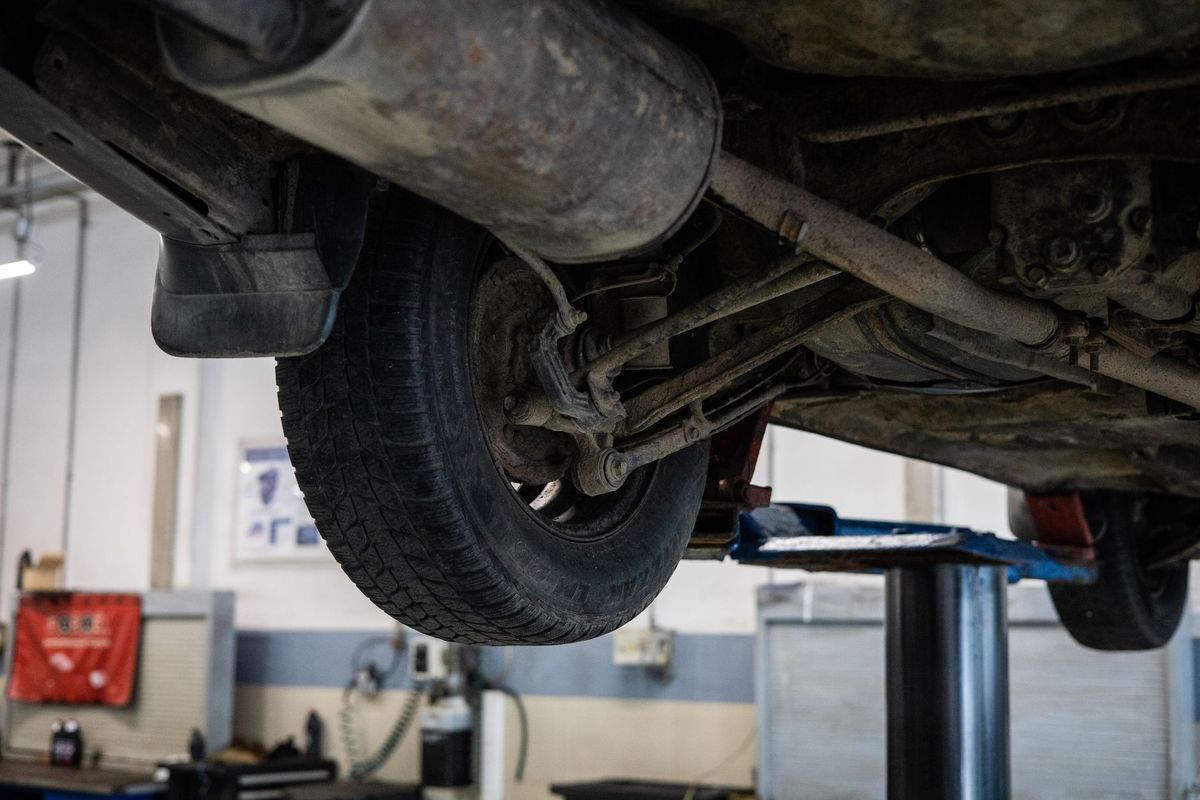 Photo: Pexels
need the police report for the claim, and a stolen converter is generally covered under comprehensive coverage, not collision. Take photos of the cut pipe from underneath before anything gets moved.
Then decide drive or tow. If your insurance includes roadside assistance, the tow may already be covered. How far insurance will tow your car after a breakdown depends on your plan, and what roadside assistance does and doesn’t cover is worth knowing before you pay out of pocket.
Ask the shop whether they can get you a quote before you authorize anything. Prices vary by vehicle. A converter replacement on a common sedan can run from several hundred dollars to well over a thousand. Hybrids and trucks with multiple converters cost more. Don’t accept a straight “delete” pipe. It’s illegal and won’t pass inspection.
Should I Tow It or Drive It to the Shop?
Tow it if the car is unsafe, the shop is far, or you have to take the highway to get there. A tow costs far less than a CO exposure or a roadside breakdown with a hanging pipe.
If you do need a tow and your car is low to the ground, ask for a flatbed. Here’s a quick checklist for whether you need a flatbed. A cut exhaust can drag on a wheel-lift setup.
If you decide to drive and something goes wrong, pull over fast. What to do if your car dies or smokes on the highway applies here too.
 Photo: Pexels
Common Questions
Q: How loud is a car with no catalytic converter? A: Very. Expect a harsh, roaring exhaust note similar to a straight-pipe setup, especially on acceleration. It’s usually loud enough to draw attention and complaints from neighbors.
Q: Will the check engine light come on if my catalytic converter is stolen? A: Almost always. The downstream oxygen sensor reads the exhaust differently without the converter and triggers the light, often with a P0420-type efficiency code.
Q: Does car insurance cover a stolen catalytic converter? A: Usually, if you carry comprehensive coverage. Liability-only policies don’t. You’ll typically need a police report and may owe your deductible.
Q: Can I just drive it for a few weeks until I can afford a new one? A: It’s not a good idea. You risk fumes in the cabin, a failed inspection, possible fines, and damage to sensors. Get a quote and ask about payment options instead.
Q: Can thieves steal another one right after I replace it? A: Yes, it happens. Ask the shop about a shield or cage, etching your VIN on the new converter, and parking in lit, busy spots or a garage.
Need roadside help? Visit Tow With The Flow for real answers when your car breaks down.