> **Quick Answer:** Try a jump start first. Cold weather is the number one battery killer, and most no-start situations in freezing temps are a dead or weak battery, not a catastrophic mechanical failure. If the engine cranks slowly and then catches, jump it. If it cranks hard and still won't fire, clicks once, or is completely silent, you likely need a tow to a shop for diagnosis.
## Should I Try to Jump Start It or Just Call a Tow Truck?
Jump start it first, unless you have a clear reason not to. A battery loses roughly half its cranking power at 0°F compared to 80°F, so a battery that was borderline all fall will fail completely on the first genuinely cold morning. That is not a mechanical failure requiring a shop visit. That is a battery problem, and jumper cables or a portable jump starter will get you running in under ten minutes.
Call a tow if you hear a single loud click with no crank, no sound at all when you turn the key, or if the engine cranks normally but won't fire and smells like it's flooded. Those symptoms point past the battery to a starter, alternator, fuel system, or engine issue that a jump won't fix.
## What Are the Signs My Cold-Weather No-Start Is a Battery and Not Something Worse?
A slow, labored crank that sounds like the engine is turning through mud is almost always a battery. So is a dash that lights up but an engine that does nothing when you turn the key. If your interior lights dim noticeably when you try to start, that confirms the battery is the weak point.
Compare that to a normal-speed crank that just never fires. That points to fuel delivery, a bad crankshaft position sensor, or a flooded engine. In below-freezing temps, fuel injectors can get sluggish, but they rarely fail completely. If the engine cranks at normal speed and won't catch, check for a "check engine" or security light. A blinking security light can mean the immobilizer is preventing fuel delivery, which no jump start will fix. See the related breakdown on [what to do when your car won't start on a cold morning](/car-wont-start-cold-morning-dead-battery-or-something-else/) for a full symptom guide.
## How Do I Jump Start a Car Safely in Cold Weather?
Connect red to the dead battery's positive terminal, then red to the good battery's positive. Connect black to the good battery's negative terminal, then black to an unpainted metal ground on the dead car, away from the battery. That order matters. It keeps a spark away from the battery, which can off-gas hydrogen in cold temps.
Let the good car run for two to three minutes before attempting a start. Cold batteries need a charge buffer before they can deliver enough cranking amps. Once the dead car starts, do not turn it off for at least 20 minutes. Drive it, don't idle it. Idling charges the battery slowly. Highway speeds with minimal electrical load, heater fan on low, no heated seats, will recharge it much faster.
If you don't have a second car nearby, a lithium-ion portable jump starter like the NOCO Boost Pro GB150 can crank a cold V8 in sub-zero temps. Keep one in your trunk.
## When Is a Jump Start a Waste of Time and I Need a Tow?
Tow it when the jump does nothing at all, when the battery takes a jump but dies again within a few miles, or when the car starts and immediately shows an alternator warning light. That last one means your alternator isn't charging the battery, and you'll be stranded again shortly.
Also tow it if you jumpe
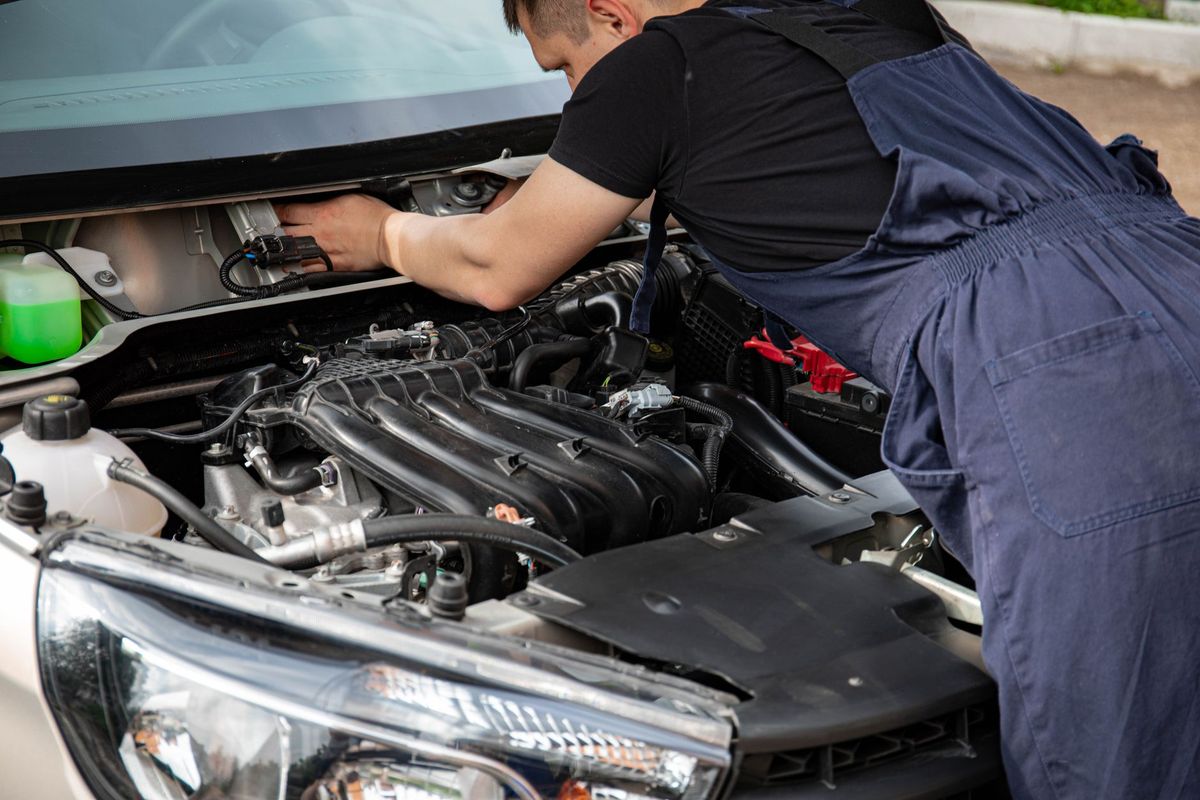
*Photo: Pexels*
d it, drove home, and it won't restart after sitting. A battery that can't hold a surface charge is done. Jump-starting it repeatedly just delays an inevitable roadside failure somewhere less convenient. A shop can load-test the battery in minutes and tell you whether it's worth keeping. If you're weighing tow costs, check the [dead battery on highway guide](/battery-dead-on-highway-how-to-get-help-fast/) for what roadside response actually looks like.
If you're stuck in a snowy or icy situation where the car won't start and you can't safely wait outside, call for help and stay in the vehicle with hazards on. The [car stuck in snow in Denver guide](/car-stuck-in-snow-denver-who-to-call-towing-cost/) covers winter-specific towing situations if you're dealing with both a no-start and a stuck vehicle at the same time.
## What Will a Tow and Battery Replacement Actually Cost Me?
A local tow for a dead battery situation typically runs $75 to $125 for the first few miles, depending on your city and time of day. A replacement battery at a shop runs $150 to $300 installed for most passenger vehicles, including the battery itself and any software resets required for cars with battery management systems. Many shops will do a battery test for free before you commit to replacement.
If you have roadside assistance through AAA, State Farm, or your insurance carrier, a jump start is usually covered at no out-of-pocket cost. Check your coverage before you call a tow truck, because a jump attempt costs nothing under most plans and a tow does count against your annual service limit.
---

*Photo: Pexels*
## Common Questions
**Q: Can cold weather permanently damage my car battery?**
A: Yes. Repeated deep discharges in cold weather accelerate sulfation inside the battery plates, which permanently reduces capacity. A battery that dies every cold morning is already degraded and should be replaced before it strands you.
**Q: My car clicked once and nothing happened. Is that the battery or the starter?**
A: One loud click usually means the starter solenoid is engaging but the battery doesn't have enough power to turn the motor. Try a jump. If you get the same single click even with good jumper cables connected, the starter itself may be failing.
**Q: How long should I drive after a jump start to recharge the battery?**
A: At highway speeds with low electrical load, 20 to 30 minutes is enough for a healthy battery to recover. If the battery is old or marginal, it may never fully recover from a deep cold discharge without a dedicated battery charger overnight.
**Q: Will a jump start work if my battery is frozen?**
A: No, and attempting it can crack the battery case or cause a rupture. A frozen battery needs to thaw in a warm environment first. If your battery is in a very cold unheated space and the electrolyte has frozen, do not connect jumper cables.
**Q: Should I replace the battery myself or go to a shop?**
A: For most basic vehicles, swapping a battery is a 15-minute job you can do yourself with a wrench. For newer vehicles with battery management systems, including most BMWs, Mercedes, and some GM trucks, the replacement has to be registered to the car's computer. Do it wrong and the charging system may overcharge the new battery. When in doubt, go to a shop.
---
*Need roadside help? Visit [Tow With The Flow](https://towwiththeflow.com/car-wont-start-in-cold-weather-tow-or-jump-start/) for real answers when your car breaks down.*
---
*Need roadside help? Visit [Tow With The Flow](https://towwiththeflow.com/car-wont-start-in-cold-weather-tow-or-jump-start-2/) for real answers when your car breaks down.*
Car Won't Start in Cold Weather: Tow or Jump Start?
Photo: Pexels