> **Quick Answer:** Rain kills car starts in a few predictable ways: wet spark plug wires, a flooded engine from driving through standing water, a soaked distributor cap (on older vehicles), or a battery that was already weak and got pushed over the edge by humidity. Try cranking it once, note how it responds, then work through the checklist below before calling a tow.
## Why Won't My Car Start After It Rains?
Moisture is the culprit in almost every rain-related no-start. The most common cause is water on the ignition system, specifically the spark plug wires, coil packs, or distributor cap. When these components get wet, electricity takes the path of least resistance across the surface of the wire instead of firing the plug. The engine cranks but won't catch, or it starts rough and dies immediately.
A second common cause is a weak battery. Cold, damp air increases the power needed to turn the starter, and a battery sitting at 60 percent capacity might handle a sunny morning but fail on a rainy one. If you hear a slow crank or a single click, the battery is the first thing to check.
Third: if you drove through a flooded road or deep puddle, water may have entered the intake and hydrolocked the engine. This one is serious. If the engine cranked hard and then stopped dead with no further movement, do not keep trying to start it. Call a tow. Forcing a hydrolocked engine bends connecting rods.
## What Do I Check First If the Engine Cranks But Won't Fire?
Pop the hood and look at the spark plug wires and coil packs. On a dark, rainy night, sometimes you can actually see electricity arcing across a wet wire like a faint blue glow. Even in daylight, look for cracks in the wire insulation where water gets in.
Dry everything you can reach with a clean rag or paper towel. A can of electrical contact cleaner or WD-40 sprayed along the plug wires and coil boot bases displaces moisture fast. WD-40 stands for "water displacement, 40th formula" and this is exactly the job it was designed for. Spray it on, wait two minutes, try to start the car again.
If your vehicle has a distributor cap (most cars made before the mid-2000s do), pull it off and check the inside for condensation or carbon tracking, which looks like a fine black line running between the terminals. Wipe it dry, reinstall, and try again.
If it cranks fine but still won't start after drying things off, check for spark by pulling one plug wire, inserting a spare spark plug, grounding the plug body against the engine block, and having someone crank the engine. If you see no spark, you have a confirmed ignition system problem.
## What If the Car Just Clicks or Does Nothing at All?
A single click points to a bad connection or a failed starter. Rapid clicking means the battery is low. No sound at all usually means a blown fuse, a faulty neutral safety switch, or a completely dead battery.
Jump-starting is the fastest first move when you hear rapid clicking after rain. If the battery takes a jump and holds it, the battery was just depleted. If it dies again within a few minutes of running, the alternator is not recharging it. The [battery warning light article](/battery-warning-light-came-on-while-driving-how-long-do-i-have/) covers exactly how long you can push that situation before the car dies completely.
If the battery is good but the car still does nothing, check the main fuse box under the hood for any fuses that look blown. Water can cause a short that pops a fuse. The fuse box location and diagram are on the inside of the cover lid
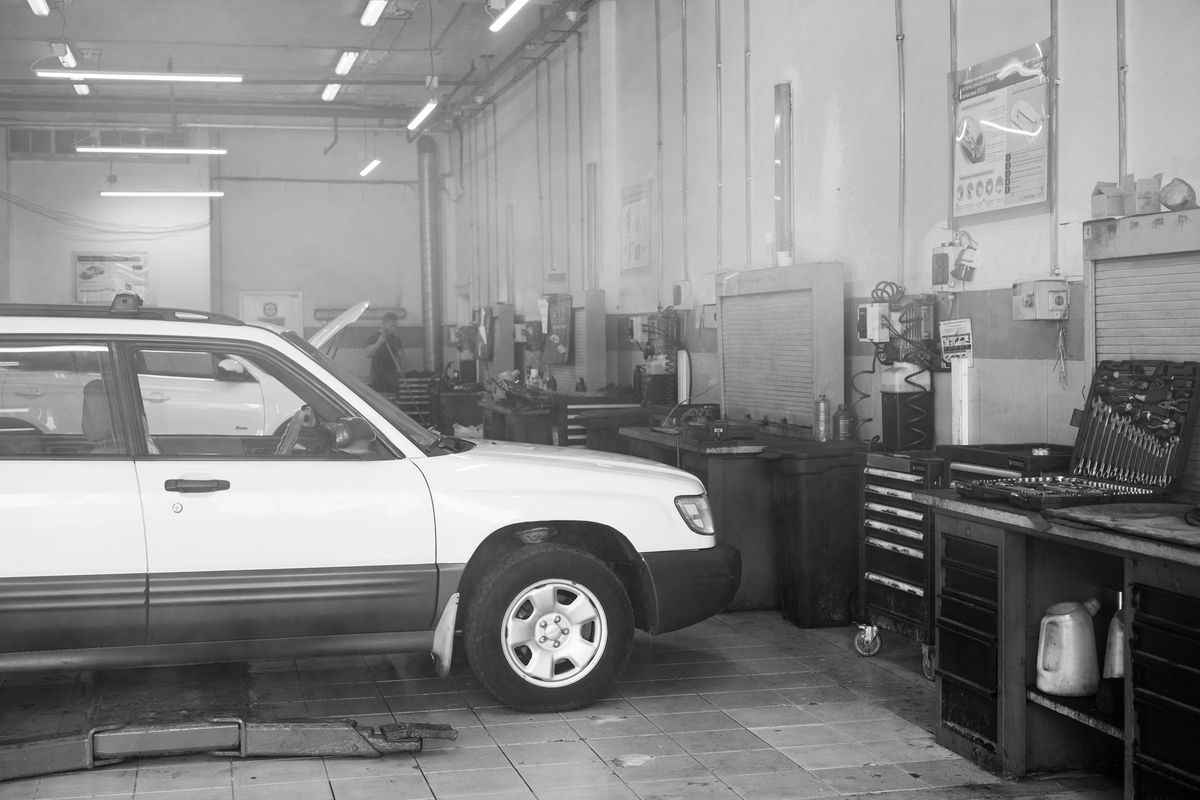
*Photo: Pexels*
or in your owner's manual.
## Should I Try to Drive Through Water Again or Just Wait for a Tow?
Never drive back through standing water to get to a shop. If water caused this problem once, going through it again risks a hydrolocked engine or water intrusion into the brake system.
If the car starts after you dry things out, give it ten minutes to warm up and burn off remaining moisture before driving. If it won't start despite everything above, call a tow. A flooded engine, a shot ignition module, or a dead crankshaft position sensor are not roadside fixes, and attempting to crank a hydrolocked engine repeatedly will turn a repair into a rebuild.
When you call, tell the tow company the car may have water in the engine so they know to use a flatbed rather than dragging it onto a wheel-lift, which can shift fluids further if the vehicle is at an angle. If you are stuck in a low-lying area and the water is still rising, get away from the vehicle first and call from a safe distance. See [how long you can safely wait on the side of a highway](/how-long-can-you-wait-on-side-of-highway-for-tow/) if you are stranded in an exposed spot. For a situation where your car hydroplaned into a ditch during heavy rain, the [car hydroplaned into ditch guide](/car-hydroplaned-into-ditch-tow-truck-or-insurance-call-first/) covers whether to call your insurer or a tow service first.
*Photo: Pexels*
## Common Questions
**Q: Can rain alone kill a car battery?**
A: Not directly, but humidity speeds up corrosion on battery terminals and cold damp air increases the power needed to crank the engine. A battery that was borderline will often fail on a wet morning when it would have managed fine on a dry one. Clean the terminals and test the battery with a multimeter. A healthy battery reads 12.6 volts or higher at rest.
**Q: How long should I wait before trying to start a wet car again?**
A: Give it 10 to 15 minutes after drying the ignition components. If you drove through deep water, do not retry at all until a mechanic checks for water in the intake and cylinders. Repeatedly cranking a hydrolocked engine causes serious internal damage.
**Q: Is it safe to drive my car after it gets wet inside from rain?**
A: A wet interior is mostly a comfort and mold problem, not immediately a safety one. The concern is if water reached the fuse box, ECU, or floor-mounted electronics. If warning lights come on after interior water intrusion, have it inspected before driving far.
**Q: My car started fine after rain but now runs rough. What's wrong?**
A: Rough running after rain usually means one or more spark plugs or coil packs are partially fouled with moisture and misfiring under load. Check engine light flashing with a rough idle points directly to a misfire code. The [check engine light flashing guide](/check-engine-light-flashing-car-shaking-should-i-pull-over/) explains when to pull over immediately versus when you can limp to a shop.
**Q: What does it mean if my engine cranked hard and then stopped completely after driving through a puddle?**
A: That is a hydrolocked engine. Water entered the cylinder through the air intake, and since water does not compress, the piston stopped moving mid-stroke. Do not crank it again. Have it flatbed-towed to a shop. The mechanic will pull the spark plugs to release the water and inspect the connecting rods for bending before attempting a restart.
---
*Need roadside help? Visit [Tow With The Flow](https://towwiththeflow.com/car-wont-start-after-rain-what-to-do/) for real answers when your car breaks down.*
Car Won't Start After Rain: What to Do Right Now
Photo: Pexels