Quick Answer: Listen to what the car does when you turn the key. Rapid clicking or dim dash lights point to a dead or weak battery. A normal-speed crank with no start points to moisture in the ignition system or a fuel problem. Silence with bright lights points to a starter, relay, or neutral safety issue. Rain mostly exposes problems that were already building, especially weak batteries and corroded connections.
How Can I Tell If It’s the Battery or Something Else?
Pay attention to the sound and the lights, because they separate a battery problem from everything else in about ten seconds. Turn the key and note which of these you get:
- Fast clicking (click-click-click-click): Weak or dead battery. The starter is asking for power the battery can’t deliver.
- One loud click, then nothing: Often a failing starter or a bad battery cable connection.
- Engine cranks at normal speed but won’t fire: The battery is fine. Look at moisture in the ignition system or a fuel delivery problem.
- Total silence, dash lights bright: Starter relay, ignition switch, or on an automatic, the transmission not fully seated in Park.
- Total silence, no dash lights: Dead battery or a loose or corroded terminal.
Turn on the headlights before you crank. If they’re bright and stay bright while you try to start, the battery has charge. If they dim badly or die, it’s the battery or its connections.
Why Would Rain Make My Car Not Start?
Rain doesn’t kill batteries. It exposes weak ones and gets moisture where it doesn’t belong. Cold, wet weather drops a battery’s output. A battery that was marginal in September can fail in a November downpour.
Water also causes real damage in a few specific places:
- Corroded terminals: Wet, crusty buildup on the battery posts blocks current. A battery can test fine and still not start the car.
- Moisture in the distributor cap, spark plug wires, or coil packs: More common on older cars. Water creates a path for the spark to leak to ground instead of reaching the cylinder.
- Wet fuse box or relay connections: Cars with leaking cowl seals or a degraded fuse box cover can short out starting circuits.
- Standing water: If the car sat in a puddle deep enough to reach the engine bay or air intake, stop. Don’t keep cranking it. Water in the cylinders can bend a connecting rod.
What Should I Try First Before Calling for Help?
Check the battery terminals and try a jump start, in that order. Both take a few minutes and solve most rain-related no-starts.
- Inspect the terminals. Pop the hood and look for white or blue-green crust on the battery posts. Wiggle each cable clamp. If one moves, tighten it with a wrench. That alone can fix it.
- Try a jump start. If the lights dim or the car clicks, connect jumper cables to a good battery. Connect positive to positive, then negative from the donor battery to bare metal on your engine block, not the dead battery’s negative post. Let the donor car run a few minutes before you try starting.
- Don’t crank repeatedly. Ten seconds at a time, then wait a minute. Overcrank
 Photo: Pexels
ing a car with a wet ignition system floods the engine and can overheat the starter.
- Give it time. If it cranks normally but won’t catch, wait 10 to 15 minutes with the hood open. Moisture on ignition parts often evaporates. Spraying a water-displacing product on exposed plug wires or the coil connections helps on older cars.
If you’re stuck in a lot, here’s who can help with a dead battery right now.
How Do I Know It’s the Alternator and Not the Battery?
If a jump start works but the car dies again soon after, the alternator may not be charging the battery. A good battery with a bad alternator runs on stored power until it’s drained, then quits. Watch for a battery light on the dash, dimming headlights while driving, or a whining noise from the engine. Read more on what happens when the alternator dies while driving so you know what to expect.
A new battery in a car with a failing alternator will also die within days. Most auto parts stores will test both for free, so get it checked before buying a battery.
When Should I Call a Tow Truck Instead?
Call a tow if the jump start doesn’t work, the car cranks but won’t start after the moisture has had time to dry, or you suspect water got inside the engine. Don’t keep trying. A car that clicks, cranks, or stays silent after a jump has a starter, wiring, or fuel problem that won’t fix itself in a parking lot.
If you think the car needs to go on a flatbed rather than be dragged, this checklist helps you decide. If you’re covered through your insurer or a club membership, see how far insurance will tow after a breakdown before you pay out of pocket.
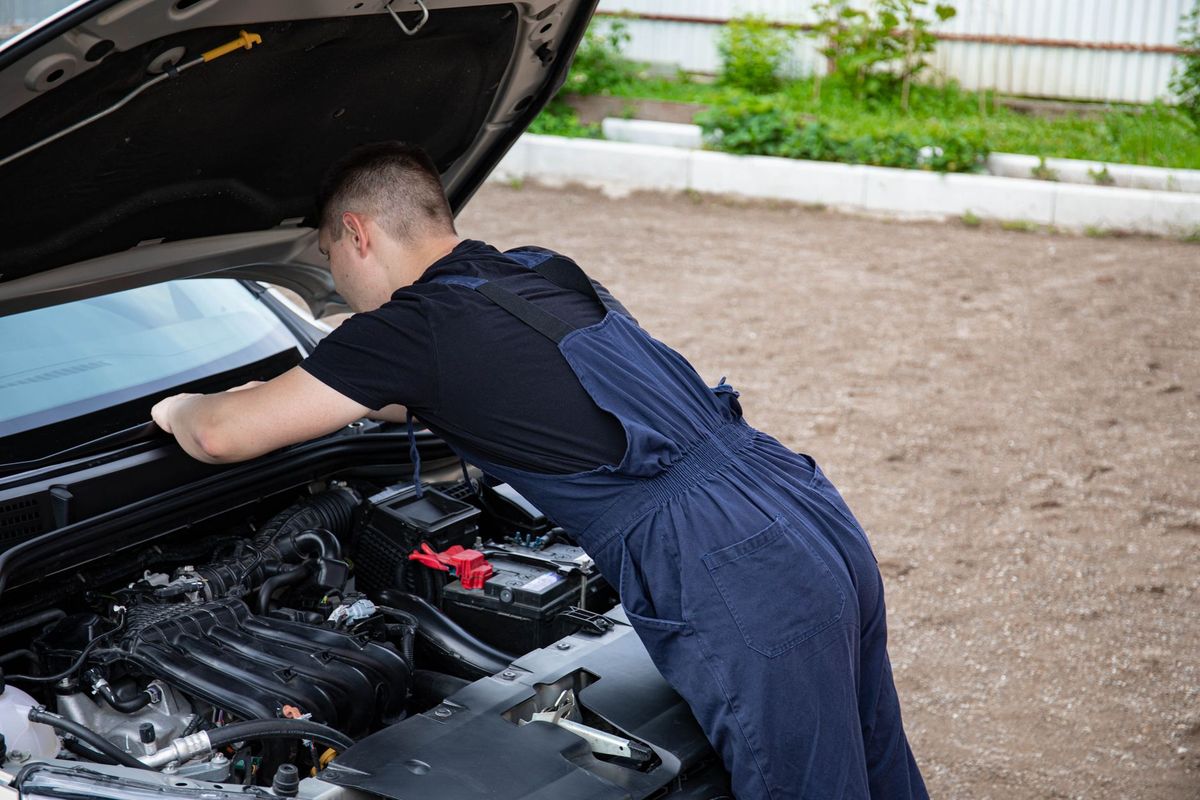 Photo: Pexels
Common Questions
Q: Can a wet battery cause a car not to start? A: Rain on the outside of the battery rarely matters. Wet, corroded terminals do, because the buildup blocks electrical flow. Clean the posts and tighten the clamps first.
Q: Will my car start once everything dries out? A: Often yes, if the problem is moisture on ignition parts. Wait 10 to 15 minutes with the hood open. If it still won’t start, the cause isn’t just dampness.
Q: Is it safe to jump start a car in the rain? A: Yes, with care. Keep the cable clamps off wet ground and away from each other, and connect them in the right order. Avoid standing in deep puddles while handling the cables.
Q: Why does my car click but not start only when it rains? A: Cold, wet weather lowers battery output, so a weak battery that works in dry weather can fail in rain. Corroded terminals get worse when damp too.
Q: How long does a car battery last? A: Most last roughly three to five years, depending on climate and driving habits. If yours is older than that and failing, replace it before the next storm.
Need roadside help? Visit Tow With The Flow for real answers when your car breaks down.