> **Quick Answer:** A transmission slipping at highway speed means the transmission is losing its grip on the drivetrain while you are doing 65 mph or more. That is a tow situation, not a drive-home situation. Get to the right shoulder, turn on your hazards, and call for a tow. Driving further risks a full transmission failure, which can lock up a drive wheel or leave you stranded in the fast lane.
## What Does Transmission Slipping Feel Like at Highway Speed?
The clearest sign is the engine revving up while your speed drops or stays flat. You press the gas and the tach climbs, but the car does not accelerate. It feels like the clutch is slipping on a manual, except you are driving an automatic. You may also notice a brief shudder or hesitation when the transmission tries to grab a gear and fails, or a sudden downshift that feels violent and unexpected.
On a CVT, like those in many Nissan and Subaru models, slipping can feel like a prolonged rubber-band sensation where the engine drones loudly while acceleration lags well behind throttle input.
## Is It Safe to Keep Driving If the Transmission Is Slipping at Speed?
No. Keep driving and you have two real risks. First, the transmission can overheat. Slipping generates heat inside the torque converter and clutch packs, and sustained high heat destroys seals, solenoids, and hard parts in minutes. Second, some failures cause an abrupt output shaft lock, which can affect rear-wheel traction without warning.
Pull to the right shoulder as smoothly as you can. Do not brake hard. Signal early, reduce throttle gradually, and coast toward the shoulder. Once stopped, put it in Park, leave the engine running if needed for safety lighting, and get out on the passenger side away from traffic. See [what to do when broken down on a highway at night](/broken-down-on-highway-at-night-safety-tips-what-to-do/) for the full shoulder protocol.
## How Do I Get a Tow from the Highway?
Call 911 if you are in a dangerous position and cannot reach the shoulder safely. If you are safely on the shoulder, call a tow company directly or use your roadside assistance plan.
Your car needs a flatbed. A slipping transmission often means the vehicle should not be towed on its drive wheels. Tell the dispatcher: "My transmission is slipping, I need a flatbed." If they send a wheel-lift truck and try to tow it in drive, stop them. For an automatic AWD or 4WD vehicle especially, all four wheels must be off the ground or the driveline can sustain additional damage during transport.
If you have AAA, USAA, or coverage through State Farm or GEICO, your roadside plan almost certainly covers a tow. [Check what GEICO covers before you call a private tow company](/does-geico-cover-towing-after-breakdown/) so you know whether to route through them or pay out of pocket and submit a claim later.
## What Will It Cost to Tow a Car with a Slipping Transmission?
A local tow up to 5 miles runs roughly $75 to $125. From a highway exit to a transmission shop across town, expect $100 to $175. If you broke down far from a metro area and need a long haul, costs rise significantly. A 50-mile interstate tow commonly runs $200 to $350, and 100 miles can reach $400 to $600 depending on the state and time of day.
After the tow, the repair bill is the bigger number. A transmission rebuild on a domestic sedan runs $1,500 to $3,50

*Photo: Pexels*
0. A full replacement can reach $4,000 to $5,000 on a newer vehicle. Getting a second quote matters here. [How much does a tow truck cost without insurance](/how-much-does-a-tow-truck-cost-without-insurance/) breaks down pricing by mileage band if you need to budget the tow itself first.
## What Should I Tell the Mechanic When I Get There?
Tell them exactly what you felt: whether it was slipping between specific gears, how often it happened, whether the transmission warning light came on, and whether you smelled anything burnt. The mechanic will pull codes with a scan tool, but your description helps them narrow it down fast.
Common culprits for highway slipping: low or burnt transmission fluid, a failed solenoid pack, worn clutch packs, or a failing torque converter. Low fluid is cheap to fix. Everything else involves labor. Ask them to check the fluid condition and level first before authorizing anything deeper, and get the diagnostic result in writing before approving repairs.
If the shop finds the transmission is too far gone to repair economically, know that a slipping transmission that finally seized or locked up while moving is related to some of the same catastrophic outcomes covered in [engine seized while driving](/engine-seized-while-driving-need-emergency-tow/). The lesson is the same: stopping early costs less than continuing.
---

*Photo: Pexels*
## Common Questions
**Q: Can I limp my car to the nearest exit if the transmission is slipping?**
A: One exit at very low speed, maybe, if the slip is mild and intermittent. But if the slip is constant, the engine is revving high with no acceleration, or you smell burnt fluid, do not move the car. The risk of a full failure in traffic is not worth a half mile.
**Q: Will transmission slipping always get worse if I keep driving?**
A: Yes, virtually always. Slipping creates heat, and heat destroys the remaining good clutch material. What starts as an occasional slip at highway speed typically becomes full slip or no movement within miles of continued driving.
**Q: Does insurance cover a tow for a transmission failure?**
A: Roadside assistance add-ons from your insurer usually cover the tow, not the repair. Comprehensive and collision do not apply since this is a mechanical failure, not an accident. Check your declarations page or call your insurer before paying out of pocket.
**Q: How do I know if it is the transmission or something else causing the slip feeling?**
A: If the engine RPM climbs normally but speed does not follow, that points to transmission slip. If the engine bogs down or misfires along with the hesitation, you may have an engine issue instead. A flashing check engine light with shaking points toward a misfire, covered in detail at [check engine light flashing and car shaking](/check-engine-light-flashing-car-shaking-pull-over-now/).
**Q: Can a transmission slipping at highway speed suddenly lock up and cause an accident?**
A: In severe cases, yes. A failed output shaft or a transmission that seizes can cause a sudden drag effect on the drive wheels. This is uncommon but not rare enough to ignore. It is one of the main reasons mechanics advise against driving a slipping transmission at speed.
---
*Need roadside help? Visit [Tow With The Flow](https://towwiththeflow.com/car-transmission-slipping-highway-speed-tow-needed/) for real answers when your car breaks down.*
Car Transmission Slipping at Highway Speed: When You Need a Tow Right Now
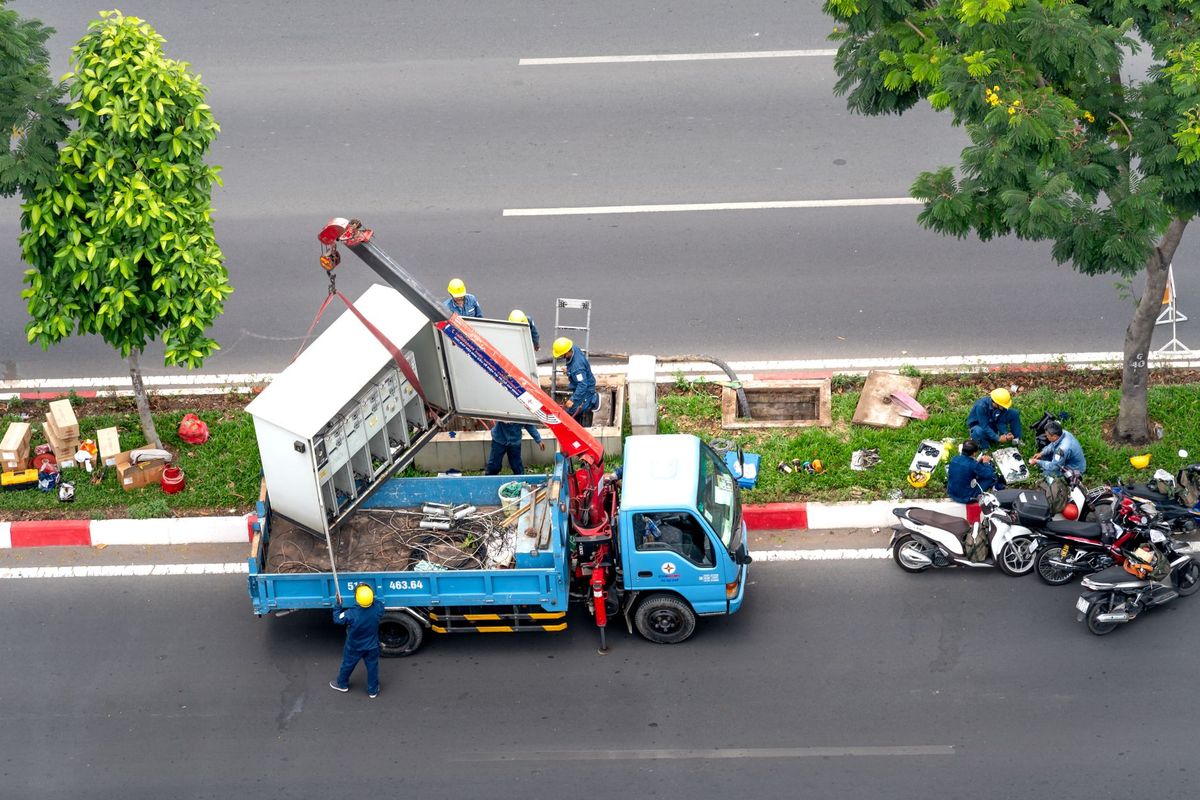
Photo: Pexels