Quick Answer: Pull over immediately and stop driving. Violent shaking while driving indicates serious mechanical failure that can cause accidents or total breakdown. Common causes include wheel separation, broken axles, or severe engine problems. Call for a tow truck right away.
What To Do
- Pull over safely immediately - Use hazard lights and get to the shoulder or parking lot as quickly as possible
- Turn off the engine - Stop all movement to prevent further damage
- Exit the vehicle carefully - Move away from traffic if on a roadway
- Check for obvious damage - Look for loose wheels, visible fluid leaks, or hanging parts
- Call for roadside assistance - Do not attempt to drive further
- Wait in a safe location - Stay away from the vehicle if near traffic
A few specifics worth knowing at each step: When you pull over, aim for a flat, stable surface. Pulling onto soft grass or gravel on a steep grade is better than staying on the road, but a flat hard shoulder is ideal. Once stopped, leave the transmission in park and apply the parking brake before you get out. When you do your visual check, squat down and look at each wheel from about 10 feet back. A wheel that is visibly tilted, wobbling, or sitting lower than the others is a red flag for a failed wheel bearing or broken spindle and means you should not touch the vehicle until a professional arrives.
If the shaking started suddenly at highway speed, the cause is more likely a catastrophic failure like a separated tire tread, a broken CV axle, or a detached wheel weight cluster than a gradual wear issue. If it built up over weeks and finally got unbearable, suspect a worn wheel bearing, failing motor mounts, or a damaged driveshaft. Either way, the action you take is the same: stop and call a tow.
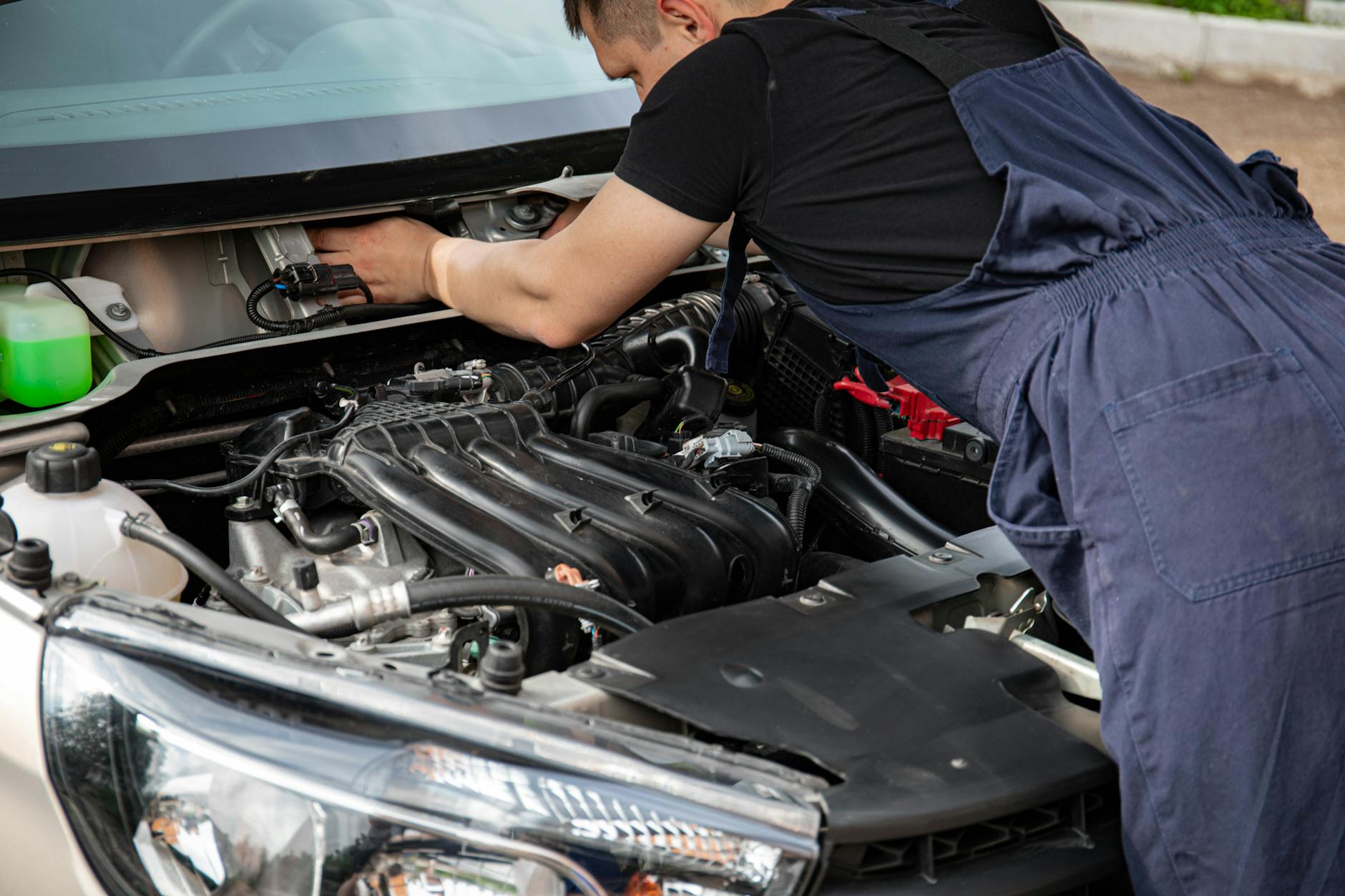 Photo: Pexels
What It Might Cost
Towing typically runs $75-200 depending on distance and location. Emergency roadside service may add $50-100. The underlying repair costs vary dramatically:
- Wheel bearing failure: $200-500
- CV joint replacement: $300-600
- Engine mount failure: $200-800
- Transmission problems: $1,500-4,000+
Those ranges widen based on your vehicle make, labor rates in your area, and how long the problem ran before you stopped. A wheel bearing caught early is a $250 job. One that wore completely through and damaged the hub, rotor, and knuckle can push $800 or more. Engine mount failure is similar: a cracked mount that gets replaced before it tears loose costs a fraction of what you pay after the engine shifts far enough to pull on exhaust pipes, coolant hoses, and wiring harnesses. Stopping immediately is not just about safety, it directly limits your repair bill.
 Photo: Pexels
Common Questions
Q: Can I drive a mile or two to get off the highway or reach a gas station? A: No. Even a short distance at low speed is enough for a failing wheel bearing to seize, a cracked axle to snap, or a loose wheel to separate entirely. Any of those failures at speed puts you and other drivers at serious risk. Call a tow from where you are.
Q: The shaking stopped on its own after I slowed down. Does that mean it is safe to keep driving? A: It does not. Many mechanical failures feel less severe at lower speeds but the underlying damage is still there. A bearing that vibrates at 50 mph and quiets at 20 mph is still failing. Drive it again and you risk it locking up without warning. Get it inspected before you drive anywhere.
Q: How do I know if my car is shaking violently enough to pull over versus just needing a tire balance? A: If the shaking is strong enough that you feel it through the steering wheel, seat, and floor simultaneously, or if it came on suddenly rather than gradually, treat it as an emergency and pull over. A tire balance issue typically causes a mild steering wheel buzz that builds gradually over weeks. Sudden, whole-body shaking is a different problem entirely.
Stay Safe
- Never ignore violent shaking - it indicates imminent failure
- Do not drive even short distances to a repair shop
- Keep passengers away from the vehicle until help arrives
- If on a highway, exit the vehicle from the side away from traffic
- Use flares or reflective triangles if you have them
- Stay visible to approaching traffic while waiting for help
Need roadside help? Visit Tow With The Flow for real answers when your car breaks down.