> **Quick Answer:** Stop driving immediately. Steam means your coolant is boiling, which means your engine is already at a temperature that causes serious damage, sometimes within minutes. Turn off the engine, get clear of the car, and do not open the hood yet. This is a tow situation, not a "let it cool down and keep going" situation. Do not drive it.
## Should I Keep Driving If Steam Is Coming Out of My Car?
No. Pull over right now, shut the engine off, and stay in the car or step well away from it. Steam coming from under the hood means coolant has reached boiling point, roughly 250 degrees Fahrenheit or higher, and is venting through a weak point in the system. Your engine is not far from causing a blown head gasket, a warped cylinder head, or a full seizure if it hasn't already started. Every additional mile you drive multiplies the repair bill.
If you're on a highway, signal, coast to the shoulder, and get as far right as possible before shutting down. Turn on your hazard lights the moment you feel the temperature gauge spike or see the hood start to vent.
## What's Actually Causing the Steam?
Steam means pressurized coolant is escaping somewhere it shouldn't be. The most common culprits are a burst radiator hose, a cracked radiator, a blown radiator cap, or a failed water pump. In more serious cases, a blown head gasket will push coolant into the combustion chamber, and you'll see white steam mixed with exhaust coming from the tailpipe, not just the hood. That last one is expensive, typically $1,500 to $3,000 or more depending on the engine.
A cracked radiator hose, by contrast, might cost $50 in parts and an hour of labor. The difference between a cheap fix and an engine rebuild is whether you stopped in time.
If you see [smoke with an oily or burning smell rather than pure steam](/car-smoking-under-hood-safe-to-drive-towing/), you may be looking at a different problem. Steam is usually white and odorless or smells faintly sweet from the ethylene glycol in the coolant.
## When Can I Open the Hood, and What Should I Look For?
Wait at least 30 to 45 minutes after the engine shuts off before opening the hood. The cooling system is pressurized. Opening the radiator cap on a hot engine will spray boiling coolant in your face. That's an emergency room visit, not a quick fix.
Once it's cooled, open the hood carefully using a rag or your sleeve on the latch. Look for:
- A split or collapsed radiator hose (upper or lower)
- Coolant pooled on top of the engine or dripping underneath
- A cracked reservoir or empty overflow tank
- A radiator cap that's loose, corroded, or shows burn marks
If the coolant reservoir is bone dry and you have a sealed jug of pre-mixed coolant in your trunk, you can add some to the overflow reservoir (not directly to the radiator cap) and check whether the car holds pressure enough to limp to a nearby shop. But this only makes sense if the source of the leak is minor and the nearest shop is less than two miles away. Any serious leak, or any sign of a
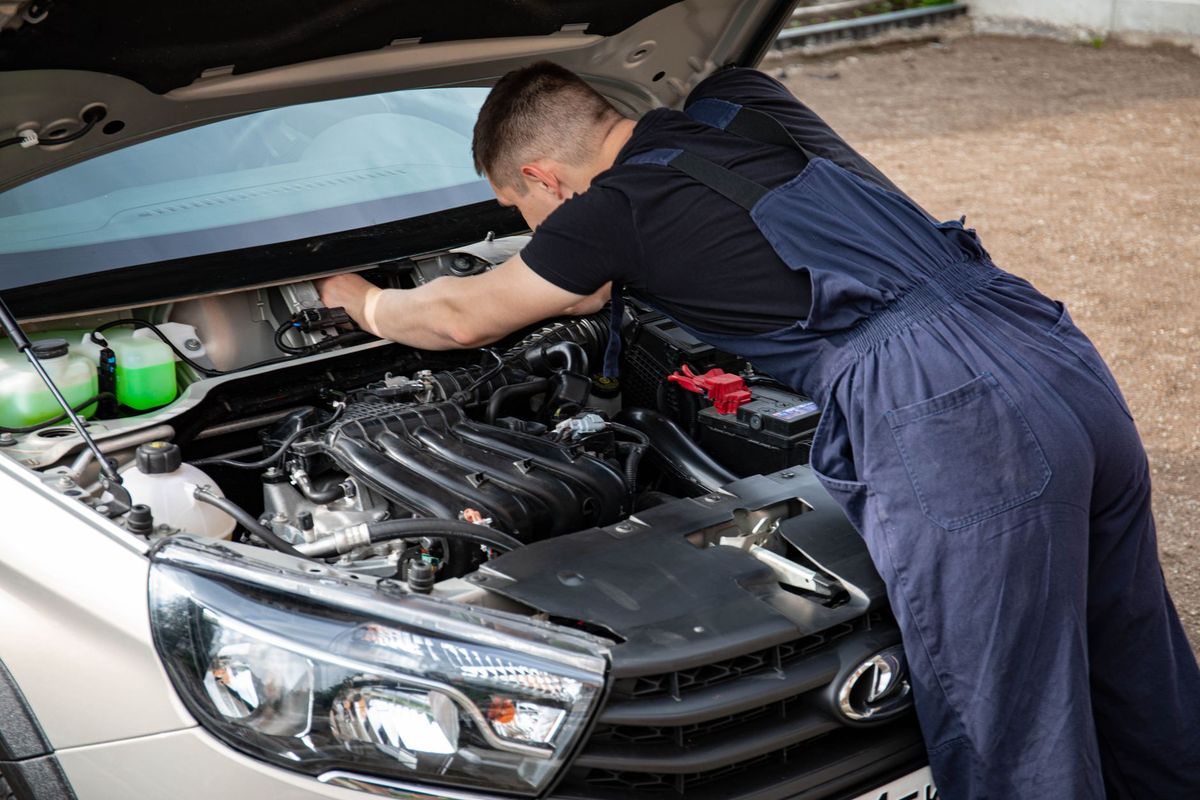
*Photo: Pexels*
head gasket issue like milky oil on the dipstick or white tailpipe smoke, means you call a tow truck.
## Do I Tow It or Drive It to the Shop?
Tow it. The risk of driving an overheated engine is not proportional to the potential savings on a tow. A local tow generally runs $75 to $150 for the first few miles. A seized engine because you pushed it another three miles to the shop costs $4,000 to $10,000 or more. That math is not close.
The only exception: if the car has fully cooled, you've identified a minor leak, you've added coolant, the temperature gauge holds steady in the normal range, and the shop is literally around the corner, you can make that short drive watching the gauge the entire time and ready to pull over again instantly. If the gauge climbs at all, you stop.
For a detailed breakdown of what towing an overheated car actually costs compared to the risk of driving it, see [car overheating towing cost vs driving to the mechanic](/car-overheating-towing-cost-vs-driving-to-mechanic-risk/).
If you get home or to a shop only to find the car won't restart after it cooled down, that's a separate problem covered here: [car won't start after overheating](/car-wont-start-after-overheating-do-i-need-tow/).
*Photo: Pexels*
## Common Questions
**Q: Can I add water instead of coolant if my car is overheating?**
A: Yes, plain water works in a genuine emergency. Distilled water is better than tap water, which contains minerals that can corrode the system over time. Use it to get to a shop, then have the system properly flushed and refilled with the correct coolant mix.
**Q: How long does it take for an overheated engine to cool down enough to drive?**
A: At minimum 30 to 45 minutes with the engine off. On a hot day or with a large engine, plan on closer to an hour before the system depressurizes enough to open the cap safely.
**Q: What does it mean if steam is coming from under the hood but my temperature gauge is normal?**
A: Don't trust the gauge. The temperature sensor itself can fail or the gauge can lag behind actual engine temperature. If you see steam, treat it as an overheating emergency regardless of what the gauge reads.
**Q: Will my insurance or roadside assistance cover the tow?**
A: If you have roadside assistance through AAA, your insurer, or your car's manufacturer warranty program, a tow is usually covered up to a set mileage limit. Check your policy before you call so you know whether to use your coverage or pay out of pocket.
**Q: Is a blown head gasket always the cause of steam from the hood?**
A: No. A blown head gasket is one cause, but burst hoses, a failed water pump, and a cracked radiator are just as common and often cheaper to fix. The head gasket is typically suspected when you also see white smoke from the tailpipe, milky residue on the oil cap, or the engine loses coolant with no visible external leak.
---
*Need roadside help? Visit [Tow With The Flow](https://towwiththeflow.com/car-overheating-steam-coming-out-tow-or-drive/) for real answers when your car breaks down.*
Car Overheating Steam Coming Out: Tow or Drive?
Photo: Pexels