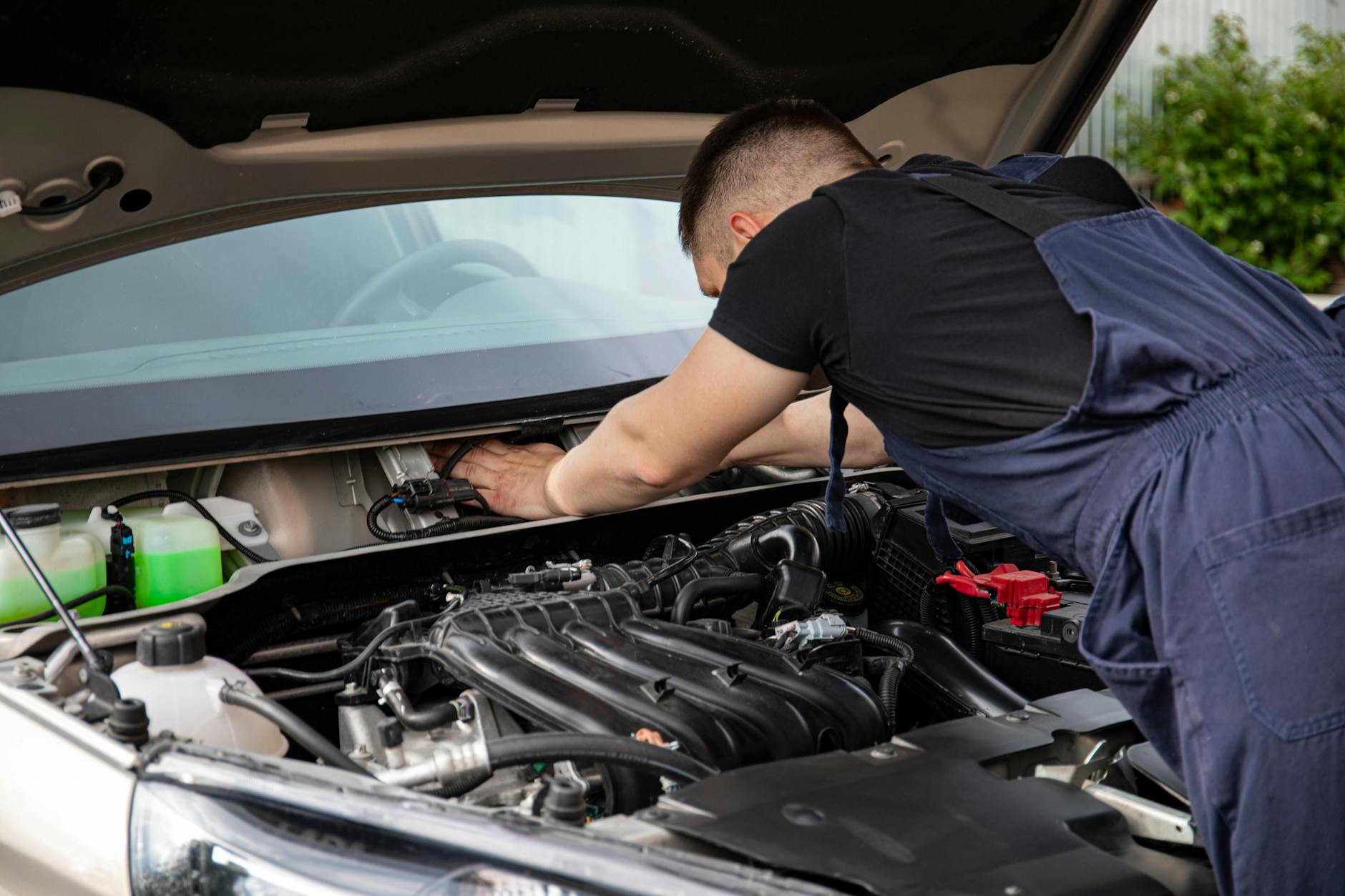
Quick Answer: Red temperature warning light means your engine is dangerously hot. Pull over immediately, turn off the engine, and wait at least 30 minutes before doing anything. Do not remove the radiator cap while hot. Check coolant level only when cool, add water if needed, and drive carefully to a shop.
What To Do
Pull over safely as soon as possible. Use hazard lights.
Turn off the engine immediately. Do not let it idle.
Turn on the heater full blast if you must drive a short distance to safety. This pulls heat from the engine.
Wait 30-45 minutes minimum before opening the hood. The cooling system is under pressure when hot. On a hot day, lean toward the full 45 minutes. The upper radiator hose should feel soft and cool to a brief touch before you proceed.
Check coolant reservoir when cool. Look for the translucent plastic tank near the radiator. The level should sit between the MIN and MAX marks on the side of the tank. A reservoir that is bone dry suggests a significant leak somewhere in the system.
Add coolant or water if the reservoir is low. Use the cap marked “coolant” or “radiator,” never the pressurized radiator cap. In a roadside pinch, plain tap water works fine as a temporary fix. Just have the system properly flushed and refilled with the correct coolant-to-water mix (usually 50/50) once you reach a shop.
Look for obvious leaks under the car. Check hoses, radiator, and water pump area. A puddle of green, orange, or pink liquid under the front of the car is a strong confirmation that coolant is escaping. Dry pavement does not rule out a leak since coolant can evaporate on a hot engine block.
Start the engine and monitor the temperature gauge. If it climbs quickly, shut off immediately.
Drive slowly to the nearest shop if temperature stays normal. Keep heater on, avoid stop-and-go traffic.
Call for a tow if the light comes back on or temperature rises again. Continuing to drive through a second overheat event is how a $400 thermostat job turns into a $2,500 head gasket job.
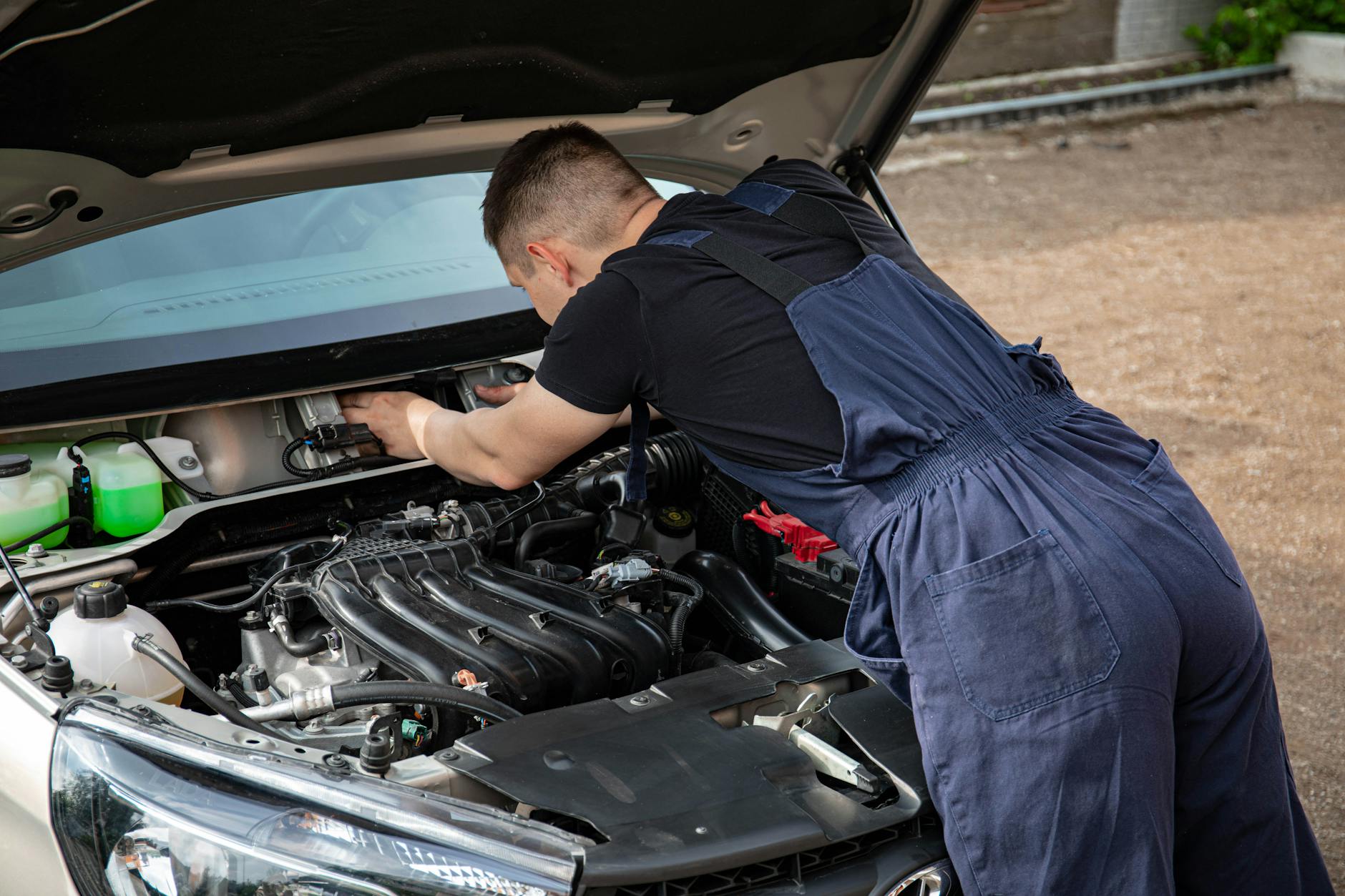 Photo: Pexels
Common Causes
- Low coolant from leaks - the most frequent cause, often a slow weep from a hose clamp or cracked reservoir
- Broken thermostat stuck closed - prevents hot coolant from reaching the radiator; engine heats up fast with no warning
- Failed water pump - the impeller can wear down or the shaft seal can fail, killing circulation
- Clogged radiator - years of scale and debris restrict flow; more common on older, high-mileage vehicles
- Broken cooling fan - electric fans fail silently; you may only notice overheating at low speeds or in traffic where airflow depends on the fan
- Blown head gasket (worst case) - combustion gases enter the cooling system, coolant can enter cylinders, and the engine destroys itself quickly if you keep driving
A failed electric fan is easy to miss. Turn on the AC and listen near the radiator at idle. The fan should run. If it does not, that points directly at the fan motor, relay, or fuse.
Common Questions
Q: Can I add just plain water instead of coolant in an emergency? A: Yes, plain water is safe as a one-time emergency top-off to get you to a shop. It will not protect against corrosion or freezing the way a proper coolant mix does, so have the system drained and refilled with the correct 50/50 coolant-water blend as soon as possible.
Q: How long can I drive once the temperature light comes on before I do real damage? A: Realistically, less than a minute at highway speeds. Modern aluminum engines warp at sustained temperatures above 240-250 degrees Fahrenheit. The light typically triggers around that range, so every additional second of driving risks a warped head or seized engine. Pull over immediately.
Q: My temperature gauge went back to normal on its own. Do I still need to stop? A: Yes. A gauge that spikes then drops can mean a failing thermostat, a low coolant situation where air pockets are temporarily blocking the sensor, or an intermittent cooling fan. The underlying problem is still there and will return. Get it diagnosed before driving any distance.
What It Might Cost
- Coolant top-off: $20-40
- Thermostat replacement: $200-400
- Water pump: $300-800
- Radiator repair: $300-600
- Head gasket: $1,500-3,000
 Photo: Pexels
Stay Safe
- Never remove the radiator cap when hot (can cause severe burns)
- Don’t drive with the red light on (engine damage guaranteed)
- Keep bottled water in your car for emergencies
- If you smell coolant inside the car, pull over immediately
- White smoke from exhaust plus overheating often means head gasket failure
Need roadside help? Visit Tow With The Flow for real answers when your car breaks down.