> **Quick Answer:** Yes, pull over immediately. An overheating engine can seize or warp the cylinder head within minutes of the temperature gauge hitting the red. Turn on your hazard lights, move to the right shoulder as quickly and safely as you can, and shut the engine off. Do not open the radiator cap. Call for a tow.
## Should I Pull Over Right Now or Can I Make It to the Next Exit?
Pull over now, not at the next exit. Every minute you keep driving with the temperature gauge in the red is another minute the coolant is boiling, the head gasket is under stress, and the aluminum cylinder head is warping. A warped head or a seized engine is a $2,000 to $6,000 repair. The next exit is not worth that risk.
The one exception: if you are on a highway with no shoulder and an exit is 30 to 60 seconds ahead, turn your heat on full blast (it pulls heat off the engine), slow down, and get to that exit. Turning the heat on is not comfortable, but it works as a short-term heat dump while you find a safe spot to stop.
## What Do I Do Once I Pull Over?
Get fully off the road onto the shoulder, as far right as possible, and turn the engine off. Activate your hazard lights before you even start moving to the shoulder. Once stopped, do not open the hood immediately. The cooling system is pressurized and the coolant is likely boiling. Wait at least 20 to 30 minutes before touching anything under the hood.
While you wait, get out of the vehicle on the passenger side, away from traffic, and stand behind the guardrail if one is present. Staying in the car on a highway shoulder puts you in a crush zone if another vehicle drifts. If you broke down at night, the risk to you standing near traffic is real. Read the full breakdown on [car broke down on highway at night: safety tips](/car-broke-down-on-highway-at-night-safety-tips/) before you assume sitting in the car is the safer choice.
Once things cool down, check the coolant reservoir and look for visible leaks under the car. A green, orange, or pink puddle under the engine is a blown hose or a failed water pump. At that point, you are not driving anywhere.
## What Actually Causes a Car to Overheat on the Highway?
The most common culprits are low coolant from a slow leak, a failed thermostat stuck in the closed position, a blown radiator hose, or a water pump that has stopped circulating coolant. On the highway specifically, a failed electric radiator fan is often the trigger at low speeds in stop-and-go traffic, though at highway speeds the ram air usually compensates. If it is overheating at 70 mph, suspect a coolant leak, a stuck thermostat, or a headgasket that is letting combustion gases into the coolant system.
A tell-tale sign of a blown head gasket is white smoke from the exhaust combined with overheating, or a sweet burning smell with no visible coolant puddle on the ground (the coolant is burning inside the cylinders). Do not add water and keep driving if you see white exhaust smoke. You will turn a repairable head gasket job into a full engine replacement.
## Can I Add Water to the Radiator and Keep Going?
Only if the engine has fully cooled, you have confirmed a simple low-coolant situation with no other symptoms, and you are close to a shop. Even then, treat it as a temporary fix, not a solution. Use distilled water if you have it. Tap water works in an emergency but leaves m
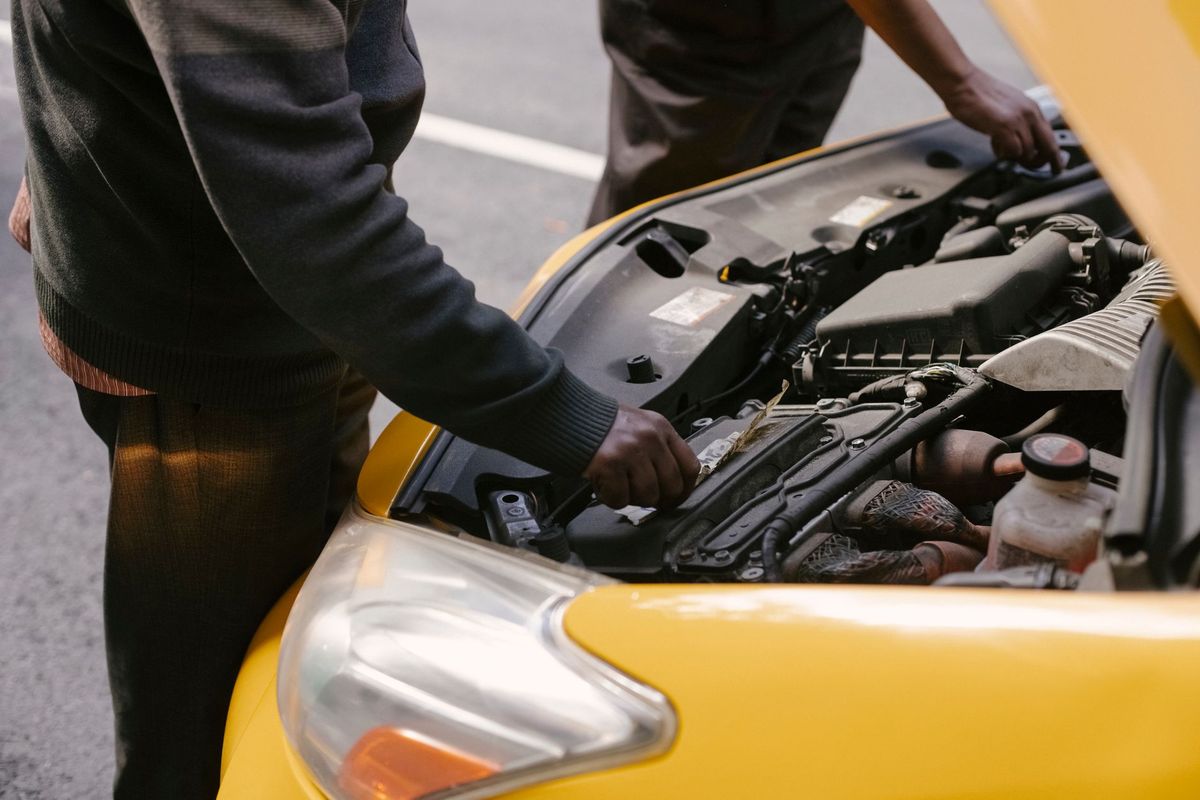
*Photo: Pexels*
ineral deposits in the cooling system over time.
Do not unscrew the radiator cap while the engine is still warm. The system is pressurized. The cap will release scalding coolant directly onto your hands and face. Wait until the upper radiator hose feels cool to the touch before carefully opening it with a rag, turning slowly and letting pressure bleed before fully removing it.
If you added water and the temperature gauge climbs again within a few miles, pull over again and call a tow. Do not try to limp it further. If your car [was smoking under the hood before it overheated](/car-smoking-under-hood-on-highway-pull-over-or-keep-driving/), a tow is the right call from the start.
## Will My Insurance Cover the Tow After an Engine Overheat?
It depends on your policy. If you have roadside assistance added to your auto policy through State Farm, Allstate, or a similar carrier, a tow from a highway breakdown is typically covered up to a set dollar amount or mileage limit. Standalone roadside memberships like AAA cover the tow regardless of the breakdown cause.
If you are uninsured or your policy does not include roadside assistance, you are paying out of pocket. A highway tow to a nearby shop typically runs $75 to $150 for the hook-up fee plus $3 to $7 per mile depending on where you are. Check [whether your insurance covers towing when the car is not driveable](/does-insurance-cover-towing-if-car-is-not-driveable/) to know what you can actually claim before the tow truck arrives. And if the engine overheated badly enough that the car is seized or undriveable, the tow is not optional.
---
*Photo: Pexels*
## Common Questions
**Q: How long can I drive with the temperature gauge in the red before the engine is ruined?**
A: It depends on the engine, but serious damage can happen in as little as two to five minutes of running in the red. Aluminum cylinder heads warp faster than cast iron. Stop as soon as it is safe to do so.
**Q: My car is overheating but I see no leaks. What is wrong?**
A: A stuck-closed thermostat is the most common cause when there is no visible leak. The coolant cannot circulate, so heat builds up fast. A failing water pump or a clogged radiator core are other possibilities. All three require a shop visit, not a roadside fix.
**Q: Can I let the engine cool down and then drive to a shop?**
A: Sometimes, if the problem is a minor coolant leak and you top off the fluid. But if it overheated badly, the head gasket may already be compromised. Start the engine, watch the gauge, and pull over again immediately if it starts climbing. One more overheat on top of a bad one can destroy the engine.
**Q: Should I turn the car off or leave it running when I pull over?**
A: Turn it off. Leaving it running continues generating heat. The only case for leaving it on is if you are in extreme cold and need the heat, but on a summer highway breakdown, engine off is the right move.
**Q: How do I know if the damage is already done?**
A: Rough idle, white smoke from the exhaust, milky brown oil on the dipstick (coolant mixing with oil), or a knocking sound after it cools are all signs of serious internal damage. Any of those means a tow to a mechanic, not a drive to one.
---
*Need roadside help? Visit [Tow With The Flow](https://towwiththeflow.com/car-overheating-on-highway-should-i-pull-over-immediately/) for real answers when your car breaks down.*
Car Overheating on Highway: Should I Pull Over Immediately?
Photo: Pexels