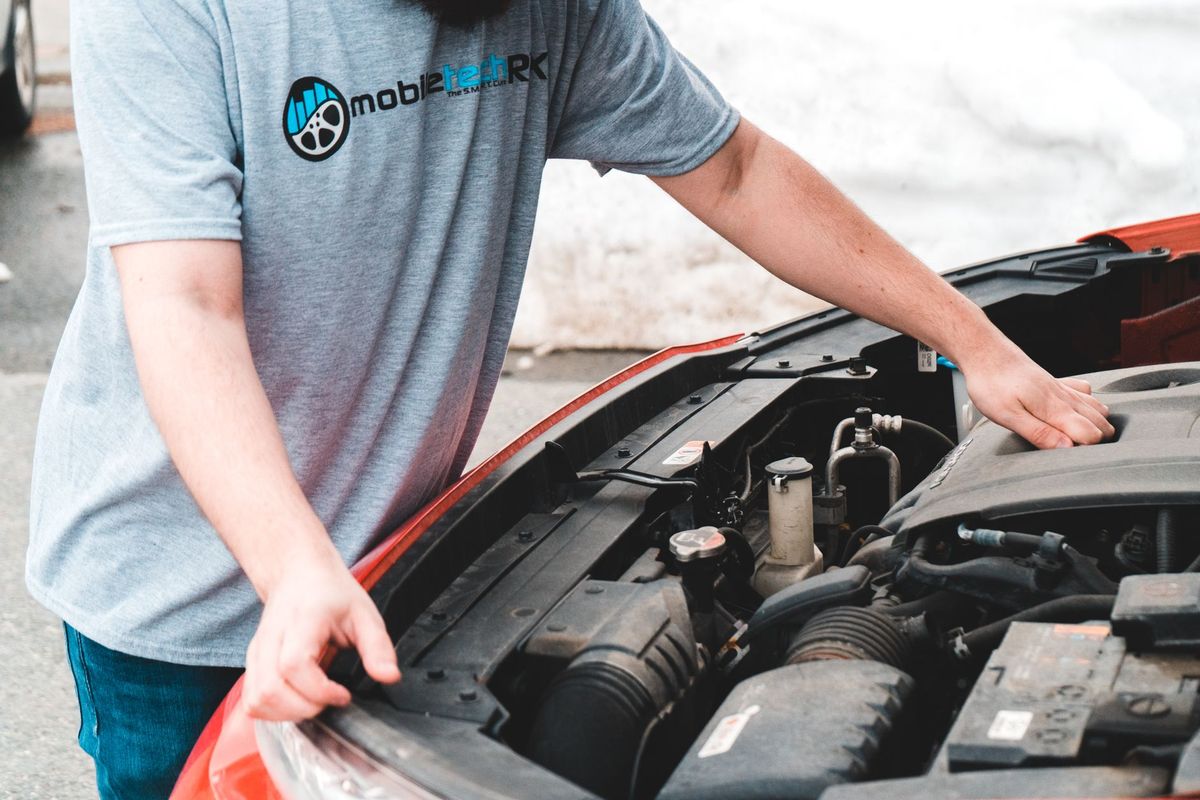
Quick Answer: Pull over. A car overheating on the freeway can warp the cylinder head or blow the head gasket within minutes, and that turns a $200 repair into a $3,000 one. Signal early, get to the right shoulder, shut the engine off, and wait. Don’t open the radiator cap while hot. If you can’t reach a shoulder safely, turn the heater on full blast to pull heat off the engine while you keep moving.
Should I Pull Over or Keep Driving If My Car Is Overheating on the Freeway?
Pull over as soon as you can do it safely. Every minute of driving with a gauge in the red risks warping the aluminum cylinder head or blowing the head gasket, and those are the repairs that total older cars.
Here’s the sequence:
- Turn the A/C off and the heater on full blast, fan at max. The heater core acts as a second small radiator. It’s uncomfortable, but it can drop engine temperature a few degrees while you find an exit or shoulder.
- Signal and move right. Don’t brake hard or swerve across three lanes. A calm, early merge beats a panicked one.
- Stop, shift to park, and shut the engine off. Leave the hazards on.
- Pop the hood latch from inside, but do not open the hood fully for a couple of minutes. Steam can come out hard.
If the temp needle just crept above the middle and there’s an exit within a mile, taking the exit is fine. If it’s pegged hot, steam is coming out, or you smell sweet syrupy coolant, stop where you are.
What Do I Do Once I’m Stopped on the Shoulder?
Shut the engine off, stay in the car with your seatbelt on if you’re close to traffic, and let it cool for at least 30 minutes before touching anything under the hood.
On a busy freeway, the shoulder is the most dangerous place you’ll be today. On something like I-95 through Miami or I-10 in Phoenix in July, shoulders are narrow and traffic moves at 70-plus. If the shoulder is tight, get out on the passenger side and stand well behind the guardrail. Don’t stand between your car and traffic.
While you wait:
- Check the coolant reservoir level (the translucent plastic tank, not the radiator cap). If it’s empty or nearly so, you have a leak or a boil-over.
- Look under the car for a green, orange, or pink puddle.
- Never open the radiator cap on a hot engine. The system runs at roughly 15 psi, and the coolant is well above boiling. Opening it can spray scalding fluid onto your face and arms.
If you’ve got coolant or distilled water, you can add it to the reservoir after 30 minutes of cooling. Plain tap water works in an emergency, just flush it later. If you’ve been dripping fluid, see our guide on adding water to a leaking car and driving.
Can I Drive Again After It Cools Down?
Only if the cause was minor and the coolant level is back to normal, and even then, drive to the nearest exit or shop, not the rest of your trip.
Restarting is reasonable when the gauge was high but nothing visibly leaked, you topped off the coolant, and the temp stays normal after restart. Watch the gauge constantly. If it starts climbing again, shut it off. A repeat overheat means something is actually failing: a stuck thermostat, dead radiator fan, failed water pump, or a coolant leak. We co
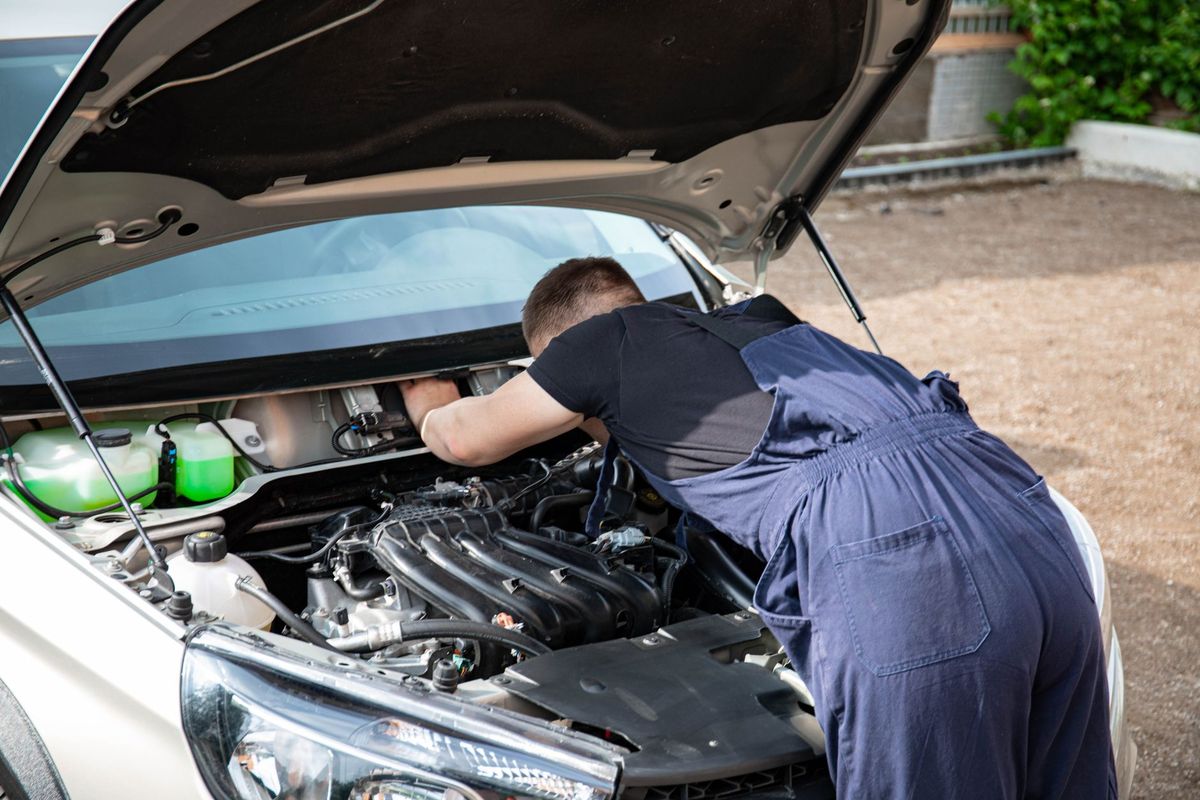 Photo: Pexels
ver that pattern in car overheating every few miles.
Call a tow instead if:
- Coolant is visibly pouring out or the reservoir was bone dry
- You see white smoke from the exhaust (possible head gasket failure)
- The oil on the dipstick looks milky or like a chocolate milkshake
- The engine runs rough, knocks, or loses power
- It overheats again within a few miles
If it won’t restart at all, read car overheated and won’t start.
How Much Damage Happens If I Keep Driving an Overheating Car?
A few extra minutes can cost you the engine. Aluminum heads warp when they get too hot, and a warped head lets coolant leak into the cylinders or oil.
Typical outcomes, from best to worst:
- Caught early: a thermostat, hose, or fan relay. Often a couple hundred dollars.
- Driven a few more miles: a water pump or radiator replacement, usually several hundred to over a thousand.
- Driven while pegged hot: head gasket or cracked head, often $1,500 to $3,500 or more depending on the engine.
- Driven until it seizes: a replacement engine, which can exceed the value of the car.
A tow typically costs a fraction of any of those. If money is the worry, no money for a tow truck lays out your options.
Who Do I Call and How Long Will I Wait?
Call your roadside assistance provider or insurer’s tow line first, and call 911 if you feel unsafe on the shoulder or can’t get fully off the road.
Freeway waits vary widely by traffic and time of day. Some states run free freeway service patrols in major metros, so check your state DOT’s traffic app or dial 511 for road conditions and help options. Expect anywhere from 20 minutes to over an hour. Our breakdown of how long tow trucks take on the highway explains what affects it.
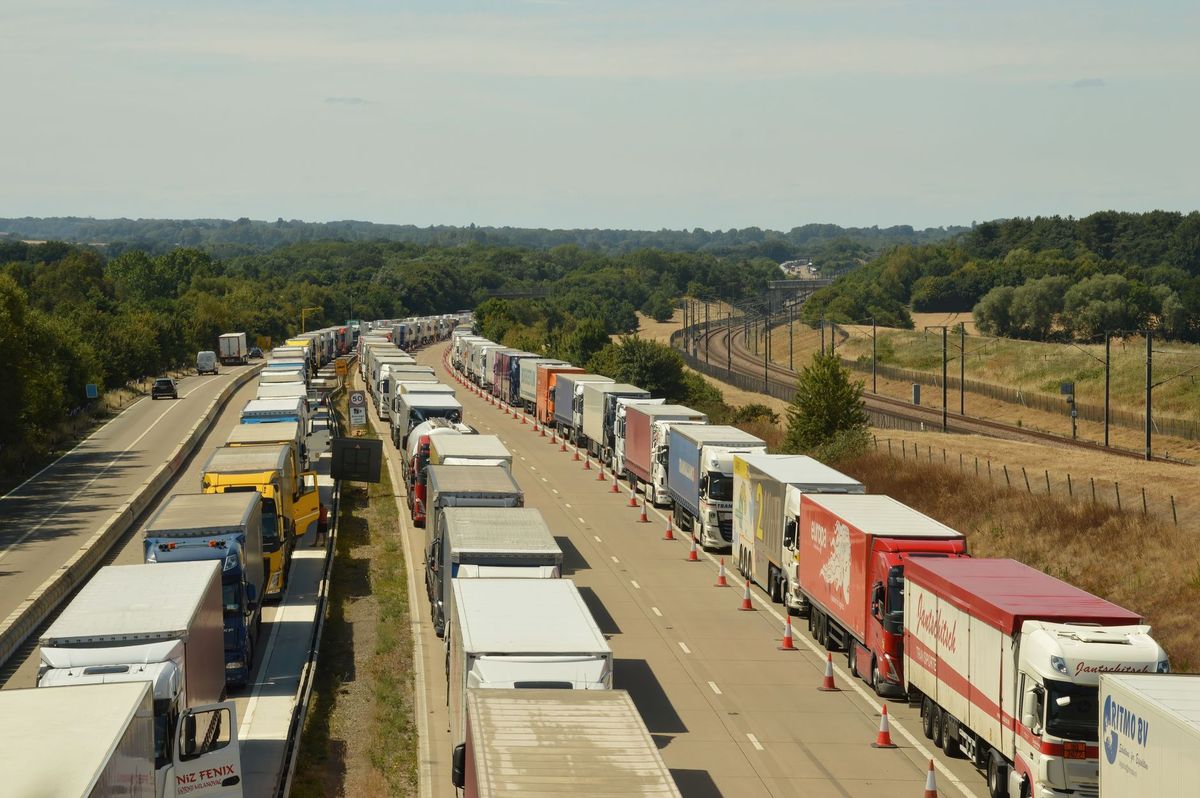 Photo: Pexels
Common Questions
Q: Is it ever okay to keep driving a car that’s overheating? A: Only to reach the nearest safe exit or shoulder, with the heater blasting. If the needle is in the red or steam is visible, stop immediately.
Q: Does turning the heater on actually help an overheating engine? A: Yes. The heater core pulls hot coolant through a small radiator inside the cabin and dumps heat into the air. It won’t fix the problem, but it can buy you a minute or two to reach a safe spot.
Q: How long should I wait before opening the hood or adding coolant? A: At least 30 minutes. Never twist the radiator cap off a hot engine. Add fluid to the reservoir only, after things cool down.
Q: Can I just add water and keep driving? A: Water can get you a short distance if the engine has cooled and the level is low. But low coolant means a leak somewhere, so drive straight to a shop.
Q: Is white smoke from the tailpipe after overheating serious? A: Yes. Sweet-smelling white smoke often means coolant is burning in the cylinders, a sign of a blown head gasket. Don’t drive it. Tow it.
Need roadside help? Visit Tow With The Flow for real answers when your car breaks down.