Quick Answer: Turn on your heater full blast, pull over safely when possible, turn off the engine, and wait 30 minutes before checking coolant. Never remove the radiator cap when hot. Call for help if coolant is low or the problem persists after cooling down.
What To Do
Turn your heater to maximum heat and fan speed immediately. This pulls heat away from the engine and into the cabin. It works because your heater core is essentially a small radiator, and running it at full blast can drop engine temperature by 10-20 degrees in a few minutes. Not a fix, but it buys you time to reach a safe stopping point.
Turn off your air conditioning if it’s running. AC puts extra load on the cooling system. The compressor forces the engine to work harder, generating more heat at the worst possible moment.
Pull over safely as soon as traffic allows. Use hazard lights and find the shoulder, parking lot, or safe spot. If you are in stop-and-go traffic with no immediate exit, creep forward slowly rather than sitting completely still. Moving air across the radiator helps more than idling at a standstill.
Turn off the engine immediately once you’re safely stopped. Do not idle or rev the engine. Idling without moving means the water pump is spinning slowly and airflow across the radiator is minimal. Revving only generates more heat.
Pop the hood but don’t touch anything yet. Let air circulate around the engine bay. If steam is actively billowing out, stand back and wait for it to stop before approaching the engine.
Wait at least 30 minutes for the engine to cool completely. The radiator cap and hoses will be dangerously hot. In warm summer weather, give it a full 45 minutes. The metal and pressurized fluid inside retain heat far longer than the outside of the hood suggests.
Check coolant level in the overflow tank (plastic tank near the radiator). Look for the minimum and maximum lines. This tank is separate from the radiator itself and safe to inspect without removing anything.
Add coolant or water to the overflow tank only if the level is low. Never remove the radiator cap when the engine is hot. If you only have water available, plain tap water will do in an emergency. Diluted coolant is better than an empty system. Top up and check the level again before starting.
Look for obvious leaks under the car. Green, orange, or pink puddles indicate coolant loss. Also check for a sweet smell, which is a strong sign of coolant escaping even if you cannot see a puddle yet. Run your hand along the lower radiator hose if it is cool enough to touch and feel for soft spots or cracks.
Start the engine and monitor the temperature gauge. If it climbs toward hot again, shut off immediately and call for service. A single overheat that resolves with a coolant top-off may be a one-time issue. Repeated overheating within the same drive means something is mechanically wrong and continuing to drive risks warping the cylinder head or blowing a head gasket, both expensive repairs.
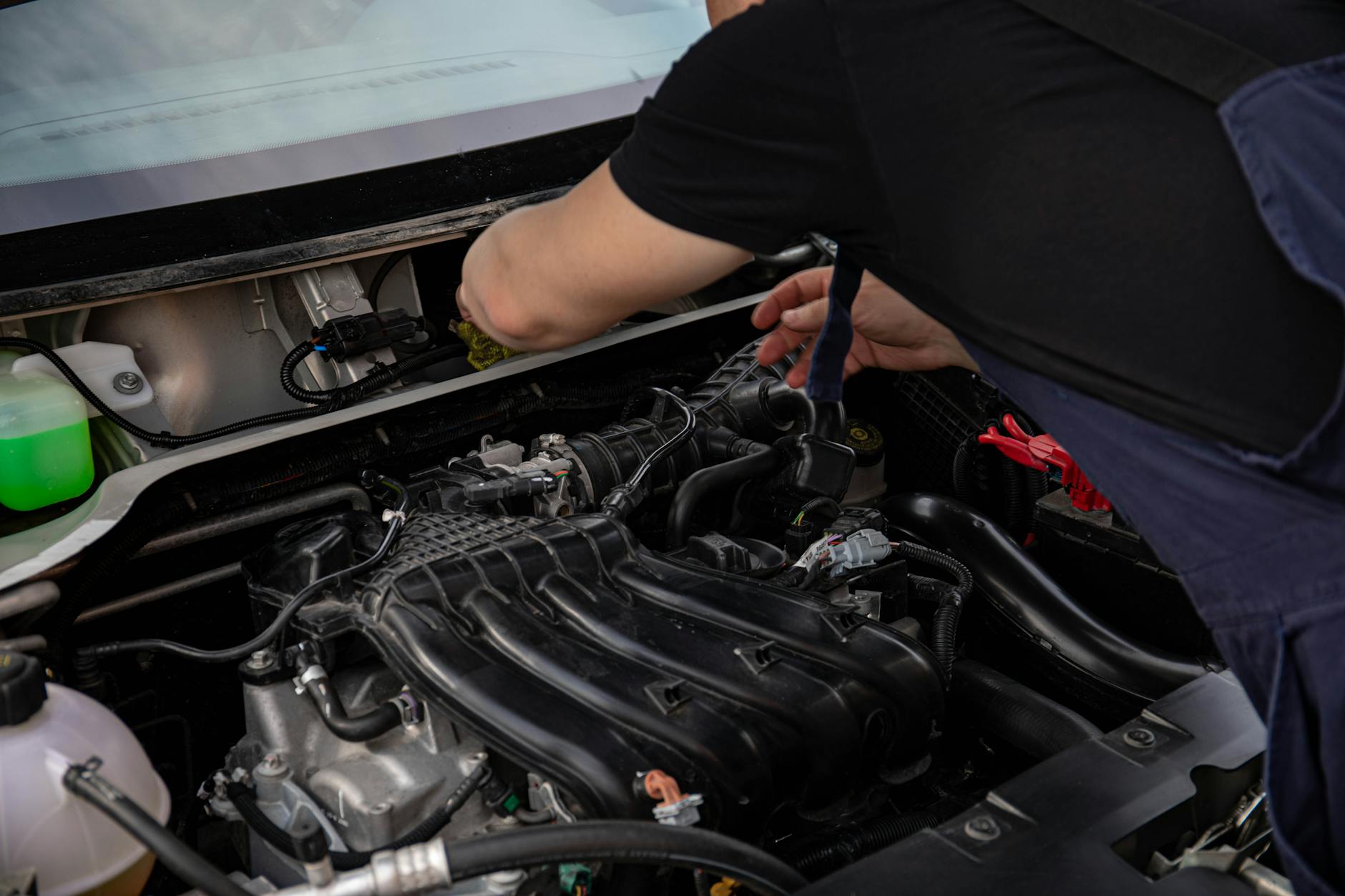 Photo: Pexels
What It Might Cost
- Towing: $100-200 for local service
- Thermostat replacement: $150-300
- Water pump replacement: $400-800
- Radiator repair/replacement: $300-1,200
- Head gasket repair: $1,500-3,000
Common Questions
Q: Can I drive a short distance to a shop if my car is overheating? A: Only if the temperature gauge drops back to normal after you add coolant and let the engine cool. If the gauge climbs into the red within a mile or two, stop immediately. Driving even a few minutes on an overheating engine can warp the cylinder head and turn a $300 repair into a $2,500 one.
Q: Why is my car overheating but the coolant level looks fine? A: A full overflow tank does not rule out a problem. A faulty thermostat stuck closed, a failed water pump, a clogged radiator, or a blown head gasket can all cause overheating even when coolant is present. A stuck thermostat is the most common culprit and one of the cheaper fixes, so start there when a mechanic diagnoses it.
Q: How do I know if I have a blown head gasket from overheating? A: Look for white smoke from the exhaust, a milky or frothy appearance on the oil dipstick, or coolant that bubbles in the overflow tank while the engine runs. Any of these signs mean stop driving immediately. A head gasket repair is serious and gets worse the more you run the engine in that condition.
 Photo: Pexels
Stay Safe
Never remove the radiator cap when the engine is hot. Pressurized coolant can cause severe burns. If steam is coming from under the hood, stay away from the front of the vehicle. Keep windows down if using the heater trick in hot weather to avoid overheating yourself. If the temperature gauge goes into the red zone repeatedly, stop driving and call for professional help.
Need roadside help? Visit Tow With The Flow for real answers when your car breaks down.