Quick Answer: Turn off your AC immediately, turn on the heater full blast, and safely pull over as soon as possible. Never remove the radiator cap while hot. Phoenix heat makes overheating deadly serious for your engine. Call for help rather than risk severe damage.
What To Do
Turn off air conditioning immediately - Your AC puts extra load on an already struggling cooling system. The AC compressor can add 10-15% more load to your engine, and when coolant temps are already climbing, that extra strain can push you from a warning into actual damage within minutes.
Turn heater to maximum heat and fan speed - This pulls heat away from the engine and into the cabin. Yes, it will be miserable, but it can save your engine. The heater core acts as a secondary radiator. At highway speeds with the fan on max, you can shed several hundred BTUs of heat fast enough to buy yourself the time to reach a safe pullover spot.
Pull over safely when traffic allows - Use hazard lights and find the nearest safe spot. Don’t risk your safety for your engine. Stopping on the shoulder of the I-10 is better than seizing an engine in the middle of a lane.
Turn off the engine and pop the hood - Let everything cool down. Popping the hood allows ambient airflow to help dissipate heat faster. Never touch anything under the hood yet.
Wait at least 30 minutes before checking coolant - Phoenix heat makes everything dangerously hot longer than normal climates. Ambient air temps of 110°F mean your engine bay stays scorching far longer than it would in cooler regions. Thirty minutes is the minimum. An hour is safer.
Check coolant level only when cool - Look at the overflow reservoir first, never remove the radiator cap on a hot engine. The reservoir is a translucent plastic tank with MIN and MAX lines. If you can see the fluid level is below MIN, that’s your confirmation the system is low.
Add coolant or water if low and engine is completely cool - In Phoenix, carry extra coolant. Plain water works temporarily but get proper coolant ASAP. Water alone raises the freeze point incorrectly and can accelerate corrosion inside your cooling system. A 50/50 premixed coolant bottle is the right tool to keep in your trunk from May through October.
Drive only to the nearest service station - Keep windows down, heater on, and watch the temperature gauge constantly. If the needle climbs back toward red within a mile or two, pull over again. You may have a more serious problem like a failed water pump, cracked hose, or a head gasket that’s already been compromised.
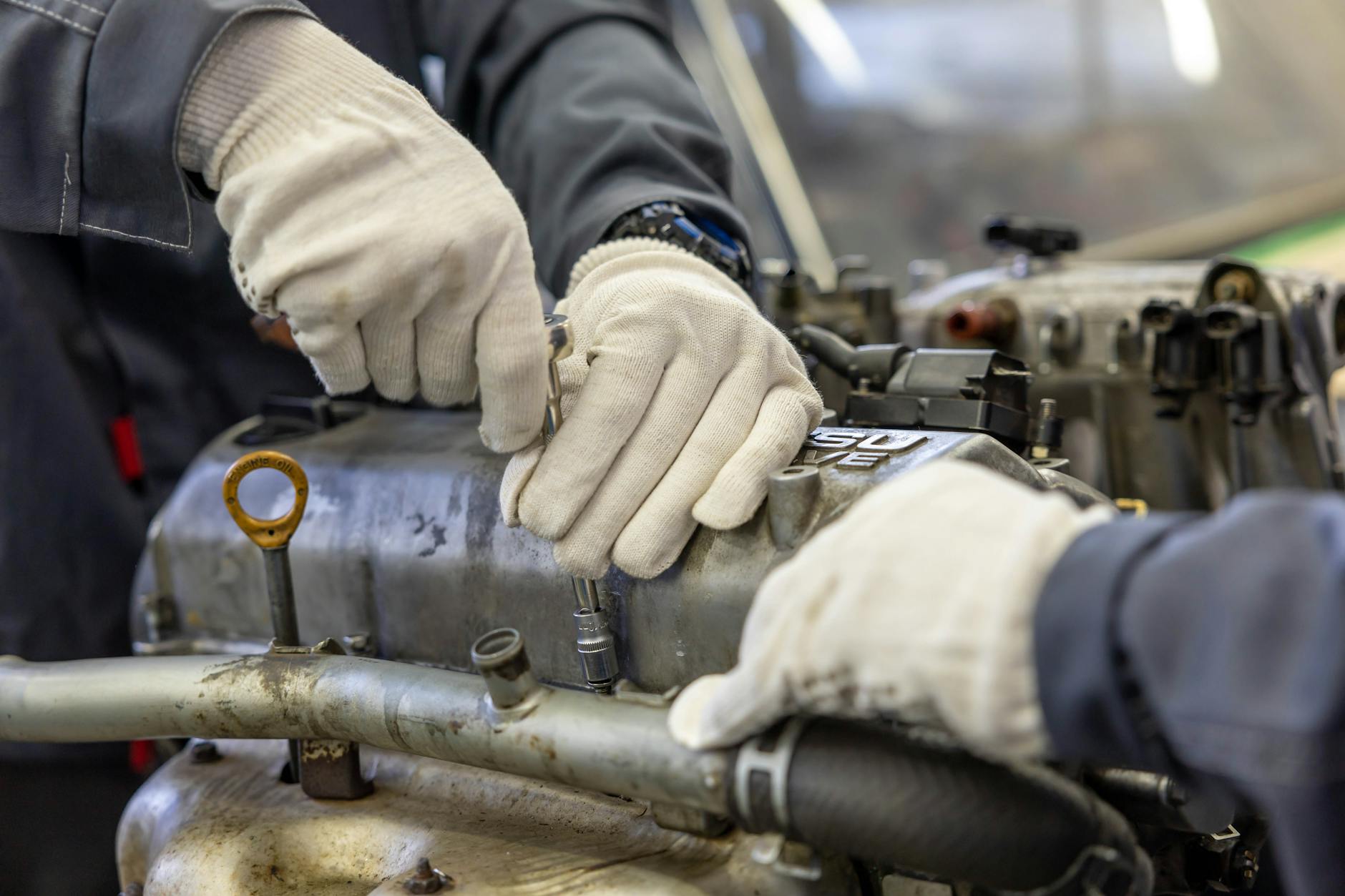 Photo: Pexels
What It Might Cost
- Emergency coolant: $15-25
- Towing in Phoenix heat: $75-150
- Blown head gasket from continued driving: $1,500-3,000
- New radiator: $400-800
Common Questions
Q: Can I drive a few miles to a shop if my car is overheating? A: Only if the temperature gauge drops back to normal after you pull over and add coolant. If it climbs again within the first mile, stop immediately. Driving even two or three miles on an overheating engine in Phoenix summer conditions can warp a cylinder head or blow a head gasket, turning a $150 tow into a $2,000 repair.
Q: Why is my car overheating only in stop-and-go traffic but fine on the highway? A: At low speeds you lose the airflow that helps the radiator shed heat, so the cooling fan has to do all the work. If your electric cooling fan has a bad relay, motor, or temperature sensor, it may not kick on when it should. This is a common failure in Phoenix where fan motors wear out faster due to constant use during hot months.
Q: How do I know if my head gasket is already damaged from overheating? A: Watch for white sweet-smelling smoke from the exhaust, coolant that looks milky or brownish, or the engine overheating again immediately after a proper coolant refill. Any of those signs mean coolant is leaking into the combustion chamber and the car should not be driven until a mechanic confirms the extent of the damage.
 Photo: Pexels
Stay Safe
- Keep extra coolant and water in your car during Phoenix summers
- Never remove radiator cap on hot engine - scalding coolant can cause severe burns
- Stay with your vehicle if stranded - Phoenix heat is deadly for pedestrians
- Call for help if temperature gauge hits red - engine damage happens fast in extreme heat
- Park in shade if possible and crack windows to prevent interior damage
Need roadside help? Visit Tow With The Flow for real answers when your car breaks down.