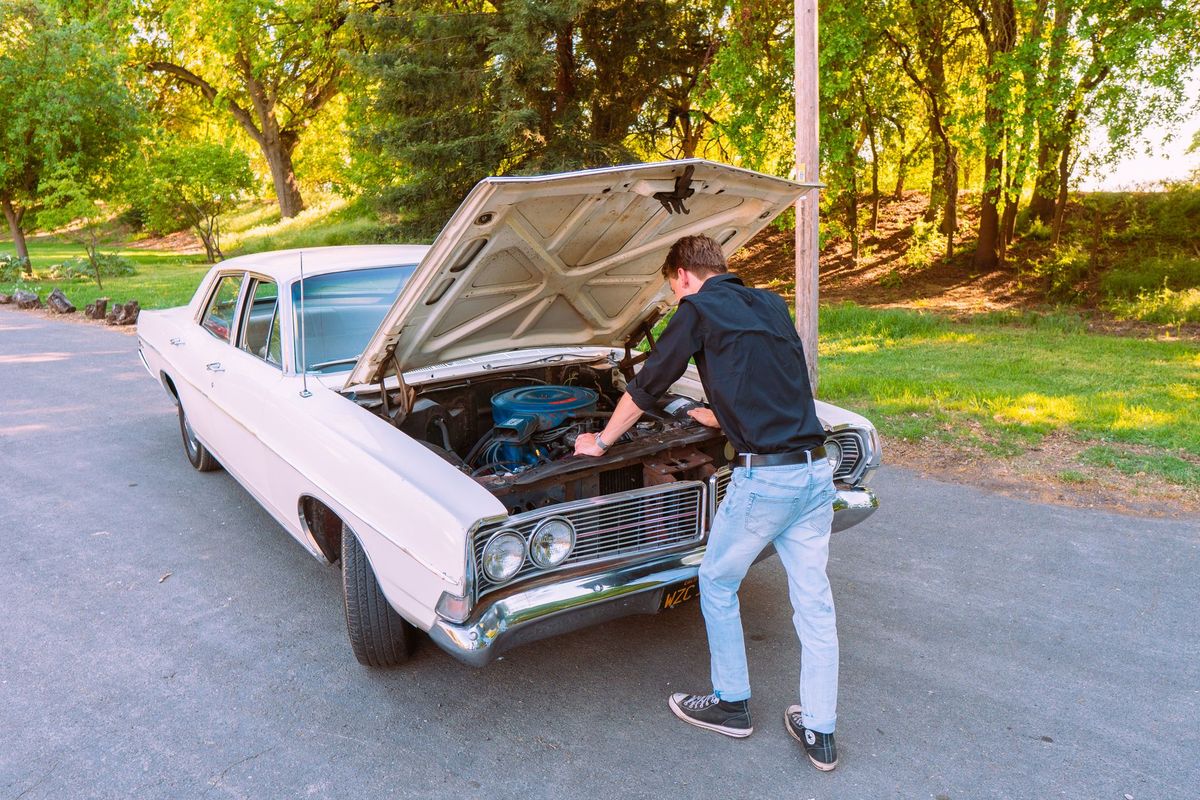
Quick Answer: Pull over immediately and shut the engine off. Do not open the hood or the radiator cap yet. Turn on your hazard lights, get off the road as far as possible, and wait at least 30 minutes before touching anything under the hood. If your temperature gauge is pegged or you see steam, the car is not safe to drive. Call a tow.
What Should I Do the Second I Notice My Car Overheating in Denver Traffic?
Kill the AC, crank the heater to full blast, and get to the right shoulder fast. This sounds backward, but running the heater dumps heat from your coolant into the cabin instead of letting it build in the engine. That buys you 30 to 60 seconds to find an exit or a safe pull-off before you cause serious damage.
In Denver summer traffic, this matters most on stretches like I-25 between the I-70 interchange and the Colorado Boulevard exit, where stop-and-go can trap you for 20 minutes with nowhere to go. If you see the temp needle moving toward red on that stretch, do not wait. Signal, move right, and exit at Colorado if you can. An empty parking lot off the highway beats breaking down in a live lane.
Once stopped: hazard lights on, engine off, do not open the hood for at least 30 minutes. Pressurized steam from an overheated radiator causes serious burns.
Why Does Denver Traffic Make Overheating So Much Worse?
Denver’s altitude and summer heat combine in a way that punishes cooling systems harder than most cities at sea level. At 5,280 feet, your engine has to work slightly harder and your coolant boils at a lower temperature than it would in, say, Dallas. Add 95-degree July afternoons and slow-moving traffic on I-70 westbound toward the Mousetrap or I-25 through downtown, and the cooling system never gets the airflow it needs at idle.
Low coolant is the most common cause. A cracked or loose radiator hose is the second. A serpentine belt that has snapped will also kill the water pump instantly, meaning coolant stops circulating even if the reservoir is full. If you heard a loud snap or squeal right before the temp spiked, that belt is likely the culprit, and the car is not moving under its own power. See Car Serpentine Belt Snapped: Can I Drive? for what to do next.
Can I Add Coolant Myself and Drive to a Shop?
Only if the engine has cooled completely, you can see the coolant reservoir is empty, and you have the right coolant mix on hand. Wait the full 30 minutes minimum. Then check the overflow reservoir first, not the radiator cap. If the reservoir is empty, add a 50/50 mix of coolant and distilled water slowly. Do not use straight water long-term, especially in Denver winters, but it will get you to a shop in an emergency.
If the reservoir is not empty, adding more will not help. The problem is somewhere else: a leak, a failed thermostat, a water pump, or a blocked radiator. In that case, driving further will cause warped cylinder heads or a cracked block. Both repairs can cost more than the car is worth.
Do a quick visual scan once the hood is cool enough to open. Look for coolant dripping under the car, a cracked or bulging hose, or a belt that is missing entirely. If you see any of those, stop there. The car needs a tow, not another five miles of guessing.
Do I Need a Tow, or Can I Drive After It Cools Down?
If the car cooled down, you added coolant, and the temperature stays in the normal range for
 Photo: Pexels
the first mile, you may be okay to drive slowly to a shop. Keep the heater on, watch the gauge constantly, and have a destination in mind before you move.
Photo: Pexels
the first mile, you may be okay to drive slowly to a shop. Keep the heater on, watch the gauge constantly, and have a destination in mind before you move.
If the gauge climbs again within a mile, pull over again immediately and call a tow. At that point you are risking a repair bill in the thousands. For help figuring out who to call and what it will cost to get the car to a shop, check Car Overheating in Denver Summer: Do I Need a Tow? and Towing Cost in Denver Colorado to Mechanic Shop Miles Away.
Any overheating that left the needle in the red for more than a couple of minutes, produced steam from under the hood, or was accompanied by a burning smell means do not drive the car again until a mechanic has looked at it. The risk of driving it is a blown head gasket, which is a $1,500 to $3,000 repair versus a $100 to $150 tow.
Is It Safe to Wait on the Shoulder of I-25 or I-70 in Denver?
Get as far off the travel lane as possible and stay out of the car if you can do so safely. In Denver, CDOT’s HELP program runs patrol trucks on major interstates including I-25 and I-70 during peak hours. These trucks carry basic supplies like water and can help you get to safety or contact a tow. You do not need to call a special number; they patrol actively.
If you are on a busy stretch like I-25 near the Alameda Avenue on-ramp or on I-70 near the Pecos Street interchange, staying inside the car with your seatbelt on is actually safer than standing outside if there is no guardrail or wide shoulder. Put all four ways on, call for help, and stay belted until someone arrives. For more detail on Car Broke Down on Highway in Denver: Who to Call Right Now.
 Photo: Pexels
Common Questions
Q: How long should I wait before opening the hood when my car overheats? A: At least 30 minutes with the engine off. The radiator is pressurized and the coolant can be well above 200 degrees even after the engine shuts down. Opening the cap too soon causes steam burns.
Q: Can I put ice or cold water on the engine to cool it down faster? A: No. Pouring cold water on a hot engine block can crack the block or warp the head. Let it cool on its own.
Q: What does it mean if my heater stops blowing hot air right before the car overheats? A: That usually means your coolant level is already very low. The heater core relies on coolant flow, so when the system runs dry the heater goes cold first. Pull over immediately.
Q: How much does it cost to tow an overheated car to a mechanic in Denver? A: A local tow in Denver typically runs $75 to $150 for the first few miles, with mileage fees added after that. See Towing Cost in Denver Colorado to Mechanic Shop Miles Away for current rate details.
Q: Will my car insurance or roadside assistance cover a tow for overheating? A: Roadside assistance (through AAA, your insurer, or a credit card) typically covers a breakdown tow regardless of cause. Standard liability insurance does not. Check your policy’s roadside or emergency towing rider before you need it.
Need roadside help? Visit Tow With The Flow for real answers when your car breaks down.