Quick Answer: Steering wheel noise usually means worn power steering components, bad CV joints, or failing wheel bearings. Stop driving immediately if you hear grinding or metal-on-metal sounds. Most other noises are safe for short distances but need immediate attention.
What To Do
Identify the noise type:
- Squealing/whining: Low power steering fluid or worn belt
- Clicking/ticking: Bad CV joints (especially when turning into parking spaces)
- Grinding: Worn wheel bearings or brake components
- Groaning: Power steering pump failure
Pay attention to exactly when the noise starts. A click that only appears during a sharp low-speed turn, like pulling into a parking spot, almost always points to a worn CV joint boot that has cracked and let the grease escape. A whine that rises and falls with engine RPM while the car is stationary points to the power steering belt or pump, not the wheels at all.
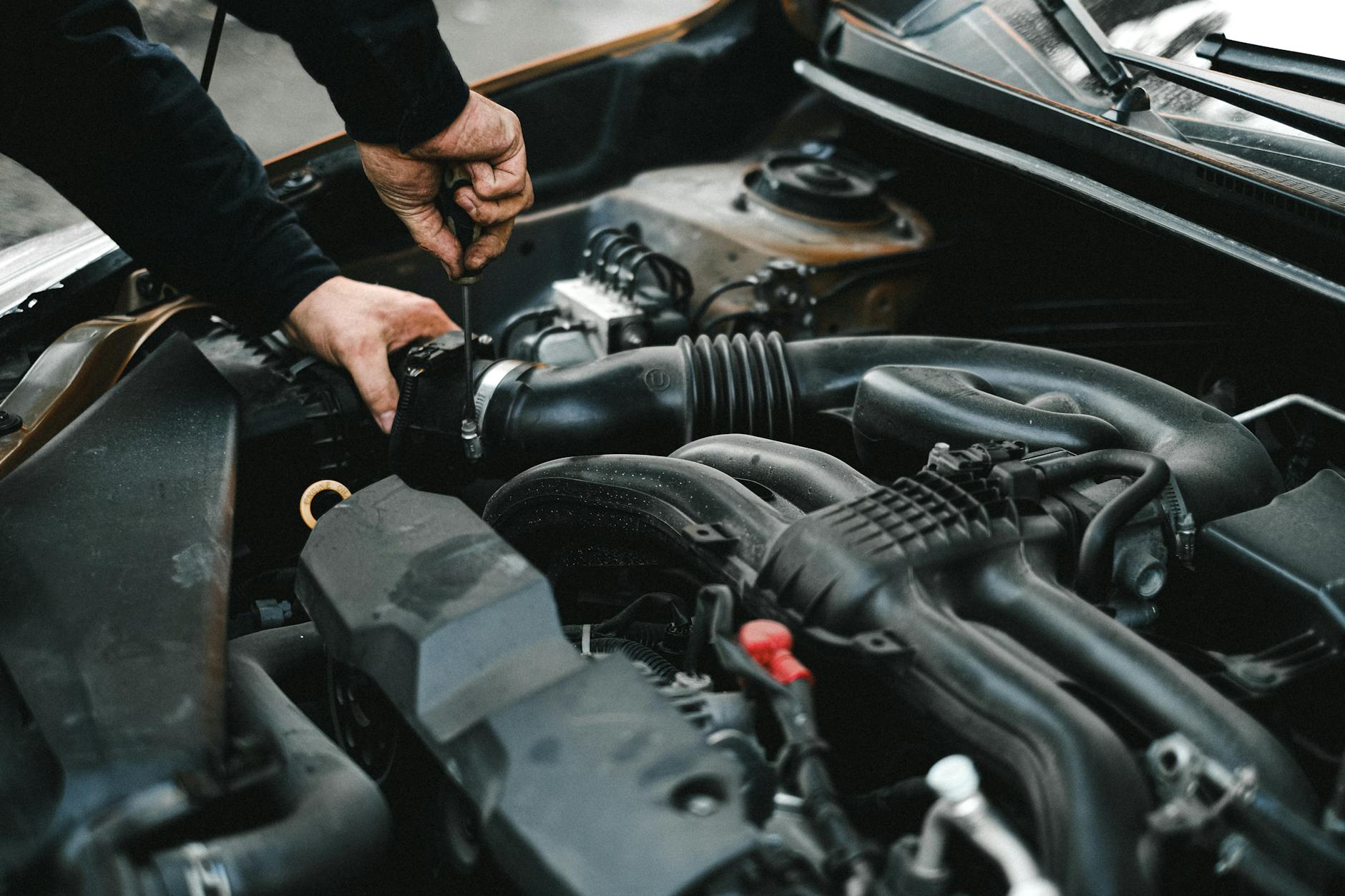
Check power steering fluid level (engine off, cold):
- Locate reservoir near engine
- Fluid should be between MIN and MAX lines
- Dark or burnt-smelling fluid needs replacement
Most reservoirs are translucent, so you can read the level without opening the cap. If the fluid looks brown or smells scorched rather than faintly sweet, the pump has been running hot and the whole system needs a flush, not just a top-off. Topping off with the wrong fluid type (mixing ATF into a system that calls for dedicated power steering fluid) can damage seals within weeks.
Test at idle:
- Start engine, turn wheel left and right while parked
- Note if noise happens only when moving or also when stationary
If the groan or whine is loudest at full lock in either direction, you are cavitating the pump. Cavitation means air is getting into the fluid, usually from a low reservoir or a loose return hose. Do not hold the wheel at full lock for more than two or three seconds during this test, because it strains the pump even on a healthy system.
Listen while driving:
- Does noise occur only when turning?
- Which direction makes it worse?
- Gets louder with speed or stays constant?
A wheel bearing hum that gets louder as speed increases and shifts pitch when you change lanes is a reliable tell. If the hum gets louder when you drift gently left, the right front bearing is usually the culprit, and vice versa. At highway speeds, a bad bearing can sound almost like a tyre noise, so try swapping that test on an empty road before assuming it is tyre-related.
Stop driving if:
- Steering becomes stiff or unresponsive
- Grinding noise gets louder
- Steering wheel vibrates severely
A severely vibrating steering wheel during a turn often means a CV axle is close to separating entirely. At that point you can lose directional control without warning. Pull over, do not just slow down and limp home.
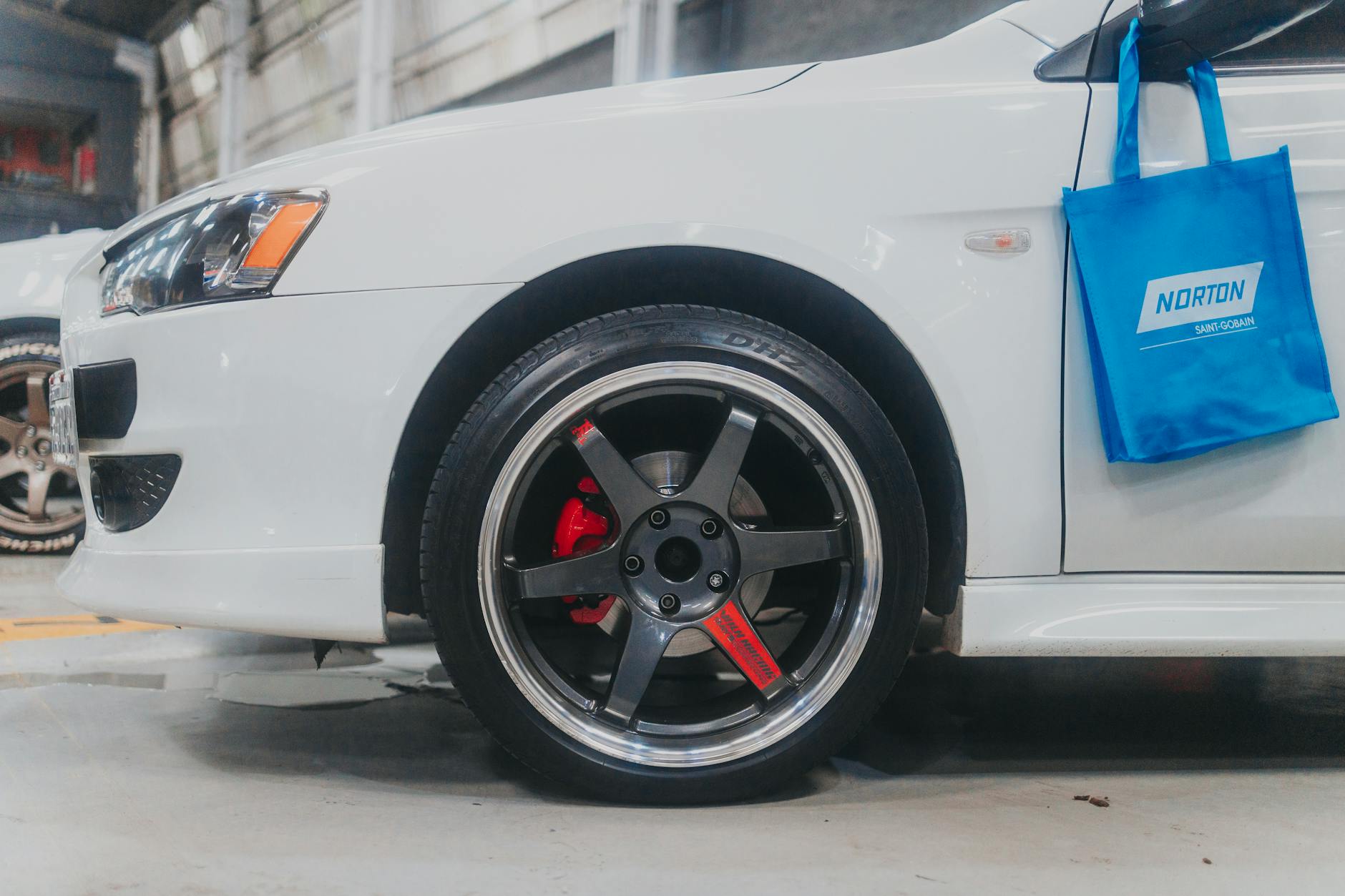 Photo: Pexels
Common Questions
Q: Can I just top up the power steering fluid and keep driving? A: Yes, if the fluid was simply low and the noise stops after topping up, driving short distances is fine. But find out where the fluid went, because power steering systems are sealed and a drop in level means a leak somewhere that will get worse.
Q: My car clicks when I turn into my driveway but drives fine otherwise. Is it urgent? A: It is not an emergency today, but a clicking CV joint is a joint that is already failing. Once the grease is gone the metal wears quickly, and a fully failed CV joint can leave you unable to move the car or, in rare cases, cause a loss of drive while turning at speed. Book it in within the next two to four weeks.
Q: How do I tell a wheel bearing noise from a tyre noise? A: Wheel bearing hum changes pitch or intensity when you shift your weight across lanes at 40 to 60 mph. Tyre noise stays roughly constant through that same manoeuvre. If the sound shifts noticeably when you drift left or right without braking, assume it is a bearing and get it checked.
What It Might Cost
- Power steering fluid top-off: $5-15
- Power steering fluid flush: $80-150
- CV joint replacement: $300-600 per side
- Power steering pump: $200-500
- Wheel bearing replacement: $150-400 per wheel
- Power steering belt: $50-120
 Photo: Pexels
Stay Safe
Never ignore steering noises. Loss of power steering assistance can make your car dangerous to control, especially at low speeds or when parking. If the steering wheel becomes hard to turn or you hear grinding sounds, pull over safely and call for roadside assistance.
Need roadside help? Visit Tow With The Flow for real answers when your car breaks down.