
Quick Answer: Steering wheel noise when turning usually means low power steering fluid, a worn power steering belt, failing CV joints, or bad steering components. Stop driving immediately if the steering feels hard or unresponsive. Check power steering fluid first, then get professional diagnosis.
What To Do
- Pull over safely if steering becomes difficult or makes loud grinding sounds
- Check power steering fluid under the hood - look for the reservoir with a steering wheel symbol
- Listen to the noise type:
- Squealing = likely belt or pump issue
- Clicking/popping = probably CV joints
- Groaning/whining = usually low fluid or pump failure
- Test at idle - turn wheel left and right while parked to isolate the sound
- Check for leaks under the car where you normally park
- Get to a shop immediately if fluid is low, steering is hard, or noise is getting worse
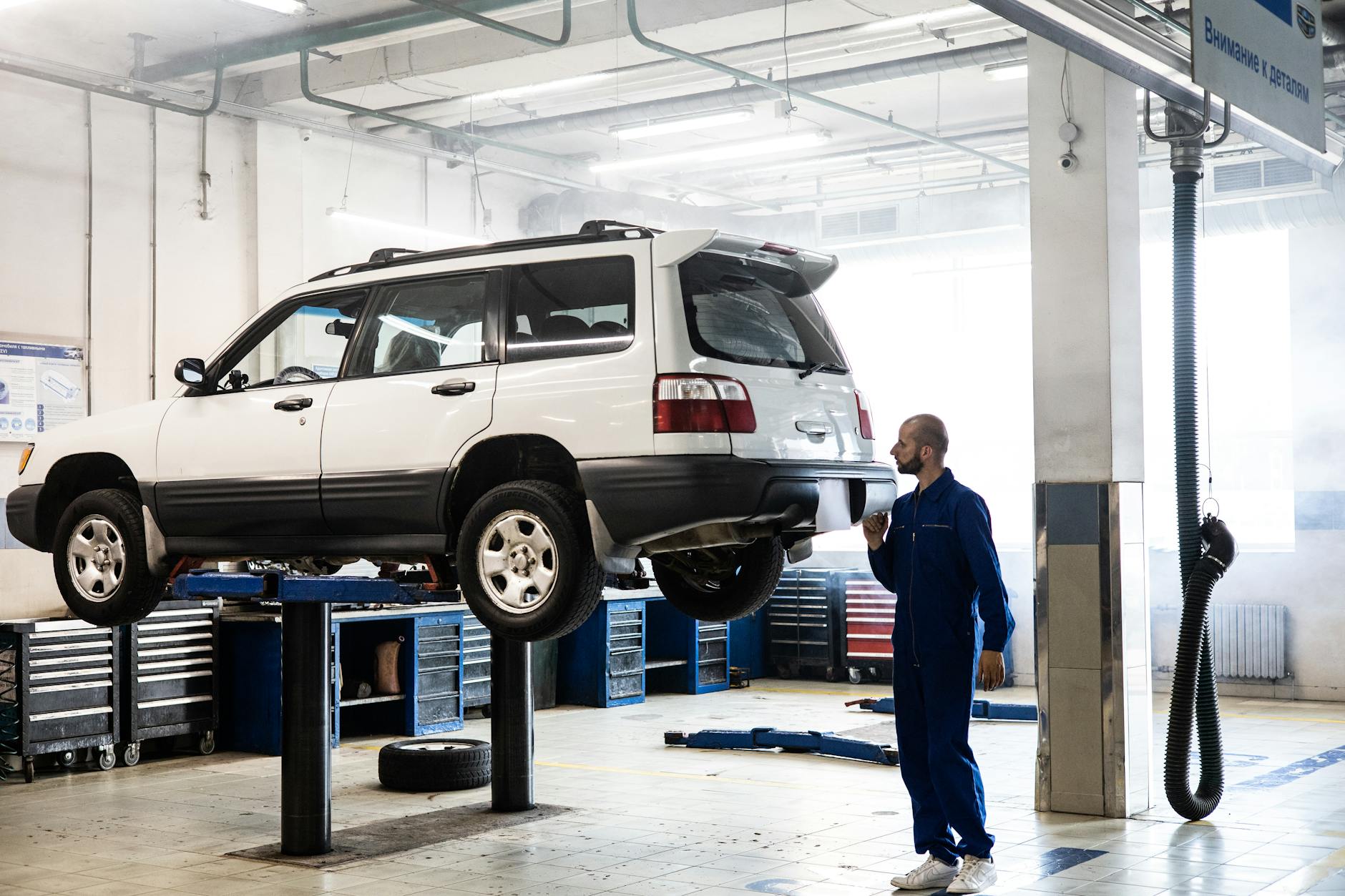 Photo: Pexels
Breaking Down the Noises Further
Not all steering noises mean the same thing, and the specific sound you hear narrows the problem down fast.
Squealing on startup or during sharp turns almost always points to a slipping serpentine or power steering belt. The squeal gets louder when you crank the wheel to full lock. At around 60,000-80,000 miles, these belts crack and lose grip. If you also see a reddish or clear fluid puddle under the front of the car, the pump itself may be leaking and running dry, which accelerates wear on the belt and pump together.
Clicking or popping that only happens while turning and moving is the classic CV joint symptom. CV joints sit at the ends of your axle shafts and handle the angle changes as your wheels turn. The clicking is most obvious during slow, tight turns, like pulling out of a parking spot. Once a CV boot cracks, road grit gets in and the joint wears fast. Ignore it long enough and the joint can separate, leaving you stranded.
Groaning or whining that changes with steering angle usually means the power steering pump is working harder than it should, either because fluid is low or the pump internals are worn. Some vehicles also develop a moan from a failing wheel bearing, which sounds similar but stays constant even when you are driving straight. A quick test: if the groan changes pitch when you gently swerve side to side on an empty road, suspect a wheel bearing, not the pump.
Clunking over bumps combined with noise on turns points toward worn tie rod ends or ball joints. These suspension and steering components develop play over time, and in Houston’s pothole-heavy roads, they wear faster than average. A loose tie rod end is dangerous because it directly affects your ability to aim the car.
Why Houston Makes This Worse
Houston heat accelerates every failure on this list. Power steering fluid breaks down faster above 90 degrees Fahrenheit, losing viscosity and lubricating ability. Rubber CV boots crack sooner in extreme heat, and serpentine belts degrade faster. If your car sits in direct sun daily, budget for these repairs earlier than the national average mileage suggests.
Common Questions
Q: Can I just top off the power steering fluid and keep driving? A: Topping off buys you a short window to get to a shop, but it does not fix the underlying problem. If the fluid was low, it leaked out somewhere, and that leak will drain the reservoir again within days or weeks. Drive to a shop, not around it.
Q: My car has electric power steering and there is no fluid reservoir. What causes the noise? A: Electric power steering uses a motor instead of fluid, so low fluid is not the issue. Noise in these systems usually comes from the electric motor or steering column, worn CV joints, or bad tie rod ends. The diagnostic steps are the same, but there is nothing to top off under the hood.
Q: How urgent is a clicking noise when turning if the car still steers fine? A: A clicking CV joint is urgent even if steering feels normal. The joint is already failing, and once it goes completely, the axle can lose drive or the joint can fracture mid-turn. Most mechanics see complete CV joint failure within a few thousand miles of the clicking starting, sometimes sooner.
What It Might Cost
- Power steering fluid top-off: $15-30
- Power steering belt replacement: $80-150
- Power steering pump: $300-600
- CV joint replacement: $400-800 per side
- Tie rod ends: $200-400
Houston’s heat makes power steering problems worse. Don’t wait.
 Photo: Pexels
Stay Safe
- Never ignore hard steering or loud grinding
- Keep power steering fluid in your car for emergencies
- Houston traffic demands responsive steering
- Pull over if steering wheel vibrates severely
- Avoid sharp turns until diagnosed
Need roadside help? Visit Tow With The Flow for real answers when your car breaks down.