Quick Answer: A loud knocking sound from your engine while driving usually means bearing failure, rod damage, or severe engine knock. Pull over immediately and turn off the engine. Continuing to drive can cause complete engine destruction requiring replacement instead of repair.
What To Do
Pull over safely immediately. Use hazard lights and find the nearest safe spot. Do not coast to a parking lot half a mile away. The shoulder right now is better than the parking lot in two minutes.
Turn off the engine. Do not let it idle. Every second of running increases damage. Oil pressure drops when bearings are failing, and idling still spins those damaged parts against bare metal.
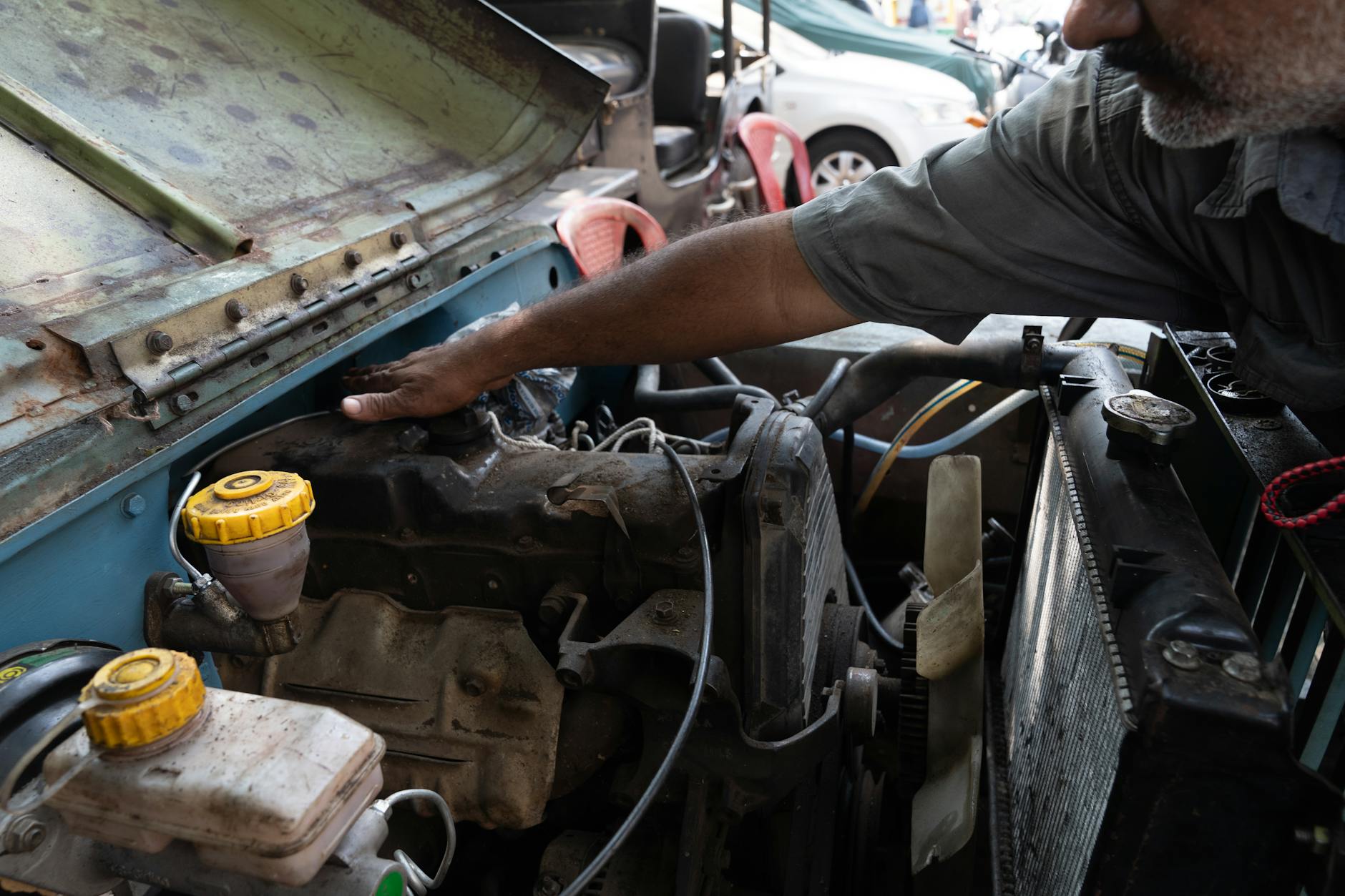
Pop the hood and listen. If knocking continues after shutdown, you have loose components bouncing around. A ticking that stops immediately after shutdown is different from a clunk that lingers. Tell your mechanic which you heard.
Check oil level. Low oil causes bearing knock. If the dipstick shows little or no oil, do not restart. Even if you add a quart and the level looks acceptable, damaged bearings do not heal. The knock will return within minutes.
Call for a tow. Do not drive the vehicle. Even short distances can turn an expensive repair into total engine replacement. A half-mile limp to a shop has destroyed engines that could have been fixed for under $3,000.
Note when it started. Was it gradual or sudden? During acceleration or constant? Does it change with RPM? Does it appear only when the engine is cold, then fade? This information cuts diagnostic time and helps pinpoint the cause before anything is disassembled.
 Photo: Pexels
Common Causes
Rod bearing failure: Sounds like hammering from deep in the engine. Gets worse with RPM. This is the most destructive type. A spun rod bearing can punch through the engine block within minutes of continued driving.
Piston slap: Hollow knocking that may quiet down as engine warms. Still serious. It means the piston is rocking inside the cylinder because clearances are too wide, usually from worn rings or cylinder walls. If it disappears completely at operating temperature, you may have some miles left, but the engine is on borrowed time.
Carbon knock (detonation): Metallic pinging during acceleration, especially under load. Less severe but needs attention. It happens when the air-fuel mixture ignites too early. Try a tank of higher-octane fuel. If it persists, check for vacuum leaks, a failing knock sensor, or carbon buildup on the pistons. Ignoring it long enough will damage pistons.
Loose flywheel or torque converter: Rhythmic knocking that matches engine speed but stays consistent regardless of load. You will often feel a vibration in the floor alongside the sound. This is a transmission-end problem, not internal engine damage, but it still requires a tow.
Wrist pin knock: A sharp, double-knock sound that is most noticeable at idle. The wrist pin connects the piston to the connecting rod. When its bushing wears out, the piston rocks at the top and bottom of each stroke.
What It Might Cost
Minor carbon knock: $200-500 for fuel system cleaning and tune-up.
Rod bearing replacement: $2000-4000 depending on engine access. V8 engines and all-wheel-drive vehicles sit at the high end because labor hours climb fast.
Complete engine rebuild: $4000-8000. This makes sense on a low-mileage engine in an otherwise solid vehicle.
Engine replacement: $3000-6000 for used, $6000-12000 for rebuilt. A used engine from a salvage yard is a gamble without mileage verification. A rebuilt unit with a warranty is safer on a vehicle you plan to keep.
Common Questions
Q: Can I drive just a few miles to the shop if the knocking is not that loud? A: No. Bearing and rod knock can go from manageable to catastrophic in under five minutes of driving. A quiet knock today can become a hole in the block by the time you reach the shop. Call a tow truck instead.
Q: I added oil and the knocking stopped. Is it safe to drive now? A: Not necessarily. If the knock faded immediately after adding oil, you may have caught it early and avoided bearing damage. But if it took a minute or two to quiet down, the bearings ran dry and the surfaces are already scored. Have the oil pressure tested and the engine inspected before putting miles on it.
Q: How do I know if the knock is coming from the engine or somewhere else, like a heat shield or exhaust? A: Engine knock is deep, rhythmic, and changes with RPM and load. A loose heat shield rattles at specific speeds and often disappears when you tap the brakes or shift weight. Exhaust ticks are usually sharper and located toward the front of the engine. If you are not sure, have a mechanic listen before assuming the worst.
 Photo: Pexels
Stay Safe
- Never ignore loud knocking sounds
- Do not add oil and keep driving if bearings are damaged
- Tow only, even for short distances
- Get diagnosis before authorizing major repairs
- Consider vehicle value versus repair costs on high-mileage engines
Need roadside help? Visit Tow With The Flow for real answers when your car breaks down.