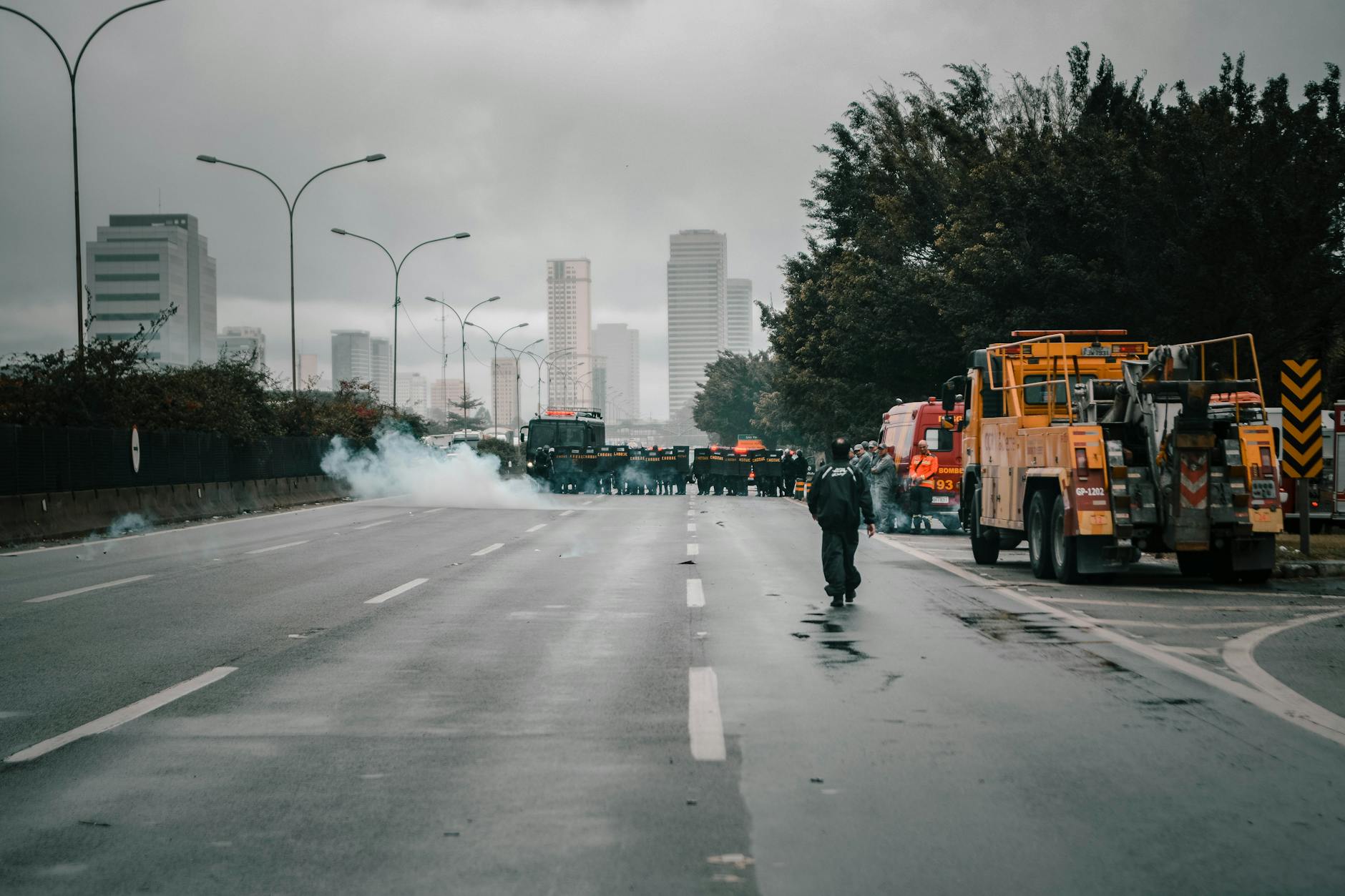
Quick Answer: Grinding noise when braking means metal-on-metal contact, likely worn brake pads or damaged rotors. Stop driving immediately. Towing costs $75-200 locally, $200-500 long distance. This is a safety emergency that requires immediate professional attention.
What To Do
Pull over safely right now. Don’t wait for the next exit or convenient spot.
Turn on hazard lights and move as far from traffic as possible.
Don’t drive the car. Grinding brakes can fail completely without warning.
Call for a tow truck. Your insurance roadside assistance or AAA if you have it.
While waiting, pump the brake pedal gently to check if you have any stopping power left. If the pedal goes to the floor, you have zero brakes.
Take photos of your wheels if safe to do so. Look for metal shavings or dark brake dust around the wheels.
Call ahead to a brake shop to explain the grinding noise and arrange immediate service.
 Photo: Pexels
What’s Actually Happening Inside Your Brakes
Brake pads have a steel backing plate bonded to a friction material. That friction material is what’s supposed to contact the rotor. Most pads come with about 10-12mm of usable material from new. When that material wears down past roughly 2-3mm, a small metal wear indicator tab starts squealing as a warning. If you ignored that squeal, or never heard it, you’re now at zero friction material and it’s bare steel grinding directly against the rotor surface.
That grinding does two things fast. First, it scores deep grooves into your rotors, which are precision-machined to tight tolerances. A rotor that should be 28mm thick can become unsafe and need replacement after losing just 1-2mm from grinding damage. Second, the heat generated from metal-on-metal contact can warp rotors and boil brake fluid, which creates compressible gas bubbles in the hydraulic line and is one of the fastest ways to lose your pedal entirely.
The grinding can also mean a stuck caliper piston, a seized slide pin, or a loose or broken pad that’s shifted sideways. Any of those scenarios is equally dangerous and equally not driveable.
What It Might Cost
Towing:
- Local tow (under 10 miles): $75-150
- Medium distance (10-50 miles): $150-300
- Long distance (50+ miles): $200-500
- Flatbed service: Add $25-50
Brake repairs typically needed:
- Brake pad replacement: $150-400 per axle
- Rotor resurfacing: $50-100 per rotor
- Rotor replacement: $200-600 per axle
- Complete brake job: $300-800 per axle
One important note: shops will almost always recommend doing both axles as a pair. If the front pads are gone on one side, the other side is close. Uneven braking from mismatched pad wear can pull the car sideways under hard stops, which is a serious handling problem on top of everything else. Budget for both axles and you won’t be caught off guard.
If the caliper is seized, add $150-350 per caliper for parts and labor. Brake fluid flush while they’re in there runs another $80-120 and is worth doing if it hasn’t been done in two years or 24,000 miles.
 Photo: Pexels
Common Questions
Q: Can I drive just a mile or two to a shop to save the tow cost? A: That’s a real gamble that usually makes the bill larger, not smaller. A mile of metal-on-metal contact can destroy a rotor that could have been resurfaced, turning a $75 resurfacing job into a $300 replacement. If your pedal is soft or going to the floor, driving even a short distance with compromised stopping power in traffic is not worth it.
Q: Why is the grinding only happening on one side? A: Brake wear is usually symmetric, but a seized caliper piston or stuck slide pin on one side will cause that pad to grind while the other side is fine. You may also notice the car pulling left or right when you brake. This is a caliper problem, not just a pad problem, and it needs a proper caliper inspection before the shop just swaps pads.
Q: The grinding started this morning but stopped after a few stops. Is it safe now? A: No. Intermittent grinding that quiets down usually means a stuck pad or caliper that temporarily freed itself, or a rotor surface condition that smoothed slightly with heat. The underlying problem is still there and will return, often at the worst possible moment. Get it inspected today.
Stay Safe
- Never ignore grinding brake noises
- Don’t pump brakes repeatedly while driving, this can cause total brake failure
- Keep your foot ready to use the parking brake if regular brakes fail
- If brakes fail completely while driving, pump the pedal once, then use parking brake gradually
- Find the closest safe spot, even if it means driving on a shoulder briefly
- Warn other drivers with hazard lights and horn if necessary
- If you must drive a very short distance to safety, go extremely slow and use engine braking
The grinding sound means your brake pads are completely worn and metal backing plates are scraping your rotors. Every foot you drive causes expensive damage and reduces your ability to stop. This isn’t a problem you can postpone.
Need roadside help? Visit Tow With The Flow for real answers when your car breaks down.