Quick Answer: Grinding when you brake usually means your pads are worn down to the metal backing plate and are chewing into the rotors. A short, slow drive to a nearby shop is often survivable, but it’s a gamble. If the pedal feels soft, the car pulls to one side, or the shop is more than a few miles away, call a tow.
Is It Safe to Drive My Car to the Shop With Grinding Brakes?
Sometimes, but only if the brakes still stop the car normally and the shop is close. Grinding means friction material is gone, so every stop is damaging the rotors and reducing your stopping power.
Drive to the shop only if all of these are true:
- The pedal feels firm and stops the car in a normal distance
- The car doesn’t pull left or right when you brake
- No brake warning light is on
- The shop is a few miles away, on roads with no steep hills or highway speeds
If any of those fail, stop driving. A $150 pad job becomes a $600 or more pad, rotor, and caliper job when you keep going. Worse, you can lose braking entirely.
What Does a Grinding Noise When Braking Actually Mean?
It almost always means metal is contacting metal. Brake pads have a steel backing plate behind the friction material. Once the friction material wears off, that plate scrapes directly against the rotor.
Squealing comes first. Most pads have a small metal wear indicator that screeches when the pad is low. Drivers ignore that sound for weeks, then it turns into grinding.
Other causes are less common but real:
- A stuck caliper that keeps one pad dragging, wearing it out early
- A rock or debris caught between the rotor and the dust shield (a scraping sound, often constant, not just when braking)
- Rust on the rotor after the car sat for days. This grinds for the first few stops, then fades. That’s normal, not a failure
- A failing wheel bearing, which grinds or hums with speed and not only when you brake
Grinding that happens only when you press the pedal and gets worse over days points to the pads.
What Do I Do Right Now If the Grinding Just Started?
Slow down gently, avoid hard braking, and get off the road at the next safe spot. Leave extra following distance because your stopping distance is longer than you think.
Then check three things:
- Pedal feel. Press it in a parking lot at low speed. Soft, spongy, or sinking toward the floor means a hydraulic problem. Do not drive. If the pedal ever drops to the floor on the road, follow the steps in Brake Pedal Went to Floor While Driving: What to Do Right Now.
- Pulling. If the car drifts to one side under light braking, a caliper is likely sticking.
- Smell and heat. A sharp burning smell near one wheel means a dragging brake. See Car Making Burning Smell After Driving: Should I Pull Over? for what that tells you.
A useful trick: look through the wheel spokes at the rotor. A deep groove, a shiny blued ring, or a rotor that looks scored like a record means the damage is already well along.
For the drive-or-tow decision in more detail, see [Car Making Grinding Noise When Braking: Safe to Drive or Tow?](/car-making-grinding-nois
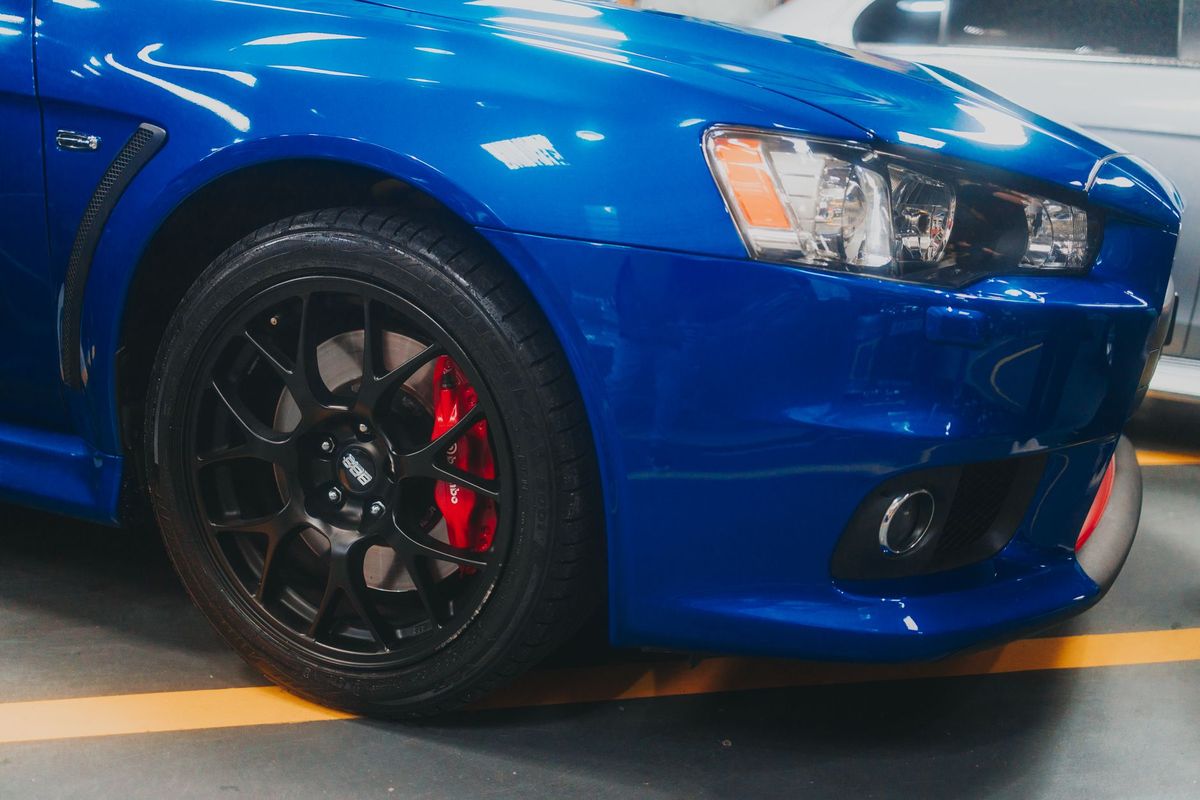 Photo: Pexels
e-when-braking-safe-to-drive-or-tow/).
When Should I Call a Tow Instead of Driving?
Call a tow if the pedal is soft, the car pulls hard, the brake warning light is on, or you’d need to use a highway or steep hill to reach the shop. Any one of those means the risk of losing stopping power outweighs the tow bill.
Also tow if the grinding is loud and constant, if you feel vibration through the pedal or steering wheel, or if the car is loaded with passengers or cargo.
Brakes are the one system where “I’ll risk it” can end in a collision. A tow typically costs less than the damage or deductible from a rear-end crash.
If money is the obstacle, check what you already have. Many insurance policies and memberships include towing, and How Far Will Insurance Tow My Car After a Breakdown? explains the mileage limits. If you’re short on cash, Car Broke Down and No Money for a Tow Truck: What Are Your Options? lists realistic ways to cover it.
How Much Will It Cost to Fix Grinding Brakes?
Caught early, a pad replacement on one axle often runs a couple hundred dollars at an independent shop. If the rotors are scored, add rotor replacement, and the total climbs noticeably. A seized caliper adds more on top.
Prices vary by vehicle, region, and parts quality, so get a written estimate before work starts. Ask the shop to show you the old pads and the rotor surface.
The pattern is consistent: the longer you drive on grinding brakes, the more parts you replace. Pads alone are the cheap outcome. Pads plus rotors plus a caliper is what waiting buys you.
 Photo: Pexels
Common Questions
Q: How long can I drive with grinding brakes? A: There’s no safe mileage number. Grinding means the pads are gone, and rotor damage and reduced stopping power get worse with every stop. Limit yourself to a short, slow trip to a shop, or tow it.
Q: Why do my brakes grind only in the morning or after rain? A: Light surface rust forms on rotors overnight or in damp weather. It grinds for the first few stops, then clears. If the noise persists past the first few braking events, the pads are worn.
Q: Can I just replace the pads and skip the rotors? A: Only if the rotors are smooth and above minimum thickness. Grinding usually scores the rotors, and new pads on a grooved rotor wear fast and brake poorly. A shop can measure them to know for sure.
Q: Is grinding when I brake the same as grinding when I turn? A: No. Grinding only when braking points to pads or rotors. Grinding or humming when turning or at speed more often points to a wheel bearing or CV joint.
Q: Will my insurance or roadside plan tow me for bad brakes? A: Many plans cover towing for a mechanical failure, up to a mileage limit. Check your policy or membership first, since coverage varies. Does GEICO Cover Towing and Roadside Assistance? What You Need to Know is one example of how those policies read.
Need roadside help? Visit Tow With The Flow for real answers when your car breaks down.