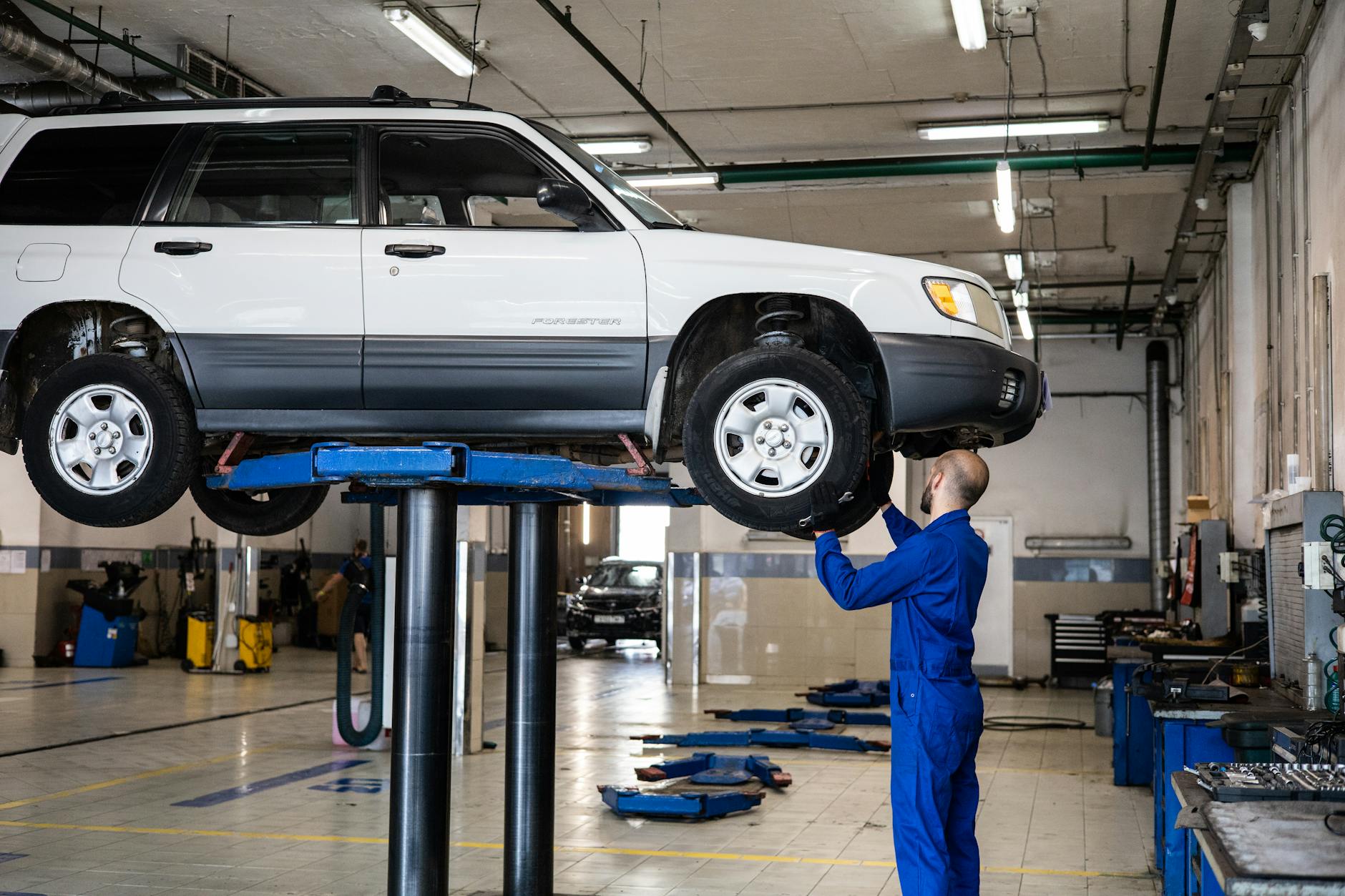
Quick Answer: Grinding while driving is a serious warning. The most common causes are worn brake pads grinding into the rotor, a failing wheel bearing, or debris caught in the brake caliper. Grinding that happens only when braking is almost certainly brakes. Grinding at all speeds regardless of braking points to a wheel bearing. Neither is safe to ignore. Brakes grinding on metal reduce stopping ability significantly.
What To Do
- Identify when the grinding happens. Only when braking? All the time? During turns? At specific speeds? This narrows the cause fast.
- If grinding only when braking, your brake pads are likely worn down to the metal backing plate. This is urgent, you’re grinding the rotor and your stopping distance is increasing.
- If grinding at all times (not just braking), suspect a wheel bearing. Try to notice if the sound changes when you swerve gently left or right, a bearing noise often changes pitch during weight transfer.
- If grinding during turns, it could be a CV joint in late-stage failure or a brake pad dragging from a seized caliper.
- Pull over and inspect the wheel area if it’s safe. Look for obvious debris, a rock or road debris can get wedged between the pad and rotor and grind loudly until it clears.
- Don’t delay brake repairs. If you’ve determined it’s the brakes, drive carefully to the nearest shop. Avoid high speeds and hard stops. This is not a park-it-and-deal-with-it-later situation.
Grinding Noise by Situation
| When It Grinds | Most Likely Cause | Urgency |
|---|---|---|
| Only when braking | Worn brake pads, damaged rotor | High, fix this week |
| All the time, every speed | Wheel bearing failure | High, can cause wheel to lock |
| During slow turns | CV joint late-stage failure | Medium-high |
| At certain speed, goes away | Debris in brakes | Usually low, often self-clears |
| When starting from a stop | Rust on rotors (normal after sitting) | Low, clears on its own |
What It Might Cost
| Repair | Typical Cost |
|---|---|
| Brake pads (front or rear, both sides) | $150 – $300 |
| Brake pads + rotors (one axle) | $250 – $500 |
| Wheel bearing replacement | $250 – $500 per wheel |
| Caliper replacement | $200 – $400 per side |
| CV axle replacement | $200 – $500 per side |
Waiting on brake repairs always makes them more expensive. Metal-on-metal grinding ruins rotors. A $150 pad job becomes a $450 pads-and-rotors job within days of grinding starting.
Stay Safe
- If grinding brakes get worse suddenly, increased stopping distance, brake pedal going to the floor, or smoke from a wheel, stop driving immediately. You may be losing brake function.
- A seized caliper will cause continuous grinding and heat buildup. The wheel can get extremely hot, which is a fire risk. If one wheel feels hot after driving, the caliper may be seized.
- Wheel bearing failure can cause the wheel to lock up without warning at speed. If you suspect a bearing (constant grinding, pulling, wheel wobble), do not drive on a highway.
- Never ignore grinding that gets louder over days. It means the component is deteriorating. The earlier you fix it, the cheaper and safer it is.
Common Questions
Q: Can I drive my car for a few days with a grinding noise to save up for the repair? A: It depends on the cause, but in most cases a few days of driving will make the repair significantly more expensive and could put you in danger. Metal-on-metal brake grinding can destroy rotors within days, and a failing wheel bearing can lock up without warning at highway speeds.
Q: How do I tell if the grinding is the brakes or a wheel bearing without taking it to a shop? A: Pay attention to when the grinding happens. If it only occurs when you press the brake pedal, the brakes are almost certainly the cause. If you hear it constantly at all speeds and it changes pitch slightly when you swerve gently left or right, a wheel bearing is the more likely culprit.
Q: My car was sitting for a few days and now grinds briefly when I start moving. Is that serious? A: That is usually surface rust on the brake rotors, which is completely normal after a car sits unused. It typically clears up within the first few stops and is nothing to worry about as long as the noise goes away quickly and does not return while driving normally.
Need roadside help? Visit Tow With The Flow for real answers when your car breaks down.