> **Quick Answer:** Pull over immediately, shut off the engine, get everyone out, and move at least 100 feet from the vehicle. Do not open the hood. Call 911 first, then a tow truck. Smoke under the hood can become an open fire in under a minute. This car does not get driven again until a mechanic clears it. You need a tow.
## Is Smoke Under My Hood Actually a Fire Emergency?
It can be, and you have to treat it like one until proven otherwise. Smoke under the hood means something is hot enough to burn, whether that's oil dripping onto an exhaust manifold, a coolant hose that has let go, or actual electrical wiring catching fire. You cannot tell which one from the driver's seat, and the difference between a steam cloud and actual combustion can disappear in thirty seconds.
The one you cannot afford to ignore: an electrical fire. Wiring insulation burns fast, it spreads to plastic components and fuel lines, and a car fire can become fully involved in under two minutes. If you see orange or yellow flame, or the smoke turns black and acrid, get out immediately.
## What Do I Do the Moment I See Smoke Coming From Under the Hood?
Get off the road, stop the car, and get out. Here is the order:
1. Signal and pull over to the shoulder or a parking lot. Do not stop in a travel lane.
2. Shift into park and turn the ignition off. Cutting power stops fuel from pumping and removes ignition sources.
3. Get all passengers out immediately. Leave your belongings.
4. Move at least 100 feet away from the car, upwind if smoke is visible.
5. Do not open the hood. Opening it feeds oxygen to any smoldering fire and can cause a flashover.
6. Call 911. Even if the smoke has stopped, fire crews can check for hidden hot spots your mechanic cannot see roadside.
7. Call a tow truck once emergency services are on the way.
If you are on a highway, stay behind a guardrail if one is available. Traffic is a second hazard once you are outside the vehicle.
## Can I Drive It to the Nearest Shop Instead of Calling a Tow?
No. A car that produced hood smoke should not move under its own power until the source is identified and repaired. Driving it risks reigniting the cause, losing brake function if a brake fluid line is leaking onto hot components, or losing power steering if the serpentine belt has failed. Any of those scenarios at highway speed turns a breakdown into a crash.
Even if the smoke stopped and the temperature gauge looks normal, something failed enough to create heat you should not have seen. Get it towed. The tow cost is far less than a totaled car or an ER visit. If you are wondering what that tow will run you, the national range for a local tow is roughly $75 to $150 for the first few miles, with per-mile charges after that.
If you have roadside assistance through your insurance or AAA, this is exactly the situation that coverage exists for.
## What Actually Causes Smoke Under the Hood, and Does It Change What I Do?
The most common sources are an oil leak dripping onto the exhaust manifold, a blown coolant hose spraying onto hot engine parts, a slipping serpentine belt generating friction smoke, or an electrical short in the wiring harness. An oil or coolant source usually produces white or gray smoke with a distinctive smell, burnt oil or sweet coolant. Electrical fires produce a sharp, acrid smell and often dark smoke.
Non
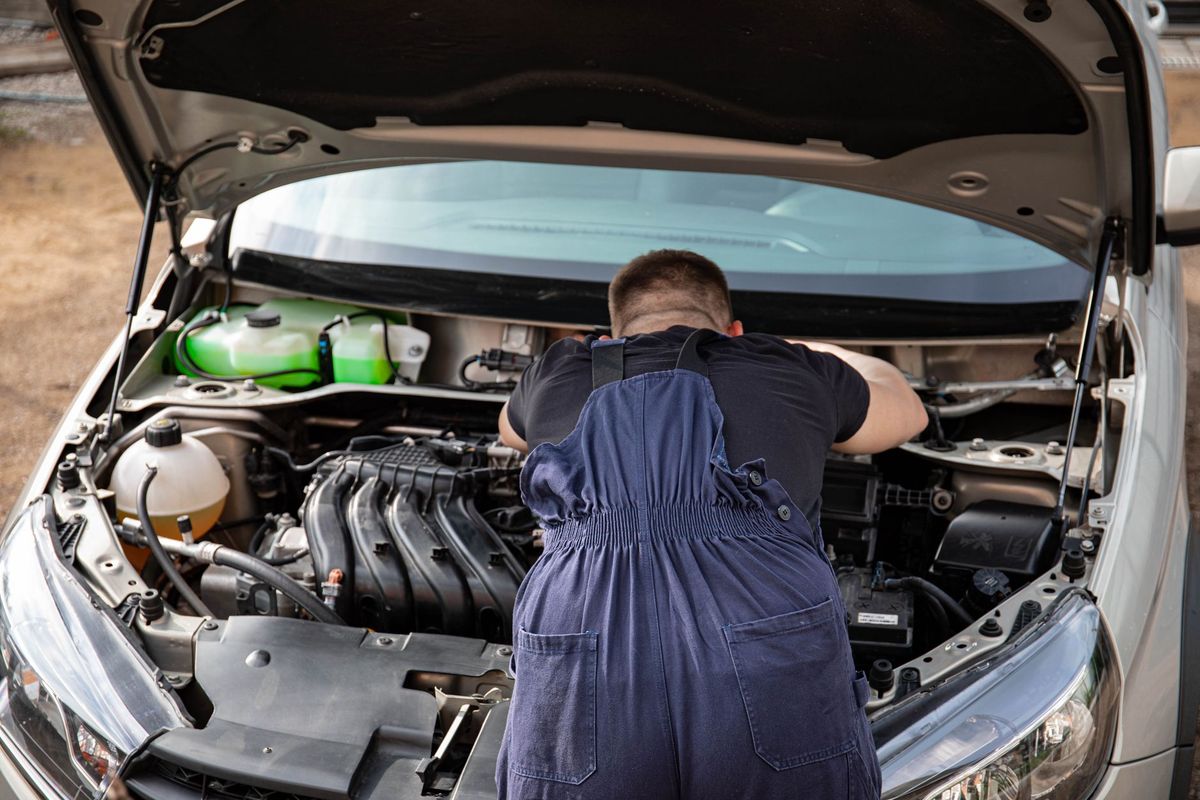
*Photo: Pexels*
e of these are drive-it-home situations. A blown coolant hose leads to an overheated and potentially seized engine within minutes if you keep driving. A burning oil leak can ignite surrounding components. A wiring fire is unpredictable and fast. If you have seen white smoke with your car running hot before, read about [car overheating white smoke](/car-overheating-white-smoke-tow-truck-needed/) for more on what that combination usually means mechanically.
The cause changes what the repair will be, but it does not change what you do at the roadside: stop, get out, call for help.
## What Will This Cost Me, and Will Insurance Cover the Tow?
A local tow to a shop runs $75 to $150 in most markets. If you need to tow to a dealership or specialty shop across town, expect $150 to $250 depending on distance.
Your auto insurance covers the tow if you have roadside assistance added to your policy. Comprehensive coverage does not typically pay for the tow itself, but it can cover fire damage to the vehicle if an actual fire occurred. Call your insurer from the scene after 911 and the tow truck are arranged. If the fire caused significant damage, document everything with photos before the car is moved.
If another vehicle's mechanical failure caused the fire (a rare scenario in a rear-end collision, for example), the at-fault party's liability coverage may apply. For more on how towing fees get sorted after an accident, see [who pays towing costs after a not-at-fault accident](/who-pays-towing-costs-after-not-at-fault-accident/).
For cars that were smoking but showed no flame, many insurers will cover the tow under roadside assistance without it affecting your collision or comprehensive rates. Confirm with your specific carrier.
---
*Photo: Pexels*
## Common Questions
**Q: Should I open the hood if I see smoke coming from my car?**
A: No. Opening the hood introduces oxygen and can turn a smoldering situation into an open fire. Let firefighters open it with the right equipment.
**Q: What if the smoke stopped on its own? Is it safe to keep driving?**
A: No. Smoke stopping does not mean the problem is gone. It means whatever was burning may have temporarily cooled or run out of fuel to burn. The underlying failure is still there. Get it towed.
**Q: How do I know if my car actually caught fire vs. just overheating steam?**
A: Steam is white and smells like coolant, often sweet or neutral. Fire smoke is darker, smells acrid or like burning plastic and rubber, and may show visible flame. Treat any smoke as a potential fire until 911 confirms otherwise.
**Q: Will my insurance pay for a tow if my car caught fire?**
A: If you have roadside assistance on your policy, yes, the tow is typically covered. If the fire caused damage to the vehicle, comprehensive coverage applies to the repair, subject to your deductible. Document the scene with photos before the tow.
**Q: What do I tell the tow truck driver about a car that had hood smoke?**
A: Tell them exactly what happened: smoke from under the hood, whether you saw flame, and whether firefighters were on scene. They need to know if the vehicle may still be hot or if there is fire damage that affects how it gets loaded onto the flatbed.
---
*Need roadside help? Visit [Tow With The Flow](https://towwiththeflow.com/car-fire-smoke-under-hood-towing-needed/) for real answers when your car breaks down.*
Car Fire Smoke Under Hood: What to Do Right Now and Why You Need a Tow
Photo: Pexels