> **Quick Answer:** Pull completely off the road, turn on your hazards, and stay in the car with your seatbelt on if traffic is near. Check for cell signal or use an app like Google Maps offline to find your location. Call your roadside assistance provider or 911. A tow from a remote location can run $200 to $500 or more depending on distance to the nearest shop. Do not start walking unless you are certain help is not coming.
## What Do I Do in the First Five Minutes After Breaking Down in the Middle of Nowhere?
Get off the road and make yourself visible. That is the entire job right now. Steer onto the shoulder or any flat area away from traffic, put it in park, and flip on your hazard lights immediately. If you have road flares or reflective triangles, place them 100 to 300 feet behind the car. Stay inside with your seatbelt fastened if vehicles are passing at speed. Getting out and standing behind a car on a rural highway is how people get seriously hurt.
Once you are stopped and safe, do a quick assessment: did you hear a loud bang (likely a blowout), did the engine just cut out (fuel, battery, or alternator), or did a warning light fire before the car died? Knowing the symptom helps when you call for help, because dispatch will ask. Check your temperature gauge and oil pressure light especially. If either is in the red, do not attempt to restart the engine.
## How Do I Get Cell Service or Call for Help When There Is No Signal?
Try every option before assuming you are completely cut off. Step out of the car and move to higher ground nearby, even a few feet of elevation can make a difference. Turn off Wi-Fi on your phone so it locks onto the strongest cell tower. On most U.S. carriers, you can dial 911 even with zero bars, because the call routes through any available tower from any carrier. Try it.
If you have no signal at all, turn on your hazard lights and wait for a passing vehicle. On major interstates, HELP call boxes are mounted roughly every mile along the right-of-way shoulder. On state highways and rural routes they are less common, but worth looking for. State DOT road patrols drive remote highways regularly, especially on interstates like I-80 across Wyoming or I-10 through West Texas. Sitting tight and being visible is faster than walking in most situations.
If you have an iPhone 14 or newer, Emergency SOS via Satellite works in remote areas of the U.S. where there is no cellular coverage at all. It is slow, but it connects you to emergency dispatchers.
## Should I Try to Fix It Myself or Wait for a Tow?
Depends on the problem. A dead battery with jumper cables and a passing driver is fixable roadside. A flat tire with a spare and a jack is fixable roadside. A blown radiator hose, a seized engine, a snapped serpentine belt, or anything that involves smoke, a grinding noise, or warning lights means you stop there and call a tow. Driving a car with a failing fuel pump or an overheated engine even a few miles can turn a $400 repair into a $4,000 one. If you [see the check engine light flashing along with shaking](/check-engine-light-flashing-car-shaking-emergency/), that is a hard stop, not a push-on situation.
For anything you are unsure about, a mobile mechanic service like YourMechanic or Wrench can sometimes dispatch to rural locations. Call and give your GPS coordinates. It is worth asking before automatically committing to a tow.
## How Much Will a Tow Cost from a Remote Location?
Expect to pay significantly more than a local tow. A standard local tow in a metro area runs $75 to $150. From a remote location, the tow company has to drive out to you and back, so you are paying fo
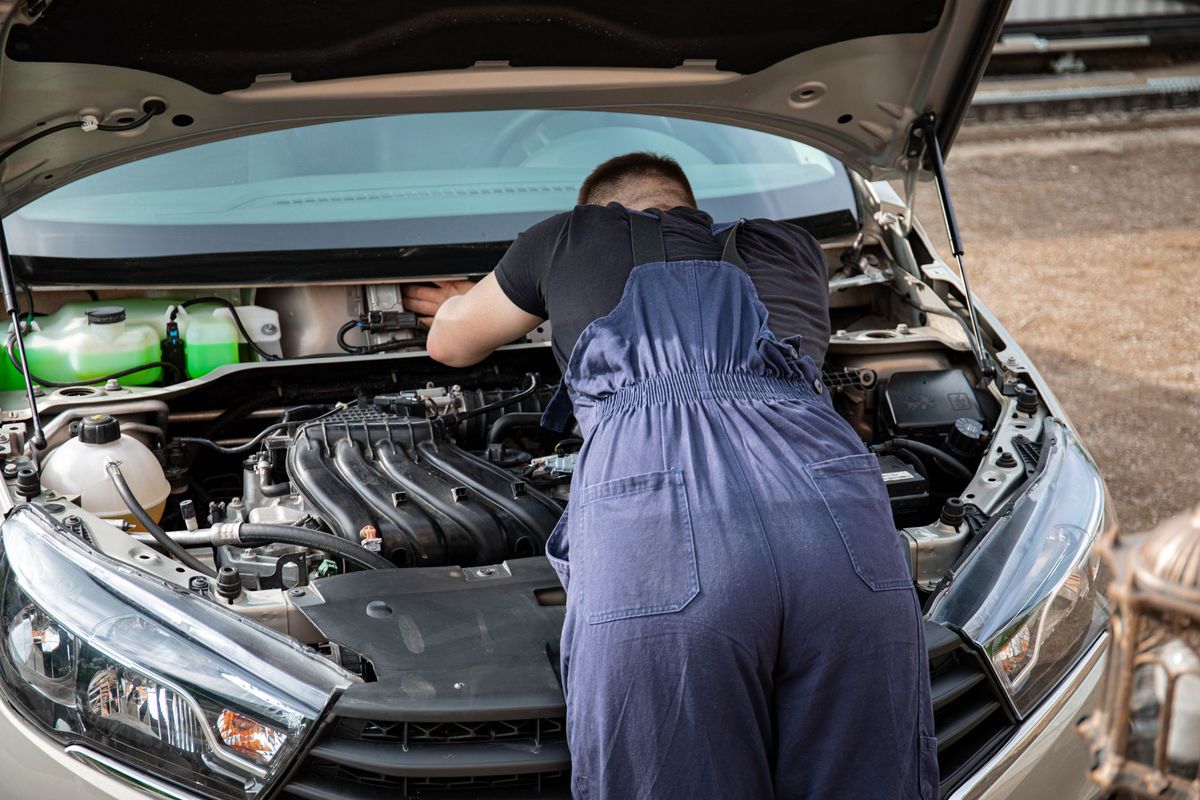
*Photo: Pexels*
r all that dead mileage. A tow from 40 miles out on a rural highway can easily run $300 to $600. If the nearest shop is in a small town with limited services, the truck may need to haul your car to a city with the right parts, and long-distance towing is billed per mile, typically $3 to $7 per mile on top of a hook-up fee.
Check your coverage right now while you are waiting. AAA Premier covers up to 200 miles of towing per incident. [State Farm's roadside assistance has a dollar limit on towing](/state-farm-roadside-assistance-dollar-limit-towing/) that may not cover the full bill in a remote scenario. If you are paying out of pocket, [roadside assistance memberships](/roadside-assistance-without-insurance-membership-cost/) sold on the spot through some providers can still be activated in an emergency and used immediately, so it is worth a five-minute call before authorizing a $500 tow.
## What Do I Do About the Rest of the Trip After the Breakdown?
Get the car to a shop first, worry about the trip second. Once you have a tow confirmed, tell the driver which shop you want. If you do not know the area, ask the driver for a recommendation, they know the local shops and which ones are reputable. Avoid letting a tow truck take your car to a shop without your input, especially in a tourist corridor where predatory pricing is more common.
For transportation: most small towns have at least one local rental agency, or you can use Turo to find a private rental nearby. If you have kids in the car, [the steps change slightly](/car-broke-down-with-kids-in-car-safety-steps/) and getting them out of the heat or cold is the first priority. If you are stuck overnight, ask the tow driver or shop about nearby motels. Many shops in rural areas have dealt with this a hundred times and will point you in the right direction.
---
*Photo: Pexels*
## Common Questions
**Q: What if my car breaks down somewhere with no road signs and I can't tell anyone where I am?**
A: Open Google Maps or Apple Maps on your phone. Even without data, it often shows your GPS coordinates. Screenshot it and read those coordinates to 911 or the tow dispatcher. That pinpoints you exactly.
**Q: Will AAA come to a really remote location or only near cities?**
A: AAA dispatches anywhere in the U.S., including remote highways, but wait times in rural areas can be two to four hours or longer. Call immediately and ask for an ETA so you know what you are dealing with.
**Q: Can I leave my car and hitch a ride to find help?**
A: Only if you are in a situation with zero signal, no passing traffic for an extended time, and you are close to a known exit or town. Lock the car, leave a note with your name and phone number on the dash, take your valuables, and note your exact location before you walk.
**Q: Is it safe to sleep in my car while waiting for a tow in a remote area?**
A: Yes, if you stay on the shoulder with hazards running and doors locked. Crack a window slightly if it is hot. Do not run the engine with windows up. If you are on a curve or at the bottom of a hill where you are hard to see, get out and move further from the car before sleeping.
**Q: What should I keep in my car for exactly this situation?**
A: A portable jump starter, a basic tire repair kit or full spare, a reflective triangle or road flares, a gallon of water, a phone charger with a battery bank, and a paper map of the states you are crossing. That kit handles the majority of roadside situations without waiting for a tow.
---
*Need roadside help? Visit [Tow With The Flow](https://towwiththeflow.com/car-broke-down-on-road-trip-middle-of-nowhere-what-to-do/) for real answers when your car breaks down.*
Car Broke Down on a Road Trip in the Middle of Nowhere: What to Do
Photo: Pexels