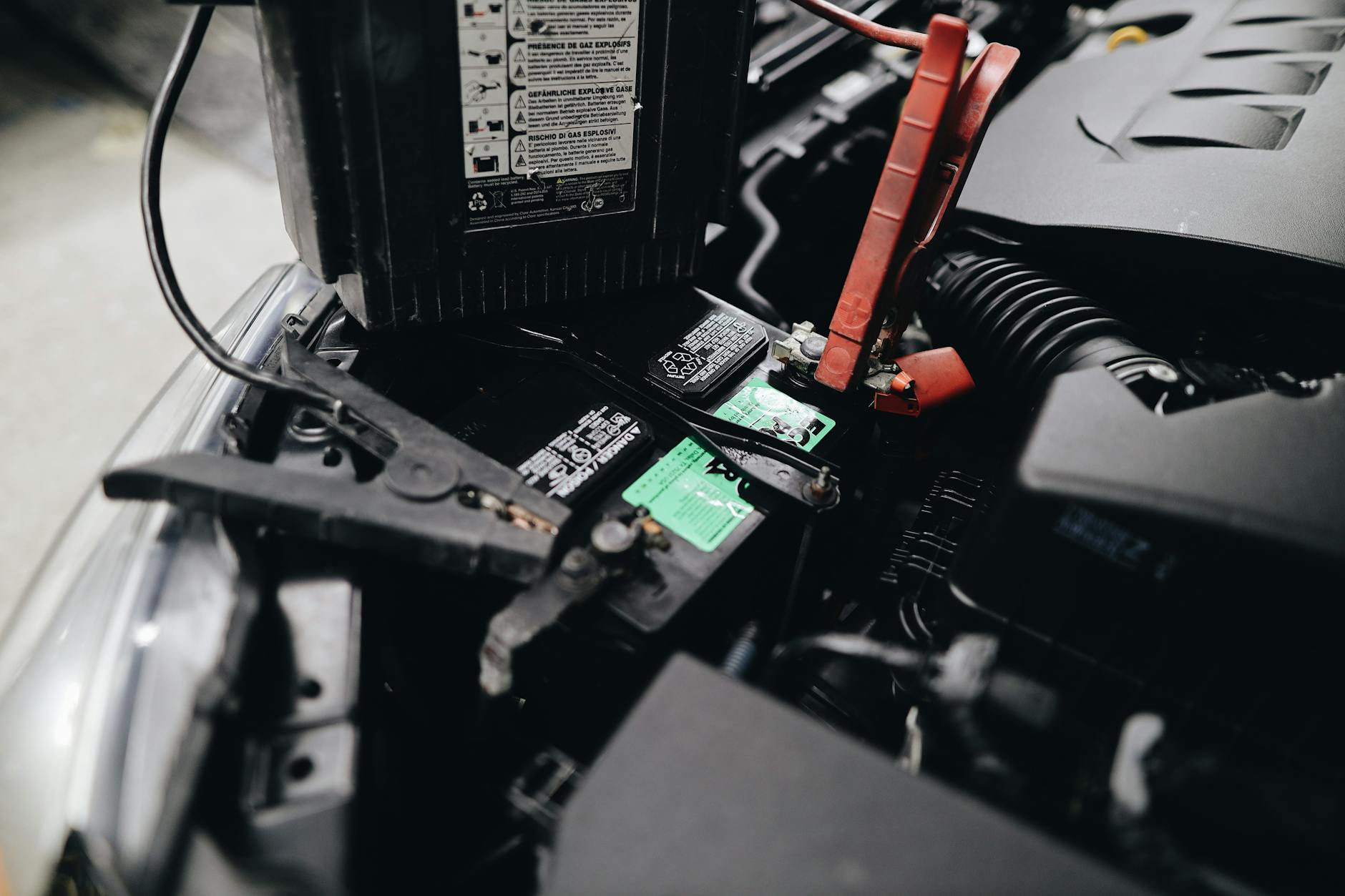
Quick Answer: Turn on hazard lights, try jump starting with cables and another vehicle, or call roadside assistance. If jump starting fails, your battery likely needs replacement. Most dead batteries can be revived temporarily, but recurring issues mean it’s time for a new one.
What To Do
Turn on hazard lights immediately to alert other drivers you’re disabled.
Try starting the engine once more to confirm it’s truly dead. You’ll hear clicking or complete silence. A single click usually means a bad connection or failing starter. Rapid clicking almost always means a dead or severely discharged battery.
Look for someone to help jump start your car. Ask shoppers, employees, or security if available. Most people carry jumper cables or are willing to pull their vehicle close for a few minutes. Don’t be shy about asking.
Position the helper vehicle hood-to-hood, close enough for jumper cables to reach both batteries. Standard 12-foot cables work for most passenger cars. If the batteries are far apart or you’re working with a truck and a small sedan, 20-foot cables give you more flexibility.
Connect jumper cables in this order:
- Red to dead battery positive terminal
- Red to good battery positive terminal
- Black to good battery negative terminal
- Black to unpainted metal in your engine bay (not negative terminal)
Grounding to unpainted metal instead of the dead battery’s negative terminal reduces the small risk of igniting hydrogen gas that can collect around the battery. Good grounding spots include a bolt on the engine block or an alternator bracket.
Start the helper vehicle and let it run for 2-3 minutes. If your battery is deeply discharged, waiting closer to 5 minutes gives the alternator more time to push charge into your dead battery before you attempt a start.
Try starting your car while the other vehicle runs. If it starts, keep it running.
Remove cables in reverse order and drive immediately to prevent another dead battery. Drive at highway speed for at least 20-30 minutes if possible. Short trips and stop-and-go city driving won’t give the alternator enough time to fully recharge the battery.
If jump starting fails, call roadside assistance, AAA, or a tow truck. A battery that won’t take a jump at all is often one with a dead cell, meaning it can no longer hold a charge and replacement is the only fix.
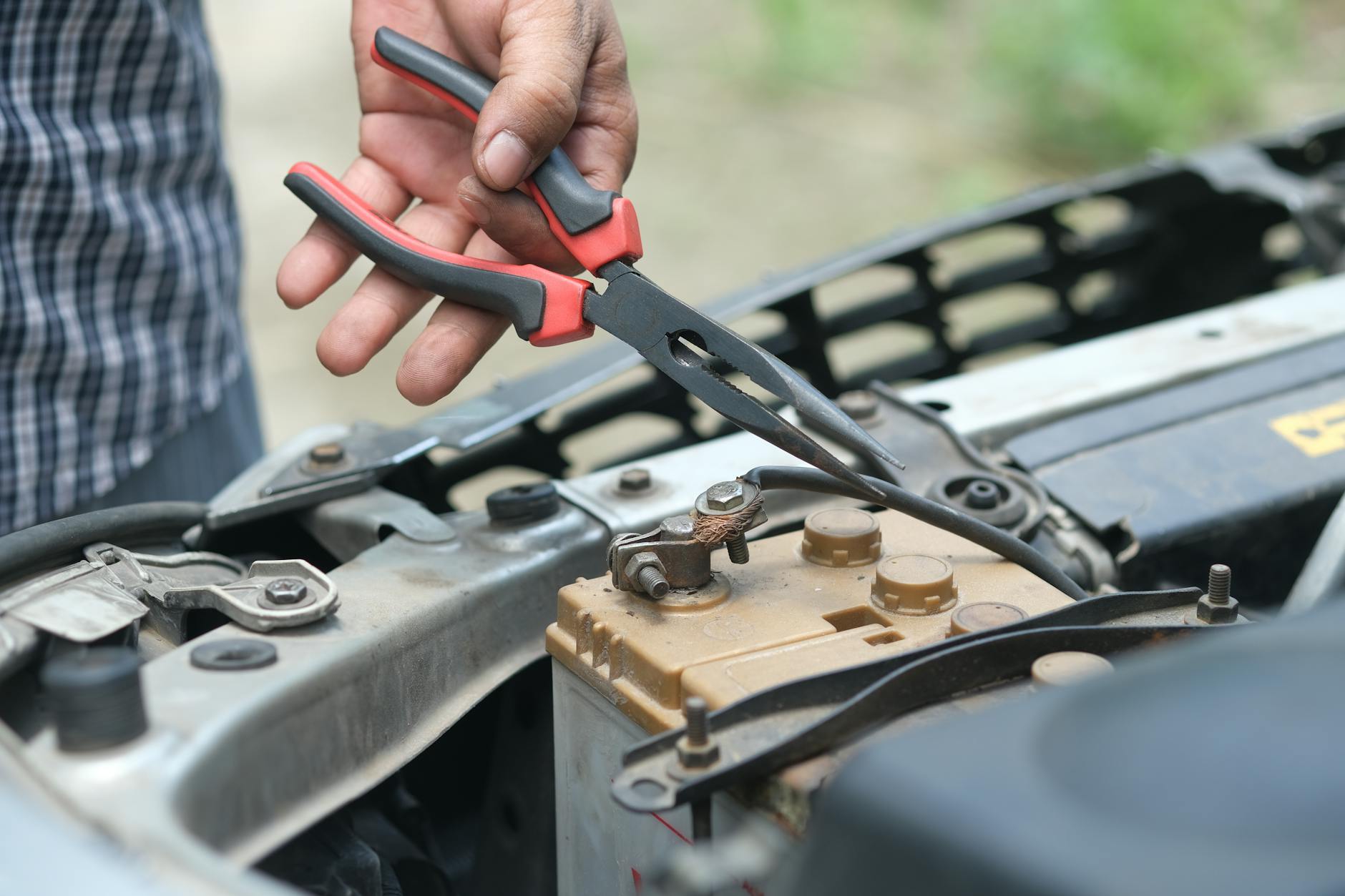 Photo: Pexels
Why Batteries Die in Parking Lots
Parking lots are common trouble spots because drivers leave lights on, run the AC or heat without the engine, or sit with accessories drawing power while the car is off. Heat accelerates battery degradation too. A battery sitting in a hot parking lot all day while you’re at work is under more stress than one parked in a garage. Most car batteries last 3-5 years. If yours is past that range, a dead battery in a parking lot is less bad luck and more a matter of time. Have an older battery tested at any auto parts store, most will do it free, so you know where you stand before it strands you.
If your battery dies more than once in a short period, the problem may not be the battery itself. A parasitic drain (an electrical component pulling power when the car is off), a failing alternator not recharging the battery while driving, or corroded terminals preventing a solid connection can all cause repeat failures.
Common Questions
Q: Can I jump start my car if the battery is completely dead? A: Yes, in most cases. As long as the battery still has some ability to accept charge, a jump start will work. If the battery has a failed internal cell, it won’t hold even a surface charge and the car either won’t start at all or will die again within minutes of disconnecting the cables.
Q: How long should I run my car after a jump start to recharge the battery? A: At least 20-30 minutes of driving at highway speeds, not idling in a parking lot. Idling puts very little load on the alternator. Highway driving pushes more current back into the battery and gives it the best chance of recovering enough charge to start the car again later.
Q: What if I don’t have jumper cables and no one nearby can help? A: Call roadside assistance, AAA, or a local tow service. Many areas also have app-based services like Urgent.ly or HONK that dispatch help within 30-60 minutes. Some insurance policies include roadside assistance as an add-on, so check your policy before paying out of pocket.
What It Might Cost
- Roadside assistance jump start: $50-100
- New battery installation: $100-200 for standard batteries
- Towing to shop: $75-150 depending on distance
- AAA membership: $60-120 annually (includes free jump starts)
 Photo: Pexels
Stay Safe
- Never smoke or use open flames near batteries
- Keep metal tools away from battery terminals while connecting cables
- If battery case is cracked or leaking, don’t attempt jump starting
- Move to a safe location away from traffic if possible before starting work
- Call 911 if you’re in immediate danger from traffic or location
Need roadside help? Visit Tow With The Flow for real answers when your car breaks down.