
Quick Answer: Turn on hazard lights, pop the hood, and try to jump start with cables or a portable booster. In Phoenix heat, work fast to avoid overheating. Call roadside assistance if you can’t get help from other drivers or don’t have equipment.
What To Do
- Turn on hazard lights immediately and pop your hood to signal distress
- Check your phone battery and location. Note nearby landmarks or store names
- Look for jumper cables in your trunk or ask nearby drivers for help
- Position the helper car close enough for cables to reach both batteries (usually 18 feet max)
- Connect cables properly: Red to dead positive, red to good positive, black to good negative, black to unpainted metal ground on dead car
- Let helper car run 2-3 minutes before trying to start yours
- Start your car and let both engines run for 5 minutes before disconnecting
- Remove cables in reverse order and drive immediately to keep battery charged
A few things that trip people up at this stage: make sure both cars are in park with engines off before you clamp anything. If the dead car clicks rapidly but won’t turn over, that usually means the battery is deeply discharged. Give the helper car an extra two minutes of idle time before trying again. If the dead car cranks slowly and almost catches, you likely have just enough juice left to start it with one more attempt.
One more detail on cable connection: always attach the final black clamp to bare metal on the engine block or a bolt away from the battery, not to the negative terminal itself. This prevents a spark near the battery, which can release hydrogen gas in enclosed or poorly ventilated spaces. In Phoenix summer heat, batteries already under stress are more likely to off-gas.
If no one can help or you lack cables:
- Call 911 if you’re in an unsafe location
- Use roadside assistance through your insurance, AAA, or car manufacturer
- Walk to nearby business and ask staff to call for help
- Use rideshare apps if you need to leave immediately
If you call roadside assistance, give them the parking lot name, cross streets, and your exact row or section if you know it. Response times in Phoenix metro can run 45 minutes to over an hour during peak summer months when call volume is high. Stay in the shade and out of direct sun while you wait.
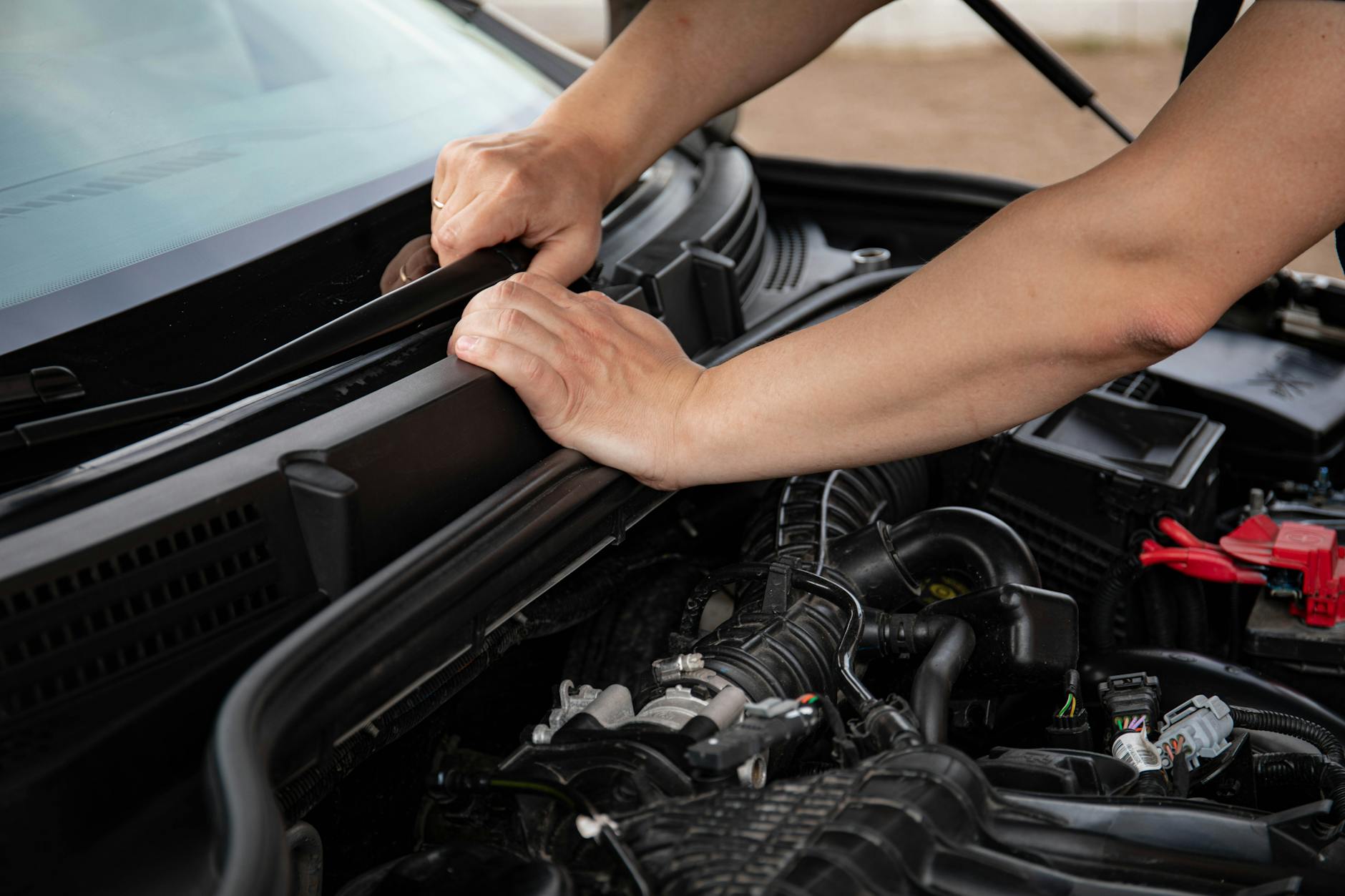 Photo: Pexels
What It Might Cost
- Jumper cables: $15-30 if buying on the spot
- Portable jump starter: $50-150 (worth keeping in Phoenix heat)
- Roadside assistance call: $50-100 without membership
- New battery installation: $100-200 at auto parts stores
On the battery replacement side, Phoenix is unusually hard on batteries. Extreme heat accelerates internal corrosion and evaporates the electrolyte fluid inside the cells. Most batteries last 3 to 5 years in cooler climates but commonly fail in 2 to 3 years here. If your battery is already more than two years old and you needed a jump today, budget for a replacement soon. Auto parts stores like AutoZone and O’Reilly will test your battery for free and install a new one in the parking lot. Expect the full process to take about 20 minutes.
Common Questions
Q: How long do I need to drive after a jump start to recharge the battery? A: Drive at highway speeds for at least 30 minutes without shutting the engine off. Short trips around a parking lot or a quick drive home won’t give the alternator enough time to put a meaningful charge back into a deeply drained battery.
Q: Can Phoenix heat actually cause a battery to die even when the car is parked? A: Yes. Heat above 100 degrees accelerates sulfation and fluid loss inside the battery, which permanently reduces its capacity over time. A battery that was borderline weak going into summer can fail completely after sitting in a hot parking lot for a few hours.
Q: What if my car starts but the battery light stays on after the jump? A: That usually points to a failing alternator rather than just a weak battery. The alternator charges the battery while you drive, so if it’s not working, your battery will drain again within 20 to 40 minutes of driving. Get to a shop or auto parts store quickly and don’t shut the engine off until a technician can test the charging system.
 Photo: Pexels
Stay Safe
- Work in shade when possible, Phoenix sun kills batteries and people
- Drink water if you have it, dehydration happens fast in desert heat
- Don’t touch cable ends together once connected
- If battery is cracked, leaking, or swollen, don’t jump it, call professionals
- Keep doors unlocked while working in case you need to get inside quickly
- Be extra cautious in mall parking lots during busy shopping periods
Need roadside help? Visit Tow With The Flow for real answers when your car breaks down.