Quick Answer: Maybe, but only if home is close. Once the alternator quits, your car runs on battery power alone, which usually lasts 15 to 30 minutes with everything shut off. Kill the AC, radio, heated seats, and phone charger, and head straight to the nearest safe spot. If home is under 10 minutes away, you can try it. Farther than that, call a tow.
Can I Drive Home With a Dead Alternator?
Only if it’s a short, simple trip: roughly 10 minutes or less, in daylight, without a highway merge or stop-and-go traffic. The alternator makes the electricity that runs the engine while you drive. When it dies, the battery covers everything, and a battery is built to start a car, not run one.
What happens when the battery runs low: the ignition system and fuel pump get starved of voltage, and the engine stalls. That can happen at 65 mph in the left lane. Modern cars are worse because the engine computer, electric power steering, and electronic throttle all draw power. Lose voltage and you lose assist on the steering wheel right when you need it.
If you decide to try, do it now. Don’t stop to think about it, because every minute of idling burns reserve you need.
How Do I Know It’s the Alternator and Not the Battery?
If the battery light came on while you were driving and the car then started acting strange, it’s almost certainly the alternator. A bad battery usually shows up at startup, not mid-drive. The alternator is the part that fails while you’re moving.
Signs that point to the alternator:
- The red battery light (or “ALT” or “GEN”) came on while driving
- Headlights and dash lights dimming, then flickering
- A whining or grinding noise from the engine bay
- A burning rubber or hot wire smell, which can mean a slipping belt or overloaded alternator
- Power windows and the radio acting sluggish
- The car stalling and then refusing to restart
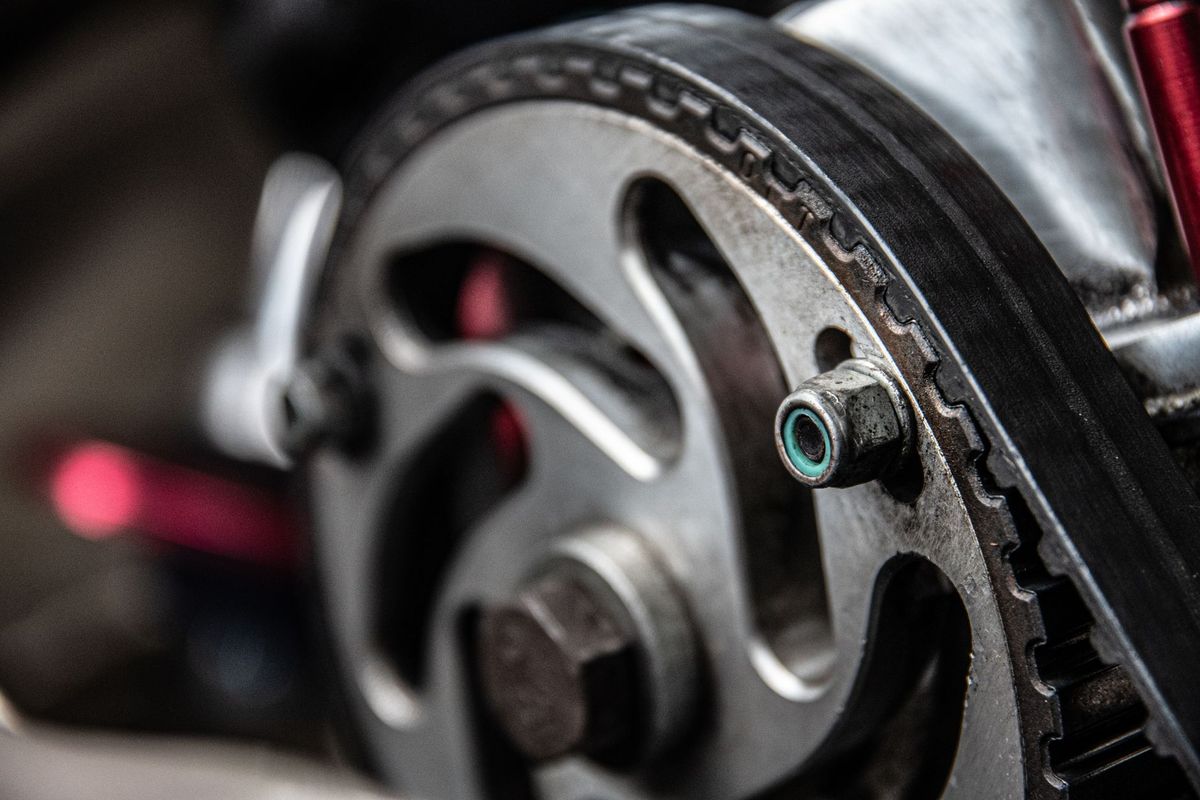
One check worth doing if it’s safe: look at the serpentine belt. If it’s snapped or hanging loose, the alternator isn’t spinning. A snapped belt on many cars also drives the water pump, so an overheating gauge climbing at the same time means shut the engine off immediately. For more on that light, see battery light came on while driving.
What Should I Shut Off to Stretch the Battery?
Turn off everything that isn’t required to keep the engine and your steering running. Every accessory shortens the time you have.
Kill these first, in this order:
- Air conditioning or heater fan on high
- Radio and infotainment screen
- Heated seats and defrosters
- Phone chargers and dash cams
- Any interior lights
Keep headlights on if it’s dark. Being invisible is a bigger risk than saving a few minutes of battery. In daylight, run them off. Don’t use the wipers unless you have to.
Drive steady. Avoid hard braking and don’t sit at red lights if you can avoid it, because idling pulls charge but gives you no distance. Stay off the highway if a surface route works.
When Should I Stop and Call a Tow Instea
 Photo: Pexels
d?
Call for a tow if home is more than about 10 to 15 minutes away, you’re on a highway, it’s nighttime or raining, or you notice the steering getting heavy. Pushing it is how a $400 repair turns into a stalled car in a live lane.
If the dash starts flickering, the steering stiffens, or the engine stumbles, get off the road immediately. Signal, coast to the right shoulder or the nearest parking lot, and turn on your hazards while you still have power. Stalling on the highway is the real danger here, so a safe exit matters more than the extra mile.
Waiting for a truck is usually safer than gambling on the drive. If the wait is long, what to do when a tow truck is taking too long walks through your options. Once you’re stopped safely, alternator died while driving: signs and what to do covers the full diagnosis and next steps.
Will a Jump Start Fix It?
A jump start gets the car running, but it won’t last. A running car with a dead alternator is just draining the jumper’s battery and your own. You might get a few extra miles, but you’re borrowing time.
A jump start is useful in one case: you’re stopped, the battery is dead, and you need to move a short distance, such as out of a parking space or onto a safer street. Don’t plan a long drive on it. If you’ve been through the clicking-and-no-crank situation, car won’t start clicking sound explains the difference.
Don’t use a battery charger as a fix either. Recharging the battery in a parking lot buys you the same 15 to 30 minutes, nothing more.
 Photo: Pexels
Common Questions
Q: How long can a car run with a bad alternator? A: Usually 15 to 30 minutes with all accessories off, though an older or weak battery can give you far less. A new, fully charged battery might stretch longer, but you can’t count on it.
Q: Can a bad alternator ruin my battery? A: Yes. A failing alternator can undercharge the battery, and repeatedly draining a battery that deep shortens its life. After an alternator failure, have the battery tested too.
Q: How much does it cost to replace an alternator? A: Expect roughly $300 to $800 for most cars, with parts and labor both factoring in. Luxury or hard-to-reach alternators cost more. Get a quote from a shop before agreeing to the work.
Q: Is it safe to keep driving if the battery light is on? A: Only to get somewhere safe, and only a short distance. The light means the charging system is failing, and you’re running on borrowed battery power.
Q: Will my car restart after the alternator dies and I turn it off? A: Often not. Starting takes a lot of power, and a drained battery may not have it. If you shut the engine off, assume you might not get it running again without a jump or a tow.
Need roadside help? Visit Tow With The Flow for real answers when your car breaks down.